Floating with the Salmon on the lower American River
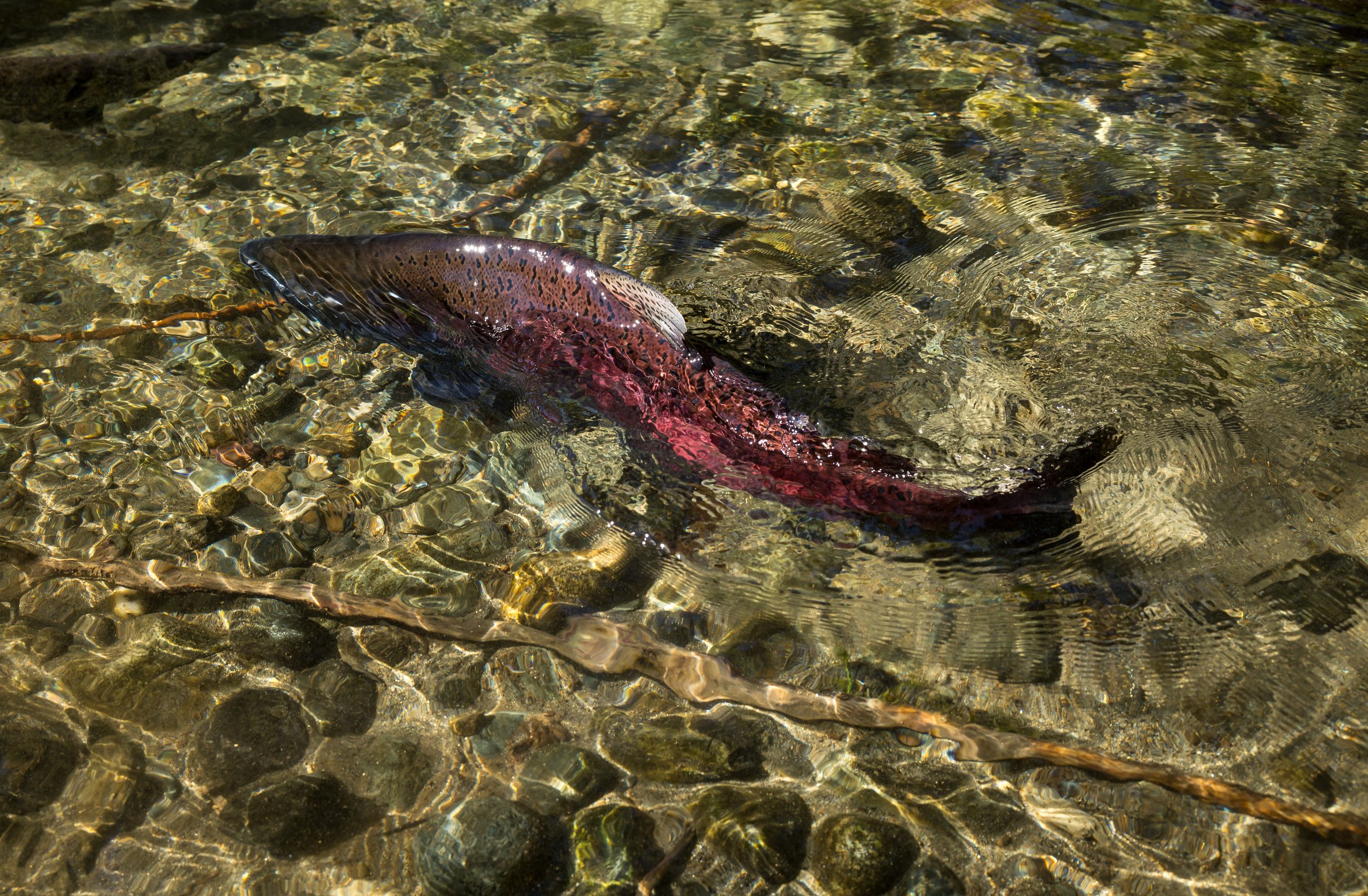
Fall-run Chinook salmon. Photo Credit: California Department of Water Resources
Our rivers provide many incredible benefits for California’s human population—one of the most wonderful is that they are essential habitat for salmon! These amazing fish begin their lives in the clear, cold, fresh water flowing out of the mountains, then migrate downstream through the Delta and San Francisco Bay to the ocean. Years later they return to lay their eggs in the gravel in hopes of continuing salmon generations into the future.
Every fall, as they have for many millennia, Chinook Salmon return to the Sacramento and San Joaquin Rivers and their tributaries in the Central Valley to find mates, spawn, and die. In the process, salmon provide valuable services that are critical to the health of our river ecosystems.
To dig their nests (called redds), female salmon churn the river bottoms with their powerful tails, moving huge amounts of gravel and cleaning out accumulated algae and sediment, allowing cold flowing water to reach their eggs. After depositing their eggs, which the males fight to fertilize, all the adults die, leaving the nutrients from their decaying bodies to nourish the rivers ecosystem. Talk about paying child support—these fish pay with their lives!
Rollin’ on the River!
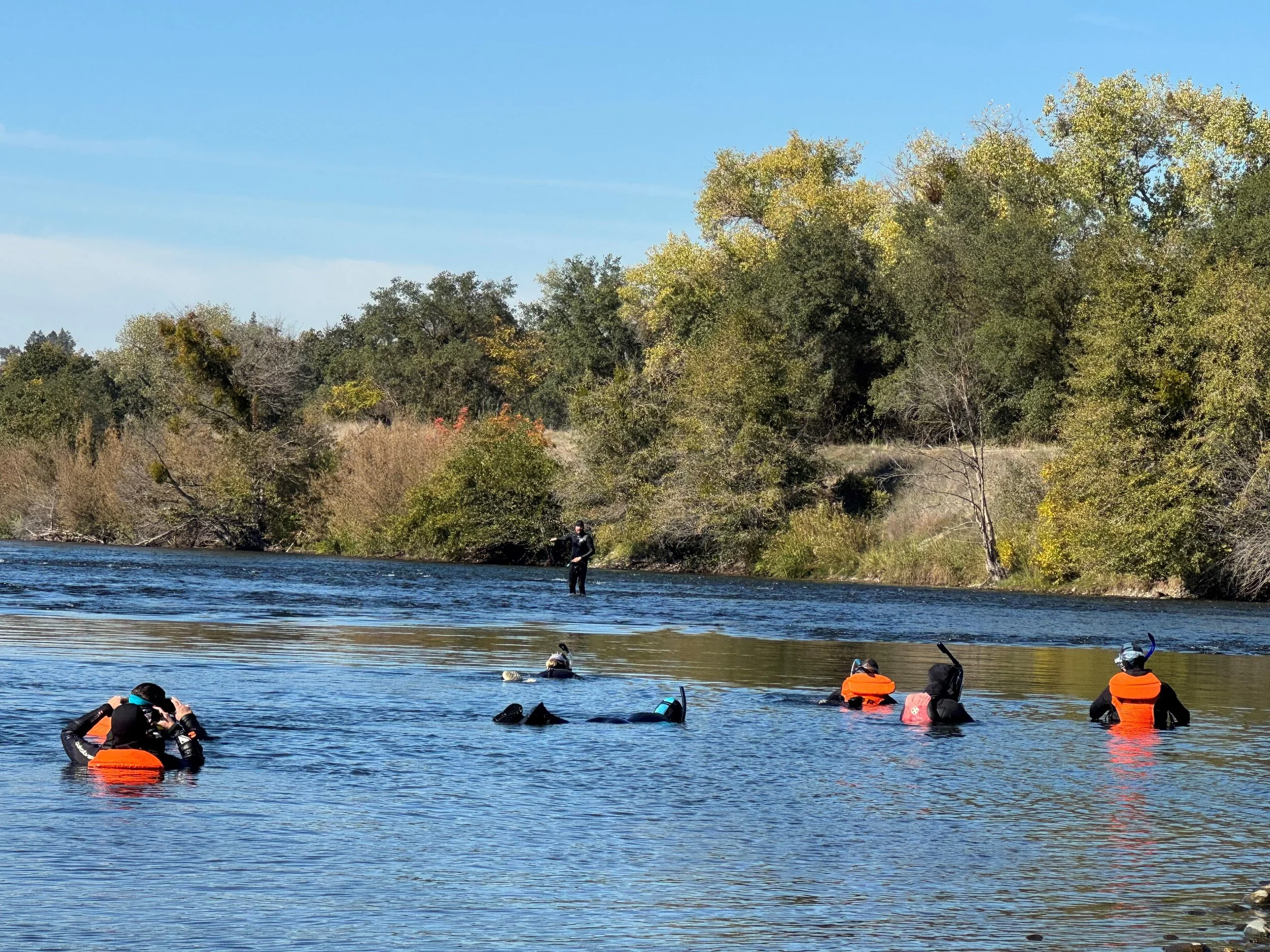
Snorkeling the lower American River. Photo Credit: Friends of the River
In October, joining with our friends and partners in Bay-Delta advocacy at San Francisco Baykeeper , FOR geared up our rafts for a fun float down the lower American River to view salmon in their riverine habitat—much better than a cement hatchery!
Along the way, we saw plentiful wildlife: deer, many bird species (great blue herons, a kingfisher, mergansers, and one spotting of an American dipper), crayfish, and other wildlife (although we didn’t see any, sea lions are seen surprisingly often in the Sacramento and American Rivers, lured up from the ocean to feast on the migrating salmon and other fish species).
Our trip started at Nimbus Fish Hatchery, where we saw juvenile steelhead, the only fish present in the hatchery this time of year. Then it was off to Sailor Bar where we launched our rafts and began our trip downriver. Floating the lower American River is available to anyone able to safely do so using various public access points along the American River Parkway. This section of the American River is calm, with no significant whitewater, but the action is all in the small riffles of shallow gravel beds—salmon swim up them, jostling each other for the best locations to dig redds and lay eggs.
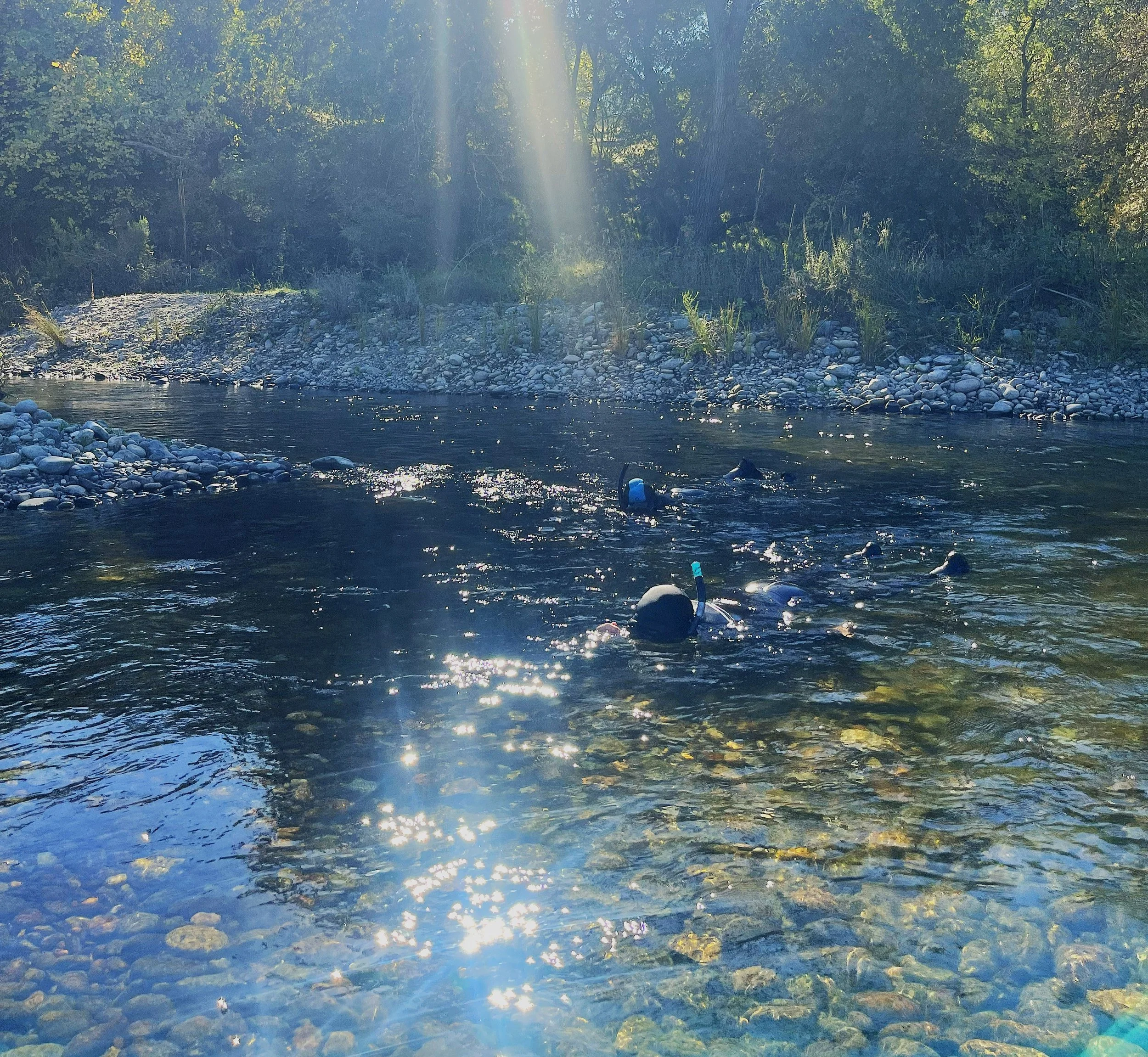
Over deeper sections we watched salmon swim smoothly underneath our boats. In shallower stretches, we gently floated and spun with the current to minimize disturbance of the gravel as much as possible. Some of us brought wetsuits, masks, and snorkels to get a fish-eye’s view of these amazing animals. Swimming with them highlighted their speed and power, and they zoomed around us as we flopped around like fish out of water.
Friends of the River works hard to protect rivers, and salmon
Seeing these animals acting out this critical stage of their lives, it is clear what brings them up the river—water. It is also clear how critical it is that we protect the entire watershed and provide enough flow to support migratory connectivity for all stages of their lives.
FOR has played a significant role in protecting the American River, and advocating for the flows that ensure that when salmon and steelhead swim up the American to spawn they find it a place where they can thrive.