Federal Watch: Fossils Fuels, Dams, and Dirty Deals
FERC Rewinds to a Dirty Energy Era
The trade press is buzzing about President Trump’s nomination of Laura Swett to the seat on the Federal Energy Regulatory Commission’s (FERC) 5-member commission currently held by Commission chair Mark Christie. According to Politico/E&E News, Ms. Swett “served as an oil pipeline adviser to former FERC Chair Kevin McIntyre and Commissioner Bernard McNamee, who wrote the Project 2025 section on FERC.”
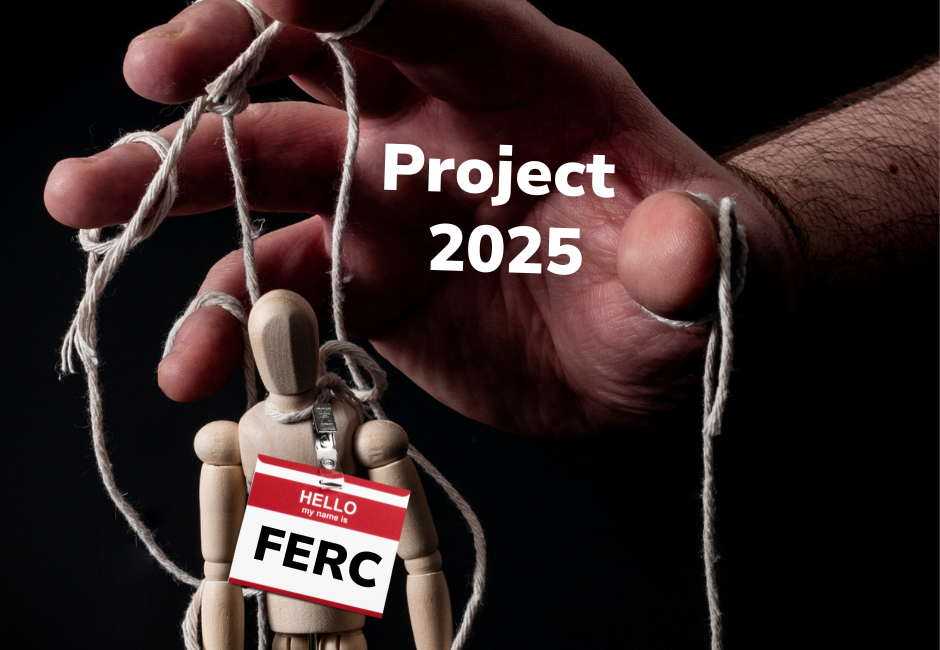
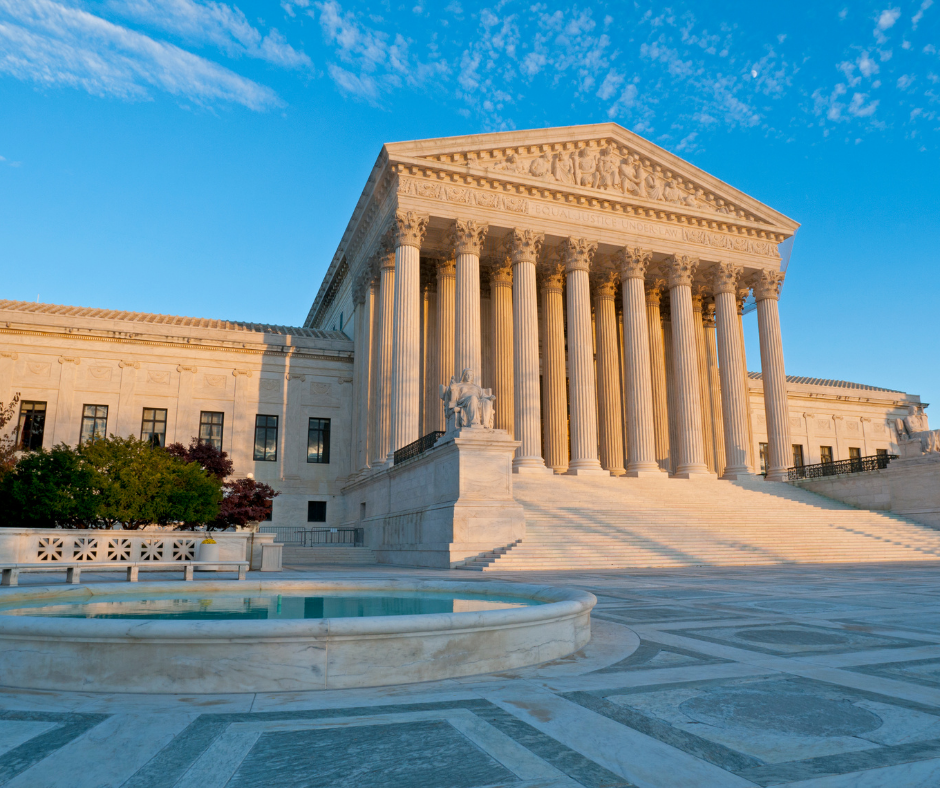
“Project 2025” is the blueprint for the reorganization and restaffing of the federal government to implement the so-called “unitary executive theory”(1) in which the President directly controls all elements of the executive branch – even independent bodies established by Congress – and appears to be the playbook for the senior members of President Trump’s Administration. The scope of that theory is being explored in the federal courts(2).
Project 2025 seeks to remodel the Department of Energy to focus on fossil fuel production(3) , but it also has a specific agenda for FERC, an independent federal agency with commissioners appointed by the President for fixed terms and that plays a key regulatory role for many hydroelectric projects.
Aside from the predictable Project 2025 goal of turning FERC into a friendlier venue for energy industry, the Project hopes to reduce or eliminate the water-quality-protection role of the states and some tribes under the Federal Clean Water Act. This is similar to the Trump I EPA Clean Water Act rules subsequently withdrawn by the Biden Administration. Currently, unless waived, certifications (permits) from states, and certain tribes with Clean Water Act authorities, are required before FERC can issue licenses for hydropower projects under the doctrine of cooperative federalism embodied in the Clean Water Act.
Friends of the River and a handful of other environmental groups have won important federal and court cases to protect the Clean Water Act(4), but we can only predict more troubled waters ahead for these important court victories as the full machinery of the federal government responds to the Project 2025 agenda.
If You Meet Delta Smelt on the Road, Kill It!
It was bad enough when President Trump issued his January 24, 2025 Executive Order on emergency measures to “improve” California water management – which essentially blamed Governor Newsom and environmental regulations for causing the Southern California wildfires, among many other unfounded assertions(5). That EO ordered the Secretary of the Interior to use the “God Squad” process under the federal Endangered Species Act to remove protections for any federally-listed endangered species that could reduce water exports. The intent was to “maximize water deliveries” to the agribusiness clients of the federal Central Valley Project.
Now Central Valley Democrat Congressman Adam Gray has introduced the Valley Water Protection Act, which would expand the Department of the Interior’s ability to waive protections for any species if there is a conflict with undefined “national security” concerns or regional economic interests. Under Gray’s bill, California could see a wave of extinctions of native fish and wildlife species that are declining as a result of poor water and land management decisions over the past half century, including salmon, steelhead, sturgeon, and smelt. The bill ignores the numerous local economies throughout the state that rely on these species. Predictably, all the major Delta exporters in the San Joaquin Valley have lavishly praised the bill.
Urge Congressman Gray to drop his bill – and let him know you won’t forget his betrayal of California’s unique environmental treasures.
The “One Big Beautiful Bill” Draws Bead on the McCloud River?
On May 22, 2025, the U.S. House of Representatives passed the GOP “Reconciliation” package 215-214-1. This “one, big, beautiful bill” authorizes $2 billion for expansions of federal storage facilities (intended by some for Shasta Dam) — plus another half billion to reconstruct canals damaged by excessive local groundwater pumping (6).
And in a breathtaking departure from more than a century of Reclamation law, this money is apparently intended to be a gift from the nation’s taxpayers to the irrigation districts in the Central Valley. Gone would be any cost-sharing requirements. Gone would be any reimbursement to the taxpayers from the benefiting irrigation districts over time.
Unless GOP budget hawks in the U.S. Senate find the courage to vote against this unprecedented gift of federal funds, the measure could pass the Congress on the slimmest of majorities and become law, setting up a confrontation between traditional state control over its waterways (the dam raise is illegal under state law) against a rising and assertive imperial federal government.
Procedural and substantive arguments are being marshalled to place in front of the U.S. Senate(7). The Winnemem Wintu have also prepared their arguments against the loss of more of the McCloud River(8).
At this writing, it appears that our Shasta Dam arguments are making headway in the U.S. Senate Energy and Natural Resources Committee and there are rumors that the $2 billion language may even be dropped from the Senate version (apparently not the case for funding canal reconstruction). But there are miles to go before the Reconciliation bill language is finally sorted out — and then there will be this year’s appropriations bills and any bills emerging from other committees of Congress.
Protecting the McCloud River has already taken forty years. More decades of work remain.
California’s U.S. Senators Alex Padilla and Adam Schiff (or any U.S. Senator) can be reached at the following simplified snail-mail address:
U.S. Senate
Washington D.C. 20510
Brass Plaques and Ribbon Cutting Occasions
Some of the less charitable among you have said the big water projects are undertaken, in part, for the opportunity to be memorialized in the modern equivalent of an Egyptian pyramid. Concrete can be pretty durable, and the scales of the efforts are similar.
So, it was not surprising that a grand ribbon-cutting was held at the end of May to celebrate the success of the U.S. Army Corps of Engineers completion of the raising of Success Dam on the Tule River (renamed the Shafer Dam in 2019 after the long-time Tule River watermaster who had championed the dam raise). Needless to say, the commander of the Sacramento District of the Corps of Engineers along with a small host of dignitaries were there to do the honor.
I’ve been a curious witness to a couple of these events, and I can say that they can be grand and culturally interesting affairs — especially for Friends of the River people, people who often have different perspectives than the “Friends of the Dam” people that assemble for the ribbon cuttings. But I didn’t get invited to this one, so I can only read the news account from one of the better on-line “newspapers” covering this beat, “San Joaquin Valley (SJV) Water.” (9)
In any event, Success Reservoir now has officially grown from its original nameplate 82,000 acre-foot capacity (estimates vary) to 112,000 acre-feet, joining its sister dam (Terminus) on the nearby Kaweah River with a reservoir capacity expansion (that one in 2004).
Of course, it’s always interesting who pays the bills for these modern pyramids. Predictably, although though local water districts were the major boosters of these dam raises, the projects have been funded mostly by U.S. taxpayers — another proud tradition of western water districts.
Big Bar Put-in/Take-out Closure Addendum
The May 2025 River Advocate carried a brief story (Little Amenities Too) on the Bureau of Land Management’s (BLM) closure of the parking lot of its Mokelumne River put-in/take-out near the Highway 49 bridge crossing.
The local watershed group, the Foothill Conservancy, reports that they have rustled up volunteers to service the restroom facilities through July 12. In response, the BLM opened up the parking lot on June 12.
There is, of course, no word on the future, and it is unlikely that the BLM could even make a prediction on how it will manage its DOGE and other program cuts. In the meantime, no doubt volunteers will continue to be needed to keep this simple place open. If you can help, contact the Foothill Conservancy.
Resources
(2) How the Supreme Court could undercut FERC independence (EE News)
(3) Project 2025 and US Energy Policy
(4) FOR coalition litigation in defense of the Clean Water Act going to the U.S. Supreme Court? (FOR River Advocate)
(5) Trump Declares War on California Water (FOR River Advocate)
(6) Proposed Reconciliation Bill language as of May 5, 2025
(7) Arguments re: Sec. 80203 (Shasta Dam Raise) Byrd Rule Violations
(8) The Proposed Shasta Dam Raise Would Continue Cultural Genocide
Against the Winnemem Wintu Tribe (Winnemem Wintu Tribe)
(9) Lake Success Celebration (SJV Water)