The Colorado River’s Bill Is Coming Due
Confronting the consequence of the multi-decade western mega-drought
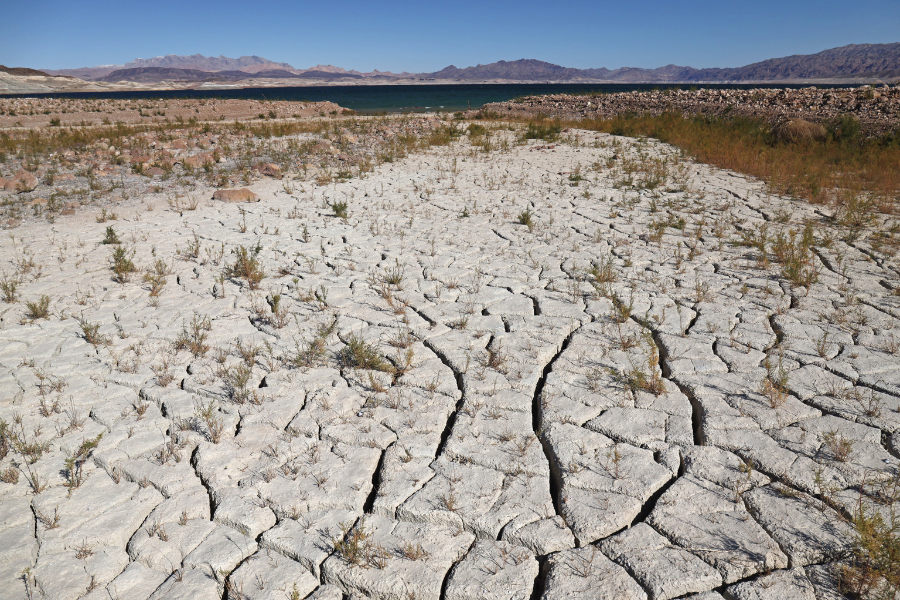
The dried and caked former lakebed of Lake Mead near Las Vegas, Nevada.
The reservoirs on the Colorado River system are big – really big. Big enough that for a long time they allowed the actors along the Colorado River to postpone the cuts that are needed to balance runoff and use of the Colorado River’s waters(1).
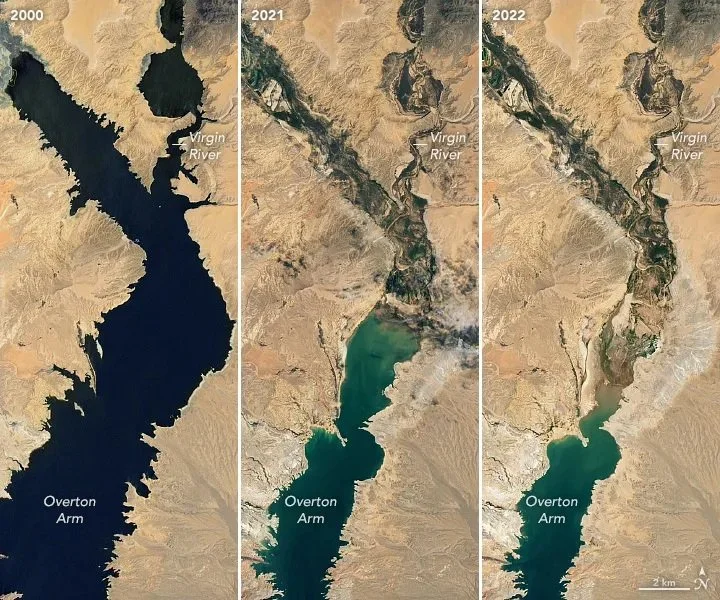
Lake Mead from 2000-2022. Photo by USGS
But what is unsustainable can by definition only go on for so long. Lake Mead keeps dropping(2)(3). Dropping reservoir levels will eventually require electricity production to shut down. Dam releases will then have to come through low-level outlets, non-powerhouse outlets that the dams’ designers may not have envisioned to receive long-term sustained use(4). And water deliveries will have to be cut.
It’s the cuts that are the immediate concern to the river’s water users(5). This year, fearful of more draconian mandatory cuts, the lower basin states — Nevada, Arizona and California — made an offer to reduce use for a couple of years, hoping, perhaps, that the coming El Nino year might bless the basin with such abundant runoff that future cuts could be postponed or reduced.
Last month the U.S. Bureau of Reclamation, the operator of Hoover and Glenn Canyon Dams on the Colorado and other dams in the Colorado Basin, accepted the offer (and offered hundreds of millions of dollars to fund water conservation programs). According to the L.A. Times, California would reduce its use by 12%, Nevada by 28%, Arizona by 29%(6).
The various Colorado River Basin states responded with statements of relief (for now) and concerns (including fear of the necessity of additional cuts)(7).
For some, the prospect of reduced deliveries rises to the level of a catastrophic emergency. Indeed, over the years, one state (Arizona) has spoken about building more desalination plants or even diverting from the Mississippi River (which is difficult to see as feasible, let alone unthinkably expensive).
Overall, the mood along the Colorado remains grim. Climate models predict that significant reductions in runoff into the Colorado River will continue. The resulting arithmetic is cruel. Water levels in the reservoirs are shrinking; the rivers through bathtub rings expanding. The Colorado will not provide the riches it once did. Demand will have to shrink. Fortunately for Southern California, millions of acre-feet of substitute water supply can be secured by investing more aggressively in water conservation, reuse, recycling, and groundwater remediation(8).
It’s time for all the Colorado River users from the Rocky Mountains to the Mexican border to identify a realistic water budget for the use of the river’s waters – and to start living within it.
Resources
(1) A New Bridge With Another Expiration Date – The Planning Report
(2) Lake Mead Keeps Dropping – NASA
(3) Technical Memorandum: Interim Operating Guidance for Glen Canyon Dam and Low Reservoir Levels at Lake Powell – Bureau of Reclamation
(4) Supercharged Bubbles Threaten Lake Powell’s Dam – Colorado Sun
(5) Colorado River Plan Leaves States Guessing Every Two Years – CalMatters
(6) Trump Admin Spares Southwest from Harshest Cuts in New CO River Plan – LA Times
(7) Weekly Digest – Maven’s Notebook
(8) Expert Testimony of Heather Cooley RE reducing water demand and expanding local water supplies in California – PDF p. 37