Raising Dams News
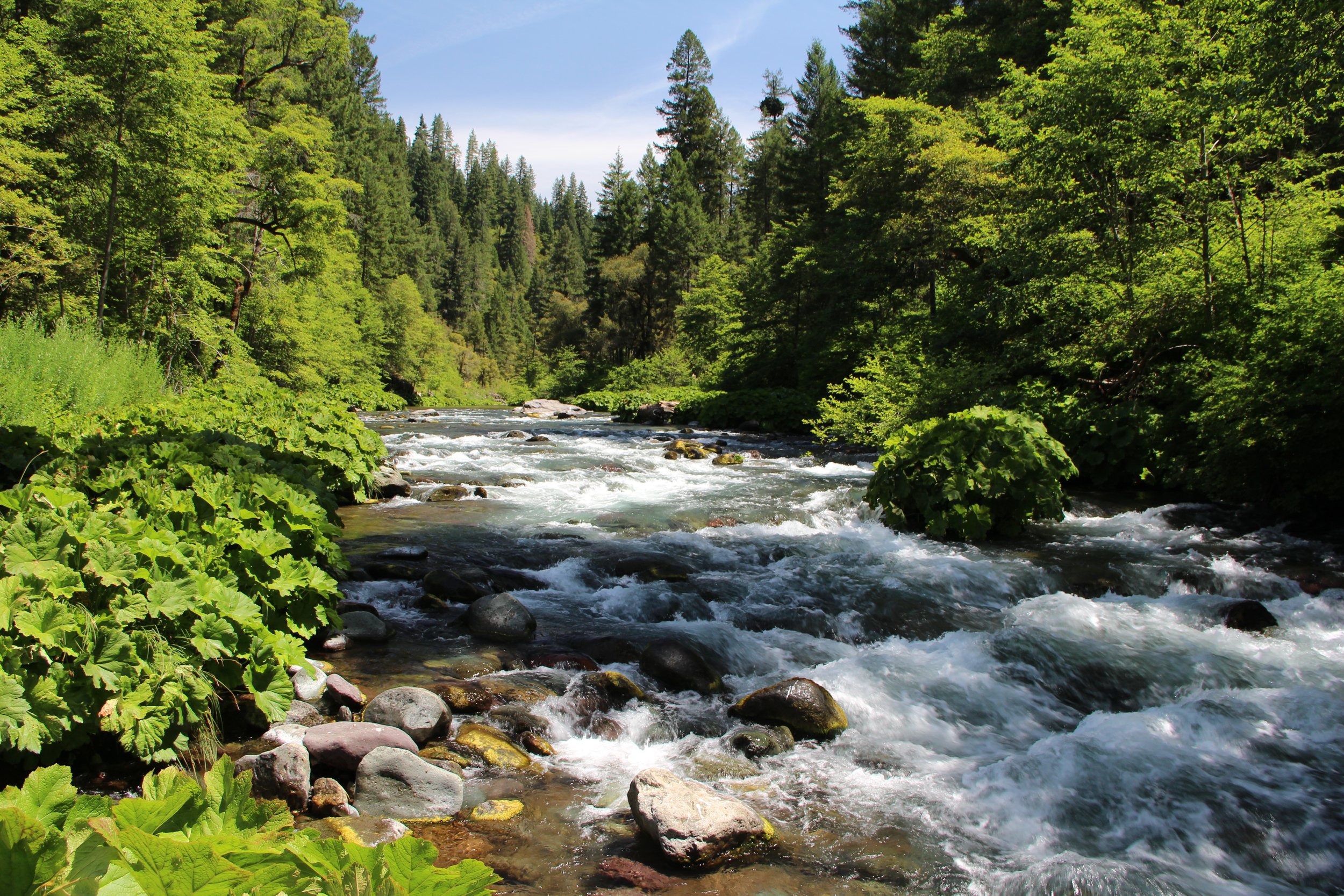
The McCloud River, Tracey Diaz
Dark Clouds for the McCloud River
Despite the fact that the McCloud River has been protected by the California Wild & Scenic Rivers Act since 1989, the first Trump administration made the $2-billion Shasta Dam raise – which would inundate much of the river – a priority. Fortunately it ran out of time to finish the required paperwork in early 2021. They also got mired on the shoals of a non-compliant Congress. The second Trump administration has more time and the prospects of a compliant Congress.
Our intelligence networks suggest that the GOP’s “reconciliation” bill will sweep away the roadblocks to dam construction: overturning federal prohibitions on construction funding, appropriating money for the dam raise, and preempting the state’s prohibition on participation in the project. The latter might be unconstitutional, but there’s no indication that the GOP-led Congress will hesitate to do the bidding of this presidency.
We also expect the Department of the Interior to put the finishing touches on its highly flawed 2020 Shasta Dam raise supplemental environmental impact statement, written to claim, in part, that the California Wild & Scenic Rivers Act was not a concern to the federal government.
We hear that the Westlands Water District (which was blocked in 2019 from joining with the U.S. Bureau of Reclamation by a California Attorney General lawsuit) is making the rounds in the state capitol to see if they can achieve some relief from state law. They are also hoping to recruit California’s new junior U.S. Senator Adam Schiff to join their team.
These will be busy and challenging times ahead here at Friends of the River, and we (and you with us) will need to step up to these challenges.
Check out our website for the latest.
In the Meantime
The California Water Commission has a problem: the dams for which they awarded $2.7 billion in California Water Bond of 2014 funding keep dropping out of the race. It’s almost as if they were financial losers in the first place. 😉
TFD: The first to stumble was the proposed 665 foot-high 1.26-million-acre-foot Temperance Flat dam (TFD) on the San Joaquin River Gorge proposed by the Temperance Flat Reservoir Authority (effectively the Friant Authority). There were reasons:
It was expensive ($2.8 billion) and the Commission had awarded it only $171 million taxpayer dollars for failure to demonstrate many environmental benefits
The dams and canals in the watershed had already demonstrated their ability to capture and divert nearly all of the water available
Procedurally, the San Joaquin River at the damsite was already fully appropriated (no more water rights were available)
The dam’s boosters were burdened with a more pressing problem — the federal canals that serve them needed expensive relocations because the ground under them was sinking because of excessive groundwater pumping
There was major environmental group opposition, although it is unknown how much of a factor this was in the Authority’s decision to drop out of the race
The Temperance Flat Dam Authority withdrew its application on October 20, 2020.
LVRE: Second to drop out was the proposed $1.6-billion, 115,000 acre-foot expansion of the Contra County Water District’s 160,000-acre-foot Los Vaqueros Reservoir (LVRE).
This one was a surprise since there had been no vocal or active environmental opposition to the proposed reservoir expansion. In the end, late last year, it was the District’s Bay Area prospective partners who killed the project, claiming that water conservation, recycling, and groundwater storage would be more cost effective.
$453 million in bond funding allocations were returned to the Commission.
See also: San Luis raise boosters want subsidies
The Water Commission’s dilemma: what to do with the returning bond funding allocations. There are now but six projects left, plus two in the waiting wings. Three of them are dams, and one of those (the Santa Clara Valley Water District’s Pacheco dam) is proposed to partially occupy a state park and whose costs have risen from $1 billion to $3 billion.
That could be a big problem — and Valley Water may have cheaper and more viable options. (See following post.)
For now, the Commission has taken some of those returned LVRE funds and awarded them to the Sacramento Regional Sewerage Plant’s delivery of treated water to area farmlands (and depriving the Sacramento River of those flows).
With the remaining money, the Commission seems to want to prop up the six remaining projects (including the proposed Sites and Pacheco Reservoirs) with returned funding allocations. The two projects waiting in the wings (including the proposed Del Puerto dam) may have to wait to see if any more bond funds become available — something that happen if the Pacheco dam fails too.
In the meantime, the Sites Project Authority can bask in the glow of being perhaps the last dam proposal standing in the supplicant line for California Water Bond taxpayer gifts.
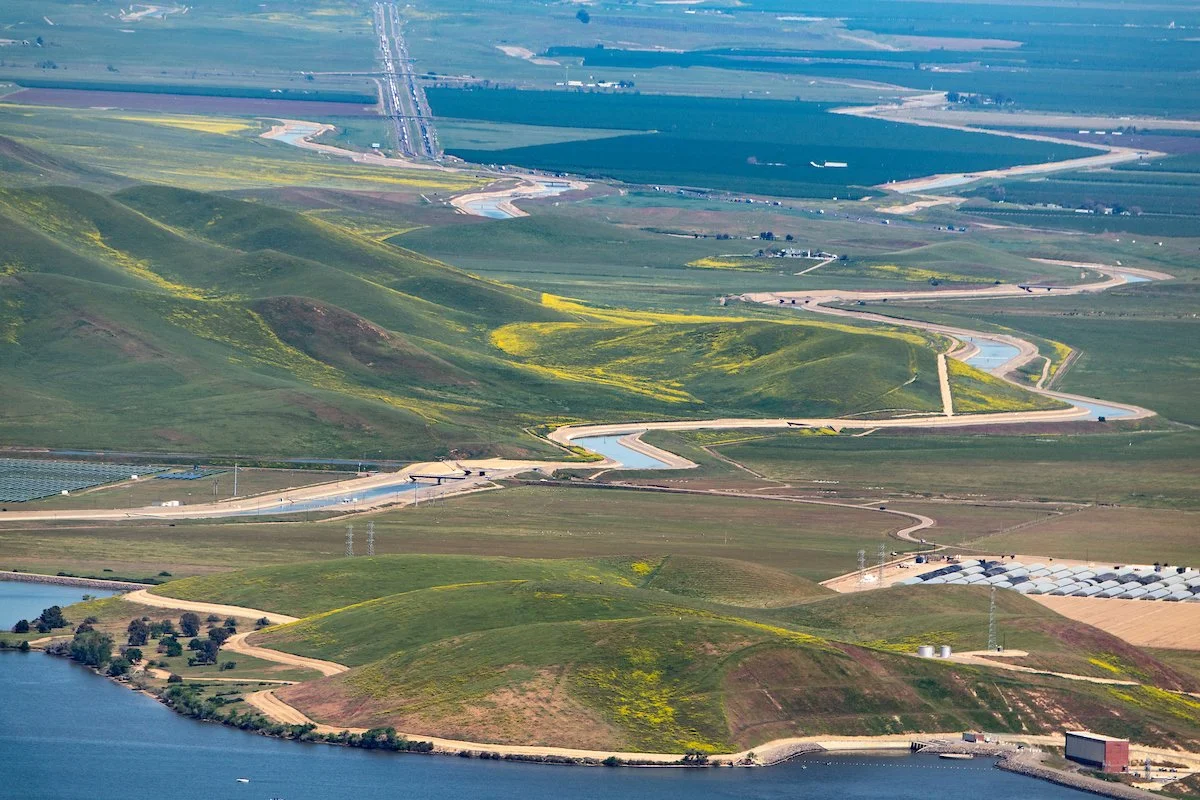
An aerial view looking north shows the California Aqueduct north of the San Luis Reservoir near Los Banos in Merced County, California. Both serve the two largest water projects in the state. Credit: CA Dept. of Water Resources
Is San Luis Reservoir Going to Grow Fatter on More Political Subsidies?
Not every reservoir expansion is slated for state bond funding, but there’s lots of other places in the state’s budget to subsidize dam projects.
Enter, the B.F. Sisk Dam raise. This dam holds the 2-million acre-feet San Luis Reservoir water poised above Los Banos in Merced County. The dam has some seismic issues and is undergoing a $1.1-billion seismic retrofit, largely funded by federal taxpayers.
Taking advantage of all that heavy equipment mobilized at the dam, the Santa Clara Valley Water District (Valley Water) and some of its allies in the San Luis and Delta-Mendota Water Authority have reached a “consensus agreement” to pursue a $900 million 130,000 acre-feet reservoir expansion project as part of the seismic project.
The U.S. Bureau of Reclamation has agreed to pay 30% of the project costs with Water Infrastructure Improvements for the Nation Act of 2016 (WIIN) taxpayer subsidies (the reservoir expansion project just squeezed by the WIIN deadlines before the Act expired). The problem — how to tap into state taxpayer funds to subsidize the project further.
The “solution” that Valley Water and Assemblywoman Esmeralda Soria (D‑Merced) are proposing is that state taxpayers should assume the costs of the Highway 152 road relocation necessitated by the larger reservoir (AB‑707). Since the road relocation amounts to half the costs of the reservoir expansion, the total subsidies for the project could get impressive.
The expansion project may not be that controversial, but federal and state taxpayer subsidies for dam projects were supposed to have ended with Governor Pat Brown and Presidents Jimmy Carter and Ronald Reagan. Dams in the modern era are once again becoming “political” dams, not the ones that the bean-counters say make good fiscal sense.
Crazy times.