Dragging Defeat from the Jaws of Victory? Trump Administration Intervenes in Long-Settled Eel River Water Conflict
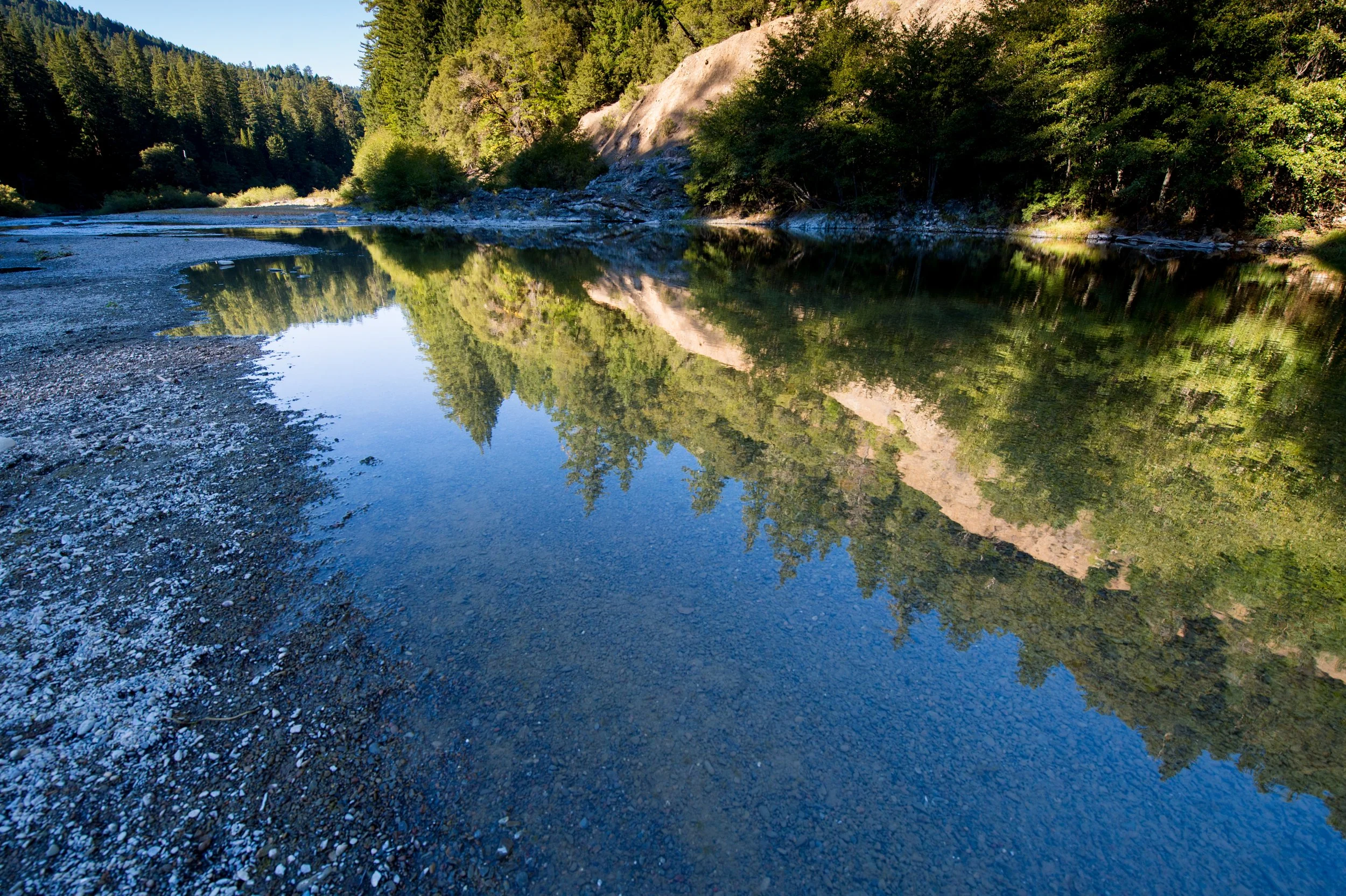
Eel River. Credit DWR
In a last minute move that could resurrect the 1960s-era battles to convert the Eel River to nothing but dams, reservoirs, and tunnels to serve Southern California water supplies, the Trump Administration and an obscure-to-most Southern California water agency are opposing the dismantling of Pacific Gas % Electric’s (P&GE’s) Cape Horn and Scott Dams on the Eel River and instead proposing to bringing the river’s water to the south state.
The low value and high operating costs of its Eel River Potter Valley Project dams have long troubled PG&E’s bean counters, and the potential relicensing by the Federal Energy Regulatory Commission (FERC) made its problems difficult to ignore. Instead, after due reflection and consultation, PG&E proposed license surrender and removal of the dams.
The resulting FERC regulatory process and accompanying local water supply mitigation arrangements were well underway when Secretary of Agriculture Brooke Rollins expressed her disapproval of PG&E’s proposal in a September 2025 social media post, followed later by a formal intervention filing at FERC.
Relevant News Articles
SF Chronicle:
Eureka Times Standard:
Friends of the Eel:
Lost Coast Outpost:
April 21, 2026 - Statements From PG&E and Friends of the Eel on SoCal Agency’s Potter Valley Dam Bid
Redheaded Blackbelt: April 23, 2026 - Feds Float Late-Stage Idea to Keep Eel River Dams as Removal Plan Moves Forward
Santa Rosa Press Democrat:
Mendocino Voice:May 2026 - The Potter Valley dams are coming down
Ukiah Daily Journal:April 22, 2026 - PG&E reports receiving no new proposal to buy the Potter Valley Project
It took a while, but the Trump Administration was able to find a Southern California Riverside County water agency, the Elsinore Valley Municipal Water District, to express a strong interest in purchasing the project from PG&E, at least in part to develop an Eel River water supply — well, maybe interest.
It is unclear, of course, whether the Administration and the water agency know that the Eel River, except for the reaches with PG&E facilities, was safely tucked into the state and federal wild & scenic river systems in 1973 and 1982, ending plans by the Department of Water Resources and State Water Contractors to add the watershed to the State Water Project’s (SWP) supply portfolio.
However, many north state players do remember, and reactions of concern, bemusement, and outrage were inevitable.
Back to the 1960s
Those were heady days for the SWP. By 1962, water agencies (mostly in Southern California) had signed contracts for 4.2-million acre-feet of supply. 2.4-million acre-feet could come from the pumps in the San Joaquin/Sacramento River/Delta and the new SWP dams in the Feather River watershed, and transported south by the California Aqueduct, all under construction.
Much more thoroughly damming and diverting the Eel River and its tributaries would provide the remaining 1.8 million. Later, more of California’s North Coast rivers and Sacramento River Basin rivers, in the eyes of the SWP planners, would follow, pushing Delta water transfers to more than 18-million acre-feet per year. The costs and the engineering requirements would be breathtaking, of course, so the state did not move to construction immediately.
But mostly out-of-sight to DWR’s pocket-protector and slide-rule engineers, this was also a time when the public was beginning to embrace environmental causes. Demonstrably, it was even creeping up on the borders of the SWP. The Middle Fork Feather, right down to Oroville Reservoir, was one of the original eight National Wild & Scenic Rivers created in 1968.
Wild & Scenic Rivers Acts Save the Eel and More
Championed by State Senator Peter Behr (R‑Marin) and others, in 1972 California created a state wild & scenic river system with its North Coast rivers (and the lower American River) comprising its initial components.
It was a close thing. California Resources Secretary “Ike” Livermore went up against DWR’s Director Bill Gianelli in a battle for Governor Ronald Reagan’s support to protect the Eel from DWR’s plans. Livermore won.
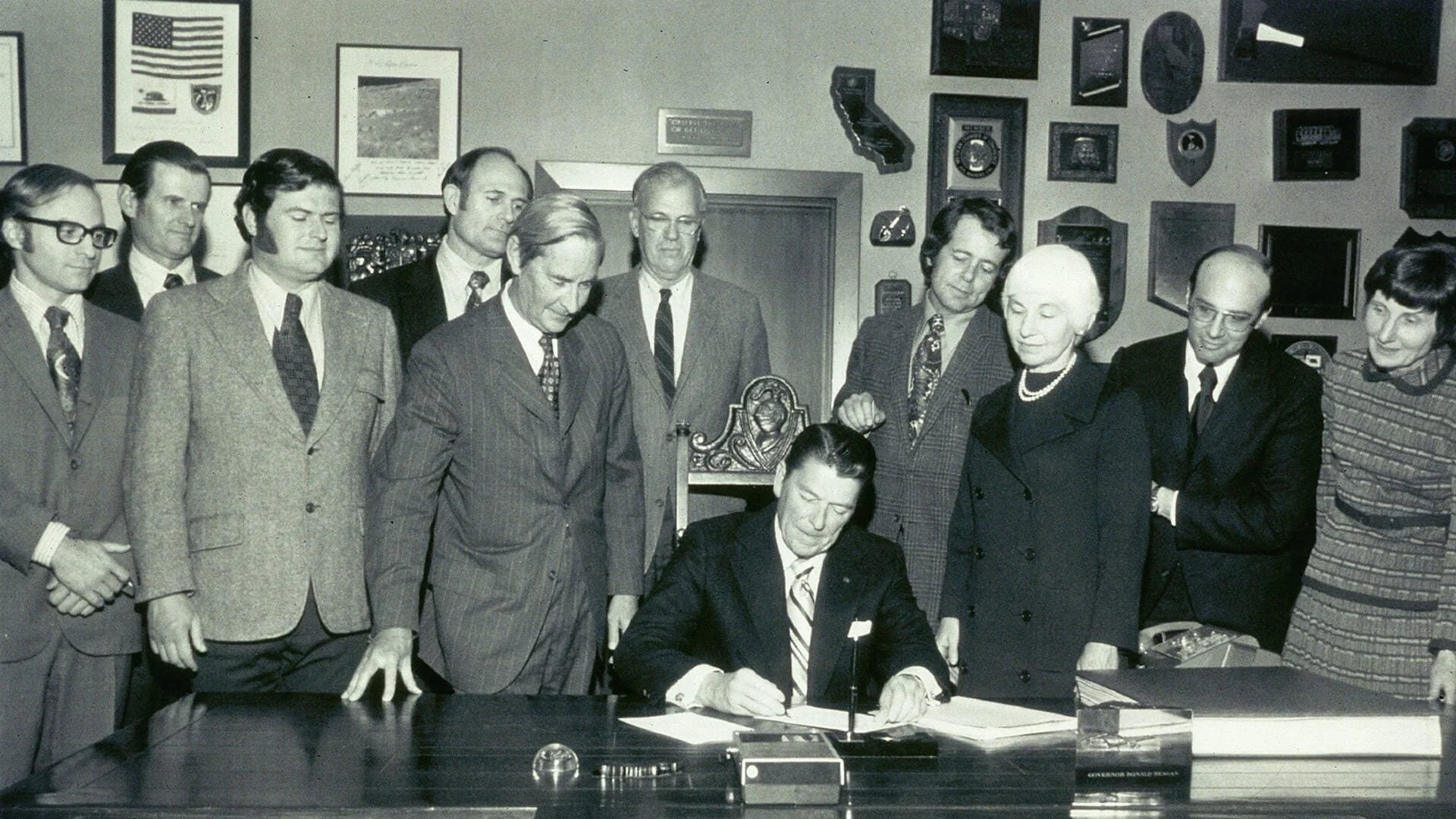
From left to right, Dan Frost (Cal Trout board member), Richard Wilson (Planning & Conservation League and Covelo land owner), Bill Quinn (Cal Trout board member), Ed Henke (Cal Trout and Committee of Two Thousand member and ex-SF 49er), State Senator Peter Behr, California Resources Agency Secretary Norman “Ike” Livermore, Governor Ronald Reagan, Richard May (Cal Trout founder), Dr. Berdeen Paul (widow of Joe Paul, CalTrout and founding chairman of the Committee of Two Million), Dave Hirsch (Planning and Conservation League), Jo Smith (League of Women Voters). Identifications from the CalTrout website, Jerry Meral, Dave Weiman, Richard May, and Bill Press. Ron Stork, April 22, 2026
It didn’t end there, of course. Powerful members of the legislature introduced and moved bills to repeal or damage the state’s Wild & Scenic Rivers Act. They mostly failed to pass. In defense, in 1980 voters would pass a ballot measure to make it more difficult for simple majorities in the legislature to achieve such changes (but, reflecting the political logrolling of those times, with provisions that could only go into effect if the voters approved a ballot measure authorizing the Peripheral and Mid-Valley Canals and a big north state reservoir, potentially the Sites Reservoir). In 1982, the voters narrowly voted down this canal and dam measure — and with it, the enhanced state protections.
The political package had, in part, been the creation of young Governor Jerry Brown, who had been focused on getting the initial SWP Delta infrastructure authorized and constructed and bringing more water from the Sacramento River into the SWP. However, before the package failed and to provide river lovers with more assurances that the north coast rivers would be safe, Brown had petitioned the President Carter Administration Secretary of the Interior Cecil Andrus to add the state’s then wild & scenic rivers to the national wild & scenic river system as well. In early 1981, Andrus did that.
Not surprisingly, the state’s water, agriculture, and timber industries all litigated against the Andrus decision. They also weakened the state act’s provisions as part of their litigation strategy, but fortunately not the dam, reservoir, and diversion provisions. They would eventually persuade the U.S. District Court for the Northern District of California to overturn Andrus’s decision, a court decision, itself, later overturned by the U.S. Ninth Circuit Court of Appeals. Finally, in early 1985, the U.S. Supreme Court declined to hear appeals to the Ninth Circuit’s decision. The judicial challenges to the state’s original wild & scenic rivers were over.
We’ve covered many of the beats of this story many times, perhaps most comprehensively updated on our FOR-CalWild wild & scenic river referenced memo at https://www.friendsoftheriver.org/our-work/wild-and-scenic/.
With the Eel double protected, the SWP would not be coming for the Eel River anymore.
Those controversies from 60 years back have mostly lain quiet all these decades. The blueprints for Eel River dam proposals have been quietly yellowing in various storage cabinets around the state, with at least some young engineers not even aware of the curiosities that might lie in those map cabinets.
Until Now?
Whither Goest the Eel today?
Mostly to the sea, of course.
More importantly, in the present-day world, Lake Elsinore Valley Water District has no way to bring the Eel to Southern California. The dams do permit a small diversion (now carefully negotiated among many of the parties) into the Russian River Basin, but that is not the south state.
Exporting the Eel River to the south state called for a far grander project. Indeed, even the DWR’s first-phase Eel River project — the Dos Rios dam and an eastbound tunnel to the Sacramento River bored through the nearby inner coast range — was expected to cost billions (in the 1970s).
Elsinore’s bean counters would need to find tens of billions of dollars to finance that in the 2030s. To do that, they and their SWP contractor brethren would need to find a way to recreate the water project subsidy and political environments of the 1950s and 1960s. Nor does PG&E’s money-losing experience suggest that Elsinore can turn a profit selling hydropower from the project while it tries to arrange for financing and approvals to link the Eel River to Southern California.
But that won’t necessarily stop them from trying. I seriously suspect that some or many of us are going to have to deal with a newly emboldened gaggle of state water contractors bent on some serious water theft once again.