Historic Water Agreement on the American River Renewed
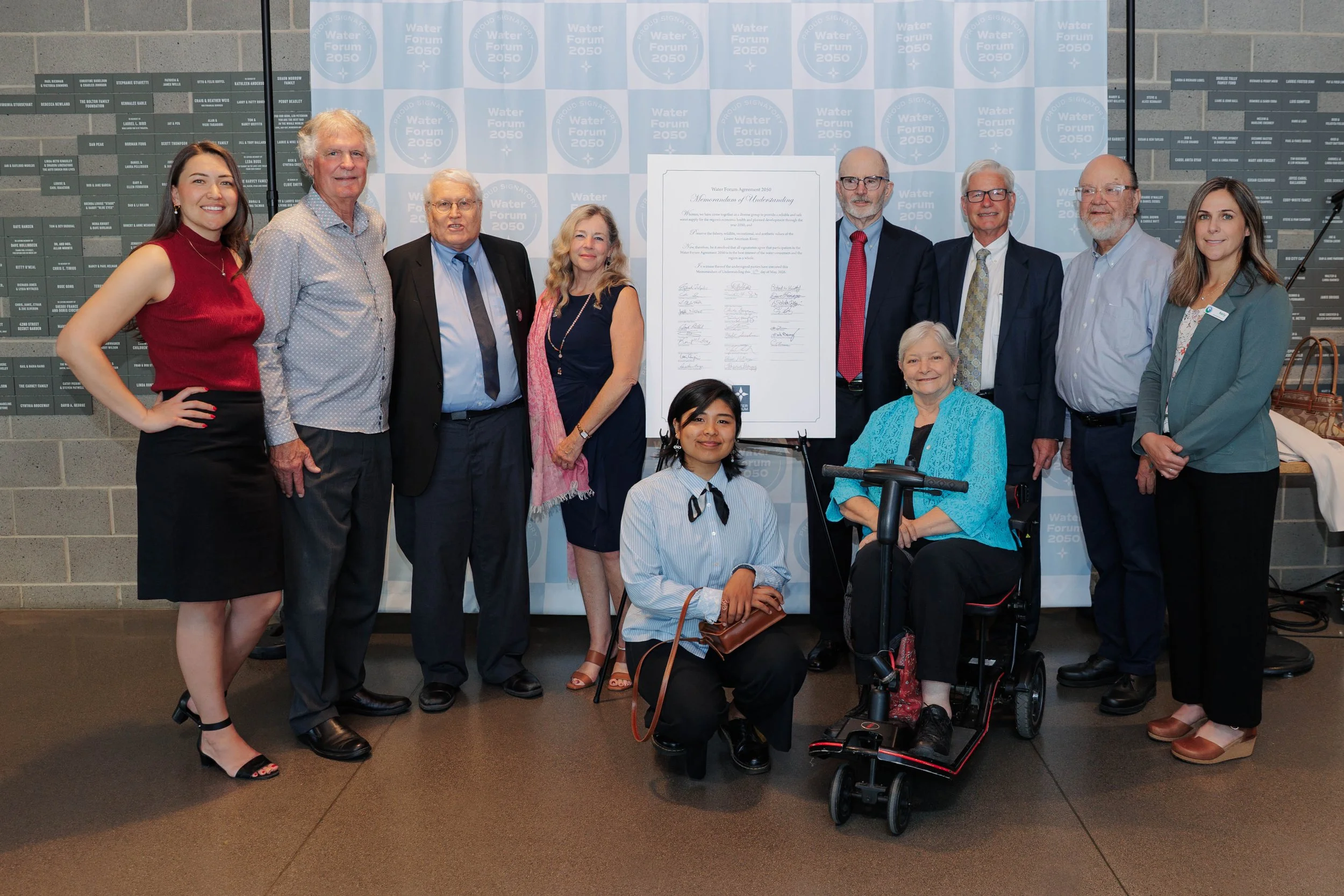
The Water Forum 2050 Signing Celebration.
The American River has been the scene of considerable history — and controversy. The California Gold Rush started here, sparking a series of crude dams for reducing river flows in favor of flumes for the mining operations. One of the first hydroelectric dams in California was built to bring electricity to California’s capital city.
In the early part of the twentieth century, PG&E coupled various mining-era and new rights into a new significant project on the South Fork American River (now owned by the El Dorado Irrigation District). In the mid last century, the Sacramento Municipal Utility District and the U.S. Bureau of Reclamation (after the water board sorted out a myriad of competing claims) won the rights to dam the upper and lower watersheds.
Soon after, the Placer County Water Agency built its significant dams on the Middle Fork’s upper watershed. Some of the early and consequential Public Trust navigation easement cases were on the South Fork. Portions of the American River became parts of the state and federal wild & scenic rivers.
The last half of the twentieth century feature the controversies on Auburn dam, whether it should be built and for whom. By then, the scale of ambitious proposed water projects had grown, including diverting the average annual flow of the river to as far south as Bakersfield. San Joaquin County tried to acquire the rights to some of the river — and lost. East Bay Municipal Utility District did as well, but with only partial success.
Into this environment the Sacramento Water Forum was born in 1993. Auburn Dam had suffered setbacks, which created a political environment that fostered intra-regional water supply disputes, including over what the lower American River needed to sustain its iconic salmonid fisheries.
After a seven-year negotiation, the Water Forum Agreement was completed in 2000. It included restrictions on surface water diversions, groundwater and water conservation elements, and proposed Folsom Dam operations for the U.S. Bureau of Reclamation. Importantly, it forged more regional cooperation and problem solving. For many, perhaps all, of the water districts in the region, Auburn Dam had become just something in the rear-view mirror.
A similar effort led by the Sacramento Flood Control Agency, the Lower American River Task Force, eventually put Auburn dam in the rear-view mirror as a flood-control “solution” for the region. After reaching some major successes, it is transitioning to a new format. https://waterforum.org/news/lartftransition/
However, the Agreement will expire in 2030, which kicked off a multi-year negotiation for a new Agreement good through 2050. The negotiation was labor intensive, but on May 11, the Agreement was ready for a signature signing ceremony. https://waterforum.org/news/wf2050signed/.
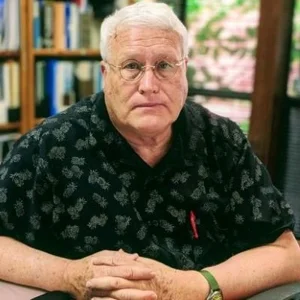
Friends of the River had played a key role in the negotiation, so yes, we were a signatory.
Of course, the future success of a “Forum” depends on the people involved. Friends of the River will need a new generation of “Forum” members as our 33-year veterans age out. “Forums,” like democracies, cannot be a spectator sport.