
White Sturgeon Move One Step Closer to Federal Protection
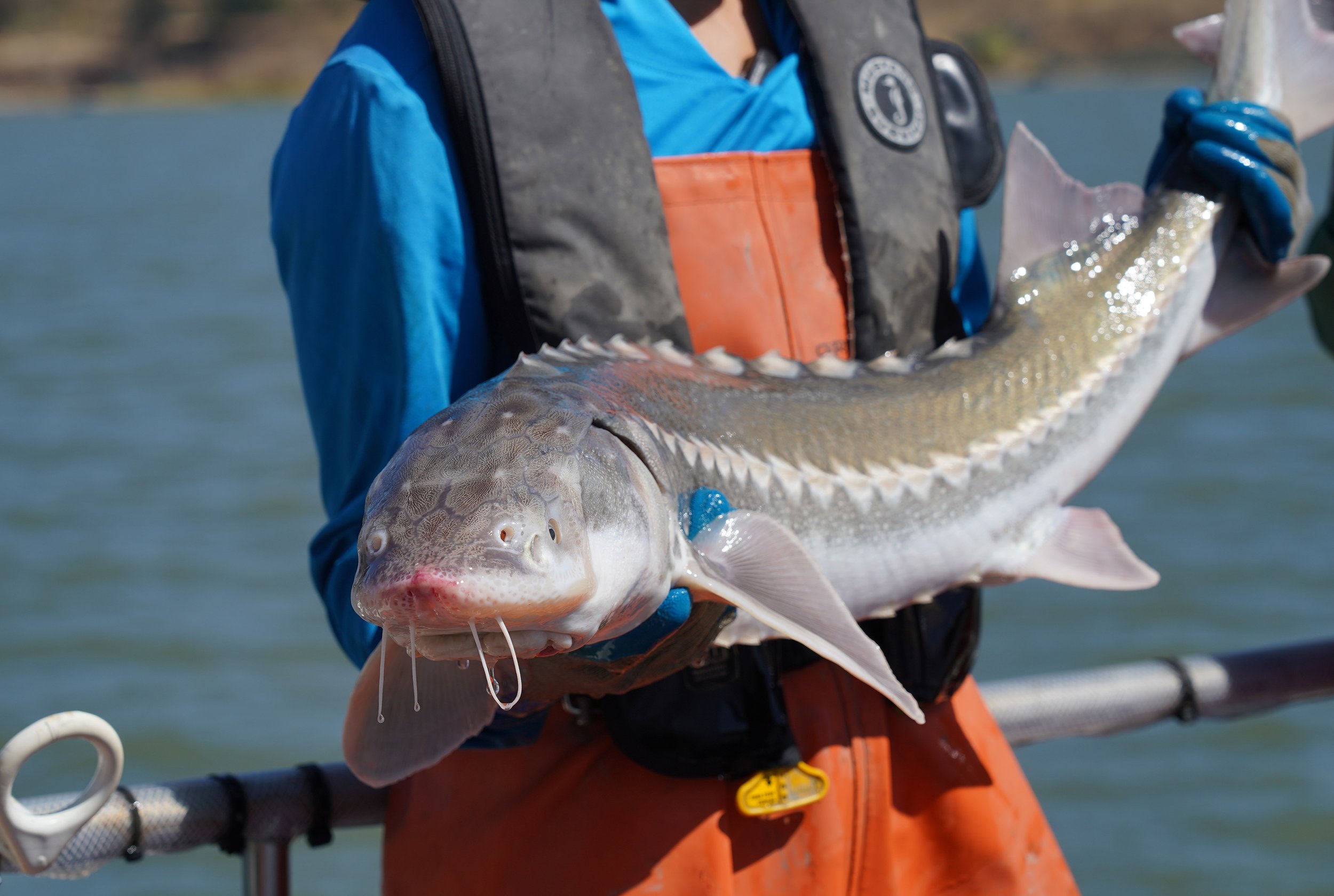
Ancient fish may still avoid becoming latest casualty of bad water management.
White sturgeon, one of California’s most ancient and long-lived fish species, edged one step closer to receiving federal protection in early September after a federal judge ruled in favor of Friends of the River and three other environmental groups challenging the government’s failure to act. The decision is both a win for the species and a rebuke of the drastic staff cuts decimating federal agencies under the Trump administration.
U.S. Magistrate Judge Lisa Cisneros ordered the US Fish and Wildlife Service to quickly complete an assessment to decide if the San Francisco Estuary population of white sturgeon should be listed as threatened under the federal Endangered Species Act (ESA). Our plaintiff coalition sued the Service after it failed to meet the mandatory December 6, 2024, deadline (12 months after being considered for listing). The court gave the Service nine months (until July 2026) to complete the assessment and publish the final finding in the Federal Register. Thanks to another petition by the same group, white sturgeon are also under review and protected by the California Endangered Species Act during this review process.
Notably, the Service had proposed 2029 (!) as a new target for completion, citing a backlog of other reviews and the recent budget and staffing cuts and hiring freeze as justification for not completing the review on time. The judge’s ruling sends a message rejecting the government’s failure to support agency scientific staff as an excuse for noncompliance and upholding the obligation to review and implement protections for imperiled species in a timely manner.
A Species Shaped by Time, Now in Decline
White sturgeon were once abundant and grew to massive sizes, with historical catches often weighing hundreds of pounds. Their slow growth and massive size point to their long-life spans, with some living up to 100 years and not reaching maturity until at least 10 years of age. These traits contrast dramatically with other fish species in the delta, including Chinook salmon and Delta smelt. Together, the simultaneous decline of these species highlights a common cause—the reduced flows and degraded water quality in the Sacramento-San Joaquin watershed.
Threats from Reduced Flows and Water Projects
White sturgeon are particularly vulnerable to the impact of reduced high flows in wet years, which are increasingly rare and the only times when the species can successfully reproduce. These high flows are also exactly what the State’s new water diversion and storage projects hope to divert and capture, yet another reason these projects must not be ‘fast tracked’ by attempts to streamline environmental review processes (see “Keeping the Triple Threat at Bay” in this issue).
White Sturgeon have earned their place in the world by evolving over tens and hundreds of millions of years while remaining stubbornly unchanged. Yet today they are rapidly declining, impacted by factors including habitat loss, reduced river flows and poor delta water quality, historical impacts from recreational fishing, and being killed by boat strikes. They deserve any protections we can afford them to ensure their continued existence.
A Broader Message for Endangered Species Protections
Beyond white sturgeon, the ruling in this case serves as a reminder to the agencies that ‘reductions in force’ do not remove their obligations to comply with ESA requirements, and not to delay decisions that are clearly supported by science—even when they are opposed by powerful interests. Let’s all hope this helps expedite listing decisions in the future for other species at risk.