When in Doubt, Change the Rules
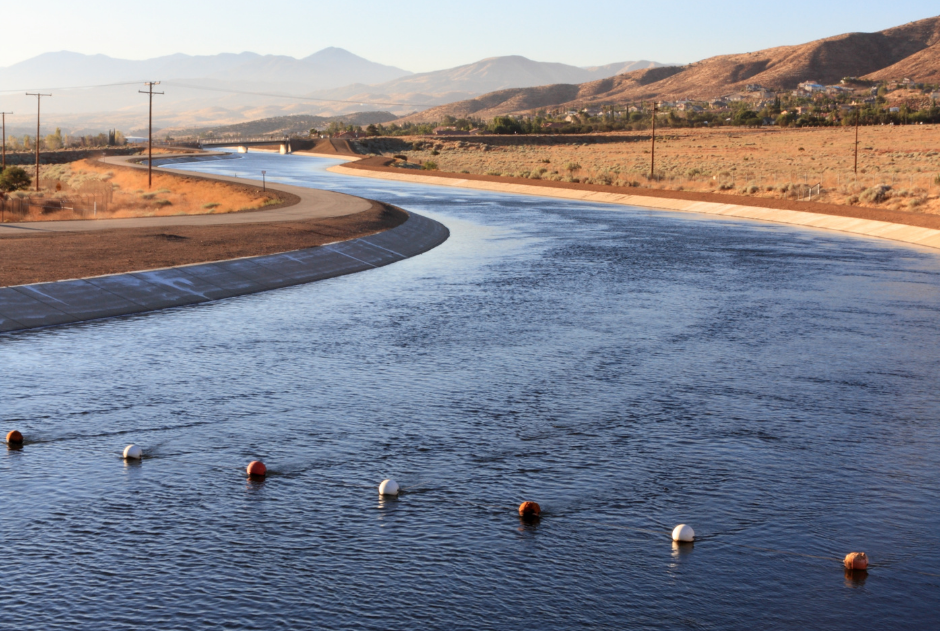
Governor Newsom’s revised state budget would remove barriers to fast-tracking the Delta Tunnel
For over half a century, California’s Governors have been fighting a persistent - and so far, uphill – battle to complete the State Water Project (SWP) and build new infrastructure to carry water around or under the Sacramento-San Joaquin Delta. On May 14, Governor Newsom made a major move to change the game in his May revision of this year’s proposed state budget by including a number of measures that would change the rules for permitting the Delta Conveyance Project (DCP), aka the Delta Tunnel. Friends of the River, which is formally protesting the state’s application for a permit, is extremely concerned that the Governor’s proposals would override existing state protections against harming water quality and aquatic ecosystems and fast-track a $20 billion boondoggle which would increase costs to SWP ratepayers and actually exacerbate the vulnerability of the state’s water supplies to climate change.
A Boondoggle in Disguise
The Delta Tunnel is the latest, downsized version of the Peripheral Canal, conceived as part of the original SWP in the 1950s and rejected by California voters in 1982. The SWP currently relies on giant pumps in the South Delta to move Sacramento River water across the Delta – creating reverse flows that destroy millions of fish, eggs, and larvae each year, disrupt fish migration, and degrade water quality. The Tunnel would allow the SWP to also divert water directly from the Sacramento River and convey it under the Delta to the SWP pumps, shifting some of the impacts to the North Delta. And, according to the Tunnel’s proponent, the Department of Water Resources, the project would also increase the SWP’s yield by nearly a million acre-feet on average each year.
Taking this huge additional amount of freshwater flows from Central Valley rivers that would naturally flow through the Delta into the San Francisco Bay would worsen the very conditions that are driving species to extinction, the Bay-Delta estuary to collapse, and threatening safe drinking water. Over half the runoff in the Bay-Delta watershed is already captured for consumptive use.–. Investing in the hugely expensive Tunnel – which the state administration has spun as “necessary” to protect future water supplies from the effects of climate change – would have the opposite effect, and also violate state law on reducing reliance on the Delta and increasing local self-reliance (1). Instead, the state’s – and SWP ratepayers’ – funds should be directed to supercharging local and regional water use efficiency and demand management projects that droughtproof supplies instead of relying even more on water supplies imported from distant parts of the state that are increasingly vulnerable to disruption by climatic, hydrological, environmental or other changes.
Dodging Oversight
DWR’s game plan to secure necessary approvals for the Delta Tunnel has been to provide as little information as possible about the project that could be used against it. The Environmental Impact Report for the Tunnel (see FOR comments) omitted detailed description and analysis of how the project would actually be operated, meaning that potential impacts to fish, wildlife, water quality, cultural resources and other beneficial uses of water were neither fully disclosed nor adequately mitigated. DWR’s testimony in the water rights proceeding that began before the State Water Resources Control Board earlier this year has been narrowly limited in scope, and the department’s attorneys have objected (unsuccessfully, for the most part) to much of the cross-examination of its witnesses by the protestants to its petition to add the Tunnel as a point of diversion for its water rights.
Most egregiously, DWR has also failed to comply so far with the Board’s requirement (to inform the current process) that it submit historical information regarding the maximum amount of water diverted and used by the SWP before its permit to maximize diversion and use expired in 2009. Only very recently - over fifteen years after it expired - has DWR gotten around to asking for that permit deadline to be extended. Indeed, in litigation over DWR’s recent extension request, the State Water Contractors (who receive water from the SWP) even asked the judge to ban the Board from requesting this information. But the Board explained to the SWC why the historical information is needed and why a time extension on the permit to maximize and use water should be considered separately:
“… the fact that the deadline to maximize the beneficial use of water under the SWP permits was December 31, 2009, means that, as a matter of law, diversion and use under the permits is limited to the maximum amount of water actually diverted and used before the deadline, whether the DCP is approved or not, unless the Board grants an extension of time to further develop appropriative water rights under the permits. DWR has not fully developed its rights by maximizing the full “face value” of its permits before the deadline. Approval of a time extension would increase significantly the amount of water DWR could divert using existing SWP infrastructure, as well as the additional capacity that would be added to the SWP by the DCP. Thus, the uncertainty concerning the status of the SWP permits has engendered uncertainty concerning how the DCP would be operated, the extent of the water supply benefits of the project, and the nature and extent of the project’s potential impacts on other legal users of water and the environment.”
Fast-Track at Any Cost
Apparently, Governor Newsom doesn’t want to remove the uncertainty about the Tunnel’s operations, supposed benefits, and likely impacts. Instead, his May budget request includes two trailer bills (Trailer Bill 1, Trailer Bill 2) that would fast-track the project, override existing regulatory requirements, and restrict the public’s ability to review and oppose it. Specifically, the bills would:
Eliminate the requirement that DWR seek an extension of the time limit to maximize and use SWP water diversion
Make it harder for the public to protest new water rights permit applications before the Board
Reduce the time allowed to challenge any approval of a permit for the Tunnel
Overrule a court decision prohibiting the state from selling bonds for the Tunnel before it is permitted
Exempt the Board’s update of water quality standards from environmental review, making it easy for the state’s “Voluntary Agreements” alternative – which falls far short of needed flow and water quality improvements and would make it easier to divert more water – to be approved instead of actually adopting stronger new standards
If the rules show that your project is bad, you can change the project or you can change the rules. Governor Newsom has clearly decided that good rules should be no object to bad projects. Friends of the River will be working to make sure he doesn’t get his way by opposing the trailer bills and continuing to make the case against the Tunnel in the proceeding before the State Water Board.
Resources