
Returning to the Stanislaus River
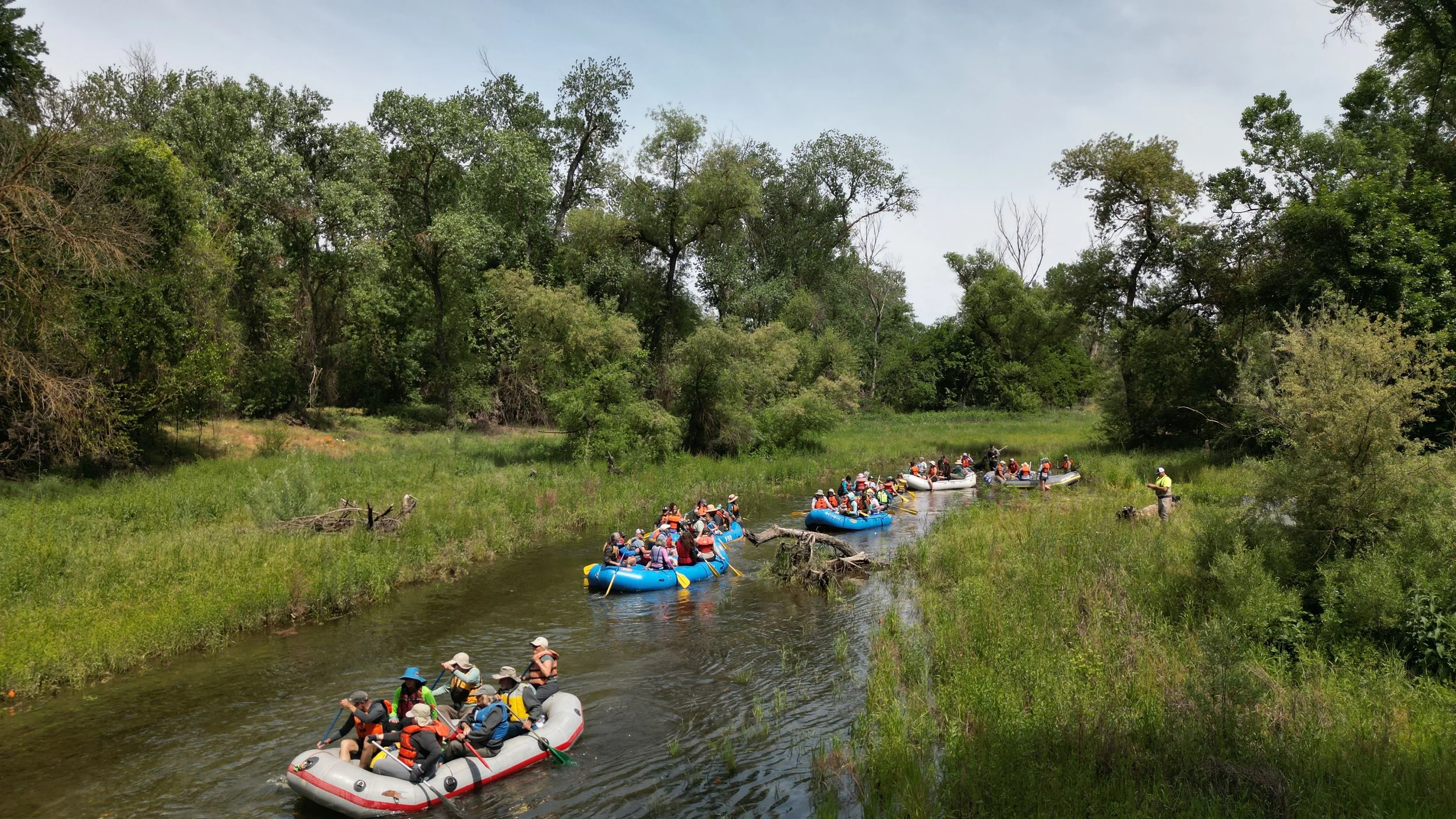
FOR’s volunteer guides, in partnership, took guests down the Lower Stanislaus River. Photo Credit: Jesse Anderson
On May 3rd, more than 50 years after its founding, Friends of the River returned to the Stanislaus River—the river where the organization began. This time, the group rafted a 20-mile stretch of the Lower Stanislaus, below New Melones Dam, continuing its long-standing mission to protect and restore California’s rivers and support community action.
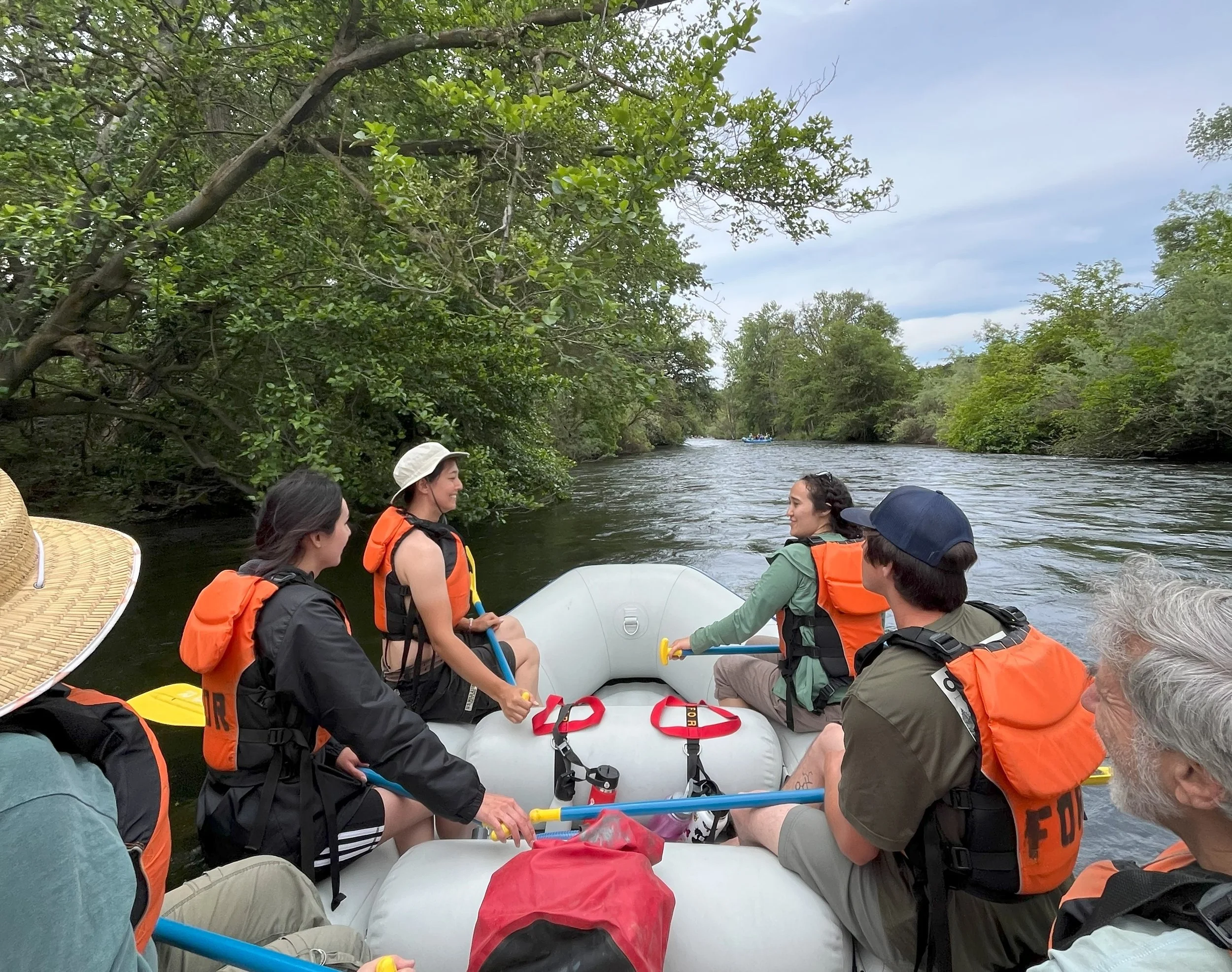
Photo Credit: Spencer Nicholas
In partnership with Restoring the Stanislaus River, the California Native Plant Society, U.S. Fish and Wildlife Service, U.S. Army Corps of Engineers, and Cramer Fish Sciences, FOR helped lead over 40 people down this often-overlooked section of river, from Orange Blossom Recreation Area to downtown Oakdale.
Kevin Wolf, President of Restoring the Stanislaus River (RSR) and his team, organized the trip to bring local community members—landowners, media, legislators, and Indigenous leaders—onto the river. Their goal was to highlight current restoration work on the Lower Stanislaus and build support for expanding efforts to improve fish habitat and overall river health.
Kevin and his organization have been key in raising awareness about these restoration opportunities. The May 3rd trip helped connect local stakeholders directly with the river, encouraging conversations about fish recovery, habitat restoration, and improving public access. FOR was there with rafts, PFDs, and our wonderful team of volunteer river guides.
A River Often Overlooked
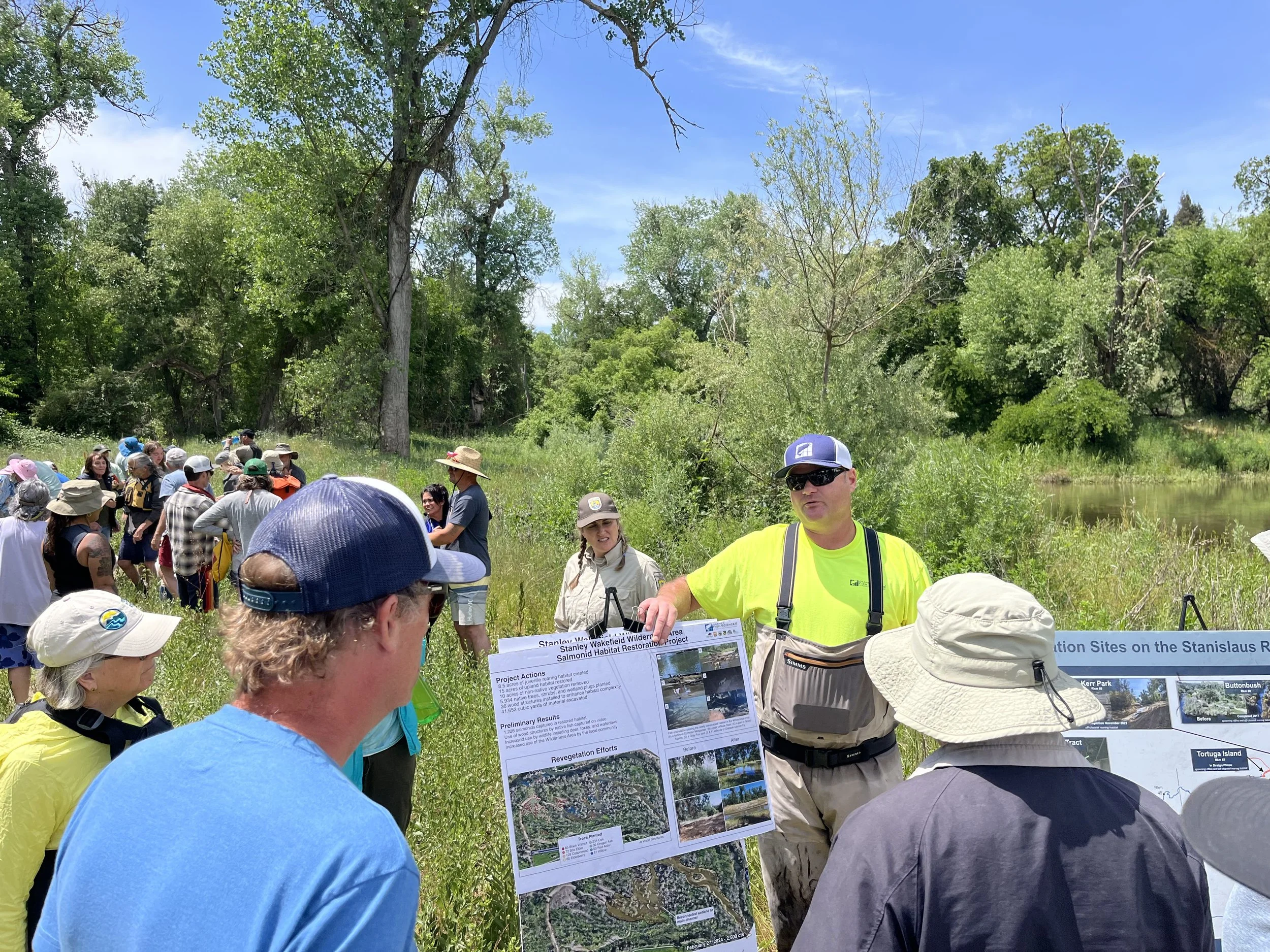
Pictured: Jesse Anderson, Cramer Fish Sciences, Photo Credit: Spencer Nicholas
The Lower Stanislaus isn’t known as a rafting destination, which made this trip all the more meaningful. This stretch of river is often overlooked by both outdoor enthusiasts and local communities. In summer, flows from New Melones Reservoir drop to around 300 cfs—barely enough for fish, let alone rafts.
Once a popular spot for whitewater, the river now runs low and slow, and few think of it as an important ecological resource. Much of the land along the Lower Stanislaus is privately owned farmland, and with limited public access, the river sees little use or attention.
On May 3rd, the river flowed above 1,000 cfs, giving us enough water to raft and explore the new side channels at the Wakefield Restoration Site. We were a mixed‑age group—kids as young as eight, elders over 70—made up of students, landowners, Indigenous community members, scientists, and other locals who care about the river. Each raft became its own “classroom.” People pointed out birds, native plants, and shared stories about why the Stanislaus River matters. Talk flowed freely, mixing concern about threats to rivers with hope for real restoration.
Restoring What’s Possible
The river winds past farmland near Oakdale. At first it looks lush: tall cottonwoods and willows shade the banks, birds are everywhere. But look closer and problems appear—patches of invasive plants, steep channelized banks, no gravel bars, and very little slow water for young fish.

Photo Credit: Spencer Nicholas
Stopping for lunch, we pulled into Wakefield’s calm side channel, a new 70‑acre restoration project that creates the shallow, slow‑moving water salmon and steelhead need. Wakefield is a success, yet more than 70 additional sites along the Lower Stanislaus have been flagged for similar work.
Most riverfront land here is private, so future projects depend on willing landowners. That’s why Restoring the Stanislaus River is building partnerships—with landowners, the U.S. Army Corps of Engineers, and others—so larger restoration efforts can revive fish habitat and open more of the river to the public.