
Raising Pine Flat Dam Could Come at a Cost to the Kings River
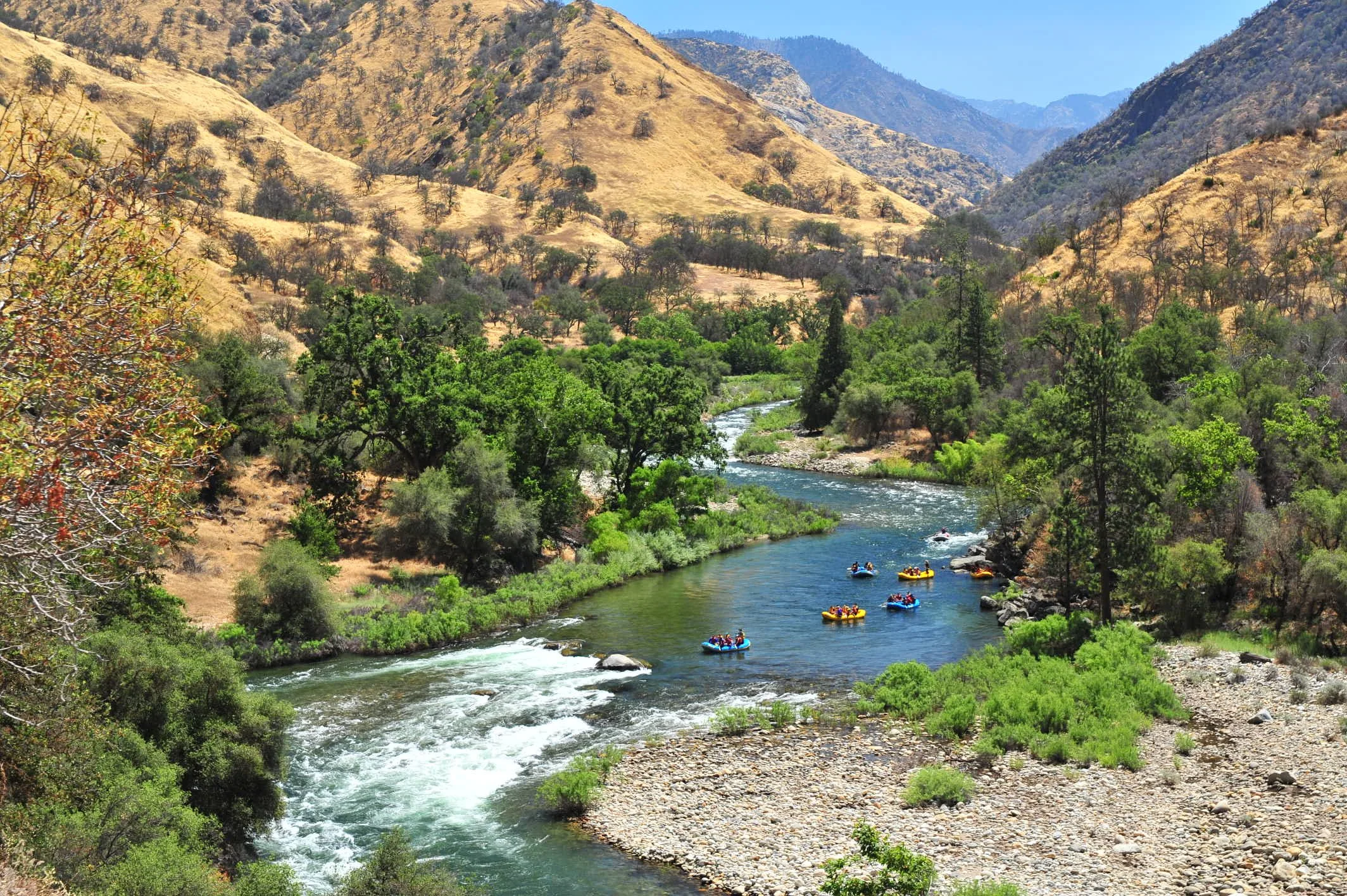
Kings River. Photo by Zephyr
Kings River boaters often remark on the comparative space and nice beaches at the takeout and Forest Service and outfitter river camps at the end of the main rafting run on the Kings River above Pine Flat Reservoir. Coming off the Kings Canyon National Park and national forest high-country snowmelt, the spring/early summer Kings is synonymous with big water coming at you riding a mostly natural hydrograph.
But that beach and stretch of river may be threatened by the not-particularly-friendly politics of the San Joaquin Valley.
This is not new. The Kings has been the locus of consequential fights for river preservation and exploitation — notably the 1940 creation of Kings Canyon National Park, the controversial 1944 authorization of Pine Flat Reservoir, PG&E’s 1950s-era construction of Courtright and Wishon Reservoirs on Maxson and Coolidge Meadows in the NF Kings watershed, the park’s Tehipite Valley and Cedar Grove expansion in 1965, and the 1987 wild & scenic river and special management area designation of much of the main stem and Middle and South Forks above the reservoir.
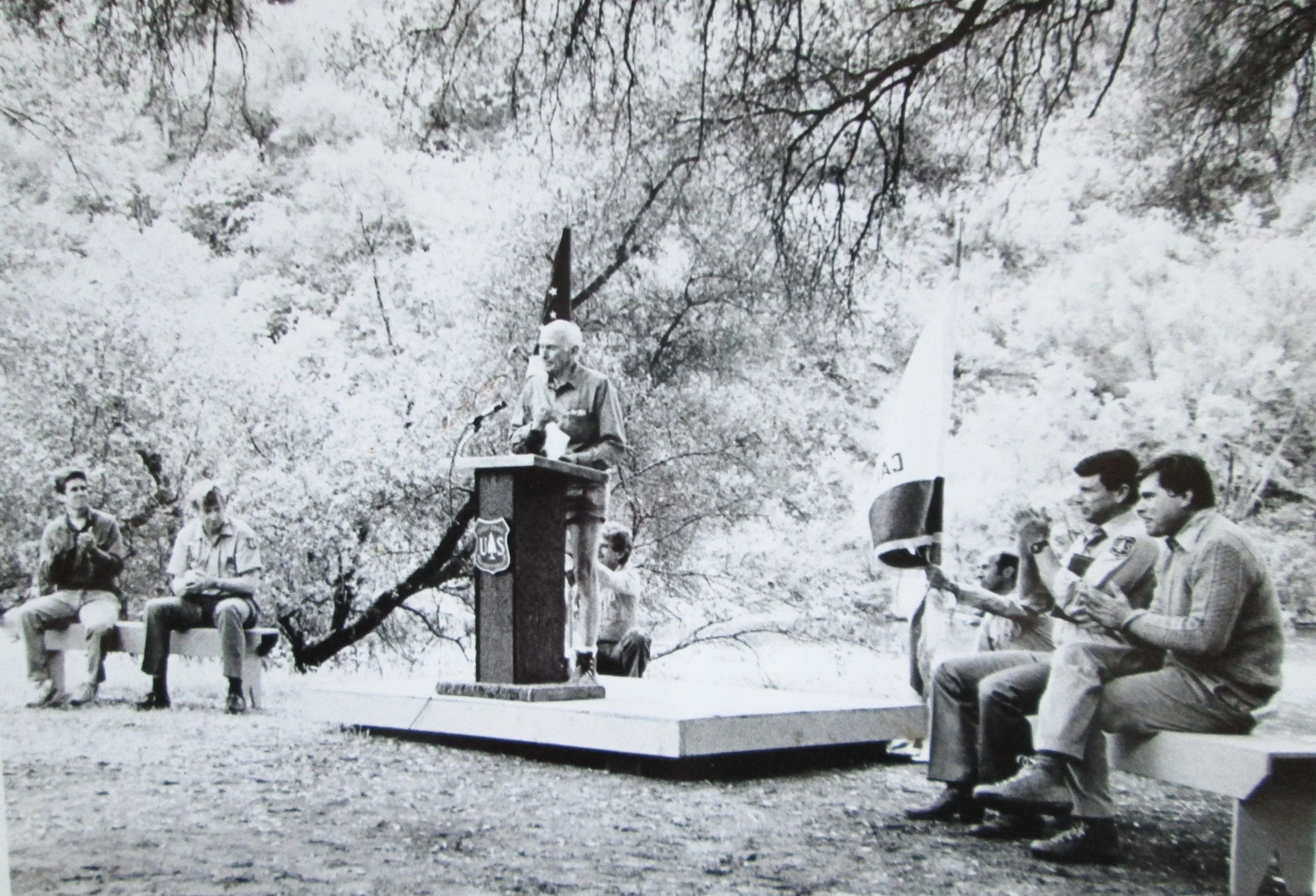
U.S. Senator Alan Cranston dedicating the Kings River Special Management Area, April 4th, 1988
The 1987 effort, however, left twenty vertical feet of the Kings above the reservoir without any institutional protection other than the high cost and limited benefits of raising the dam. This was not a political accident: since the 1970s, the King River Conservation District (KRCD) and the U.S. Army Corps of Engineers has been looking for opportunities to dam more of the Kings River, notably by building the giant Rogers Crossing dam (blocked in 1987) or to raise Pine Flat Dam.
The KRCD advanced it efforts in 2025 with the passage of the 2024 Water Resources Development Act (WRDA), which authorized the Corps to study a 12-foot-high expansion of Pine Flat Reservoir on the Kings River (and expansion of Eastman “Lake” on the Chowchilla River).
See these previous articles on the 2024 WRDA and Pine Flat Reservoir.

Downstream View showing Rooster Tail and area of all three outfitter camps on river left. Photo by Zephyr
Such an expansion will come at a cost to the landscape and uses of the Kings River. The space available for the takeout and camping areas and camps is already tight. Adding 12 feet of elevation to a full “lake” will cause significant disruptions — and even loss of some takeout amenities. More about this when surveys can be conducted.
Nevertheless, KRCD is working to secure federal taxpayer appropriations for the Corps’ Pine Flat study and to take advantage of the Corps’ new 3 x 3 x3 expedited study process — which features a study that is no more than 3 years long, is less than $3 million, and involves three coordinated parallel levels of Corps review(1).
United States Capitol
Presumably, the first vehicle for appropriations will be the FY 2026–27 Energy and Water Appropriations bills making its way through the Congress. More likely will be some kind of omnibus, “mini-bus,” or continuing appropriations (spending) bill that the GOP-controlled lame duck Congress can cobble together before their sine die adjournment in December.
Looking forward, the KRCD believes the cost of building the dam raise might be a billion dollars for the proposed 124,000 acre-feet of new storage space. No doubt that they are expecting the federal taxpayers to pay for most of the project.
Of course, the law of diminishing returns (or declining marginal value) may dictate that only a fraction (perhaps a tenth) of the new storage translating to “new” average annual water stopped from escaping to the San Joaquin River and the ocean. KRCD has not publicized any of their yield calculations as far as we can tell.
However, if KRCD’s bipartisan Congressional patrons commit enough “free” taxpayer dollars, KRCD just might be able to finance it — and slip more of the Kings River landscape under a reservoir and into bathtub-ring status.
This is a project that could use some “birddogging.” If you can help, feel free to contact the FOR office.
Resources
(1) Pine Flat Dam Spillway Enhancement - KRCD