Federal Watch: Little Fish, Big Subsidies, and Federal Cuts Harming Rivers
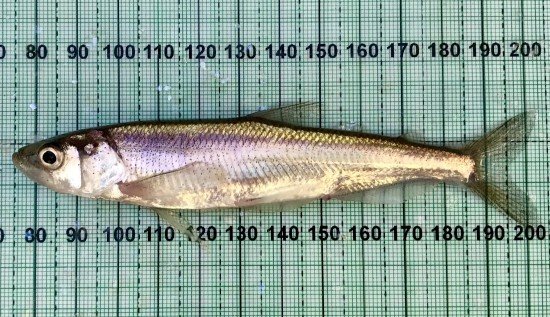
Longfin are in the crosshairs of the new GOP-dominated Congress. Photo Credit: USFWS
By Ron Stork and Keiko Mertz
Longfin in the crosshairs
What is it about fish like Longfin and Delta smelt that draws such ire from people who oppose environmental regulations? Maybe it’s because they’re less well known than “charismatic” species like salmon, steelhead, and sturgeon, and not directly associated with a major commercial or recreational fishery – which makes them easier to scapegoat and attack without as much fear of blowback. Maybe it’s because they’re critical to the health of the San Francisco Bay-Delta estuary ecosystem – and crippling protections for them helps undermine broader protections for that ecosystem. Whatever the reason, Longfin are in the crosshairs of the new GOP-dominated Congress.
The Longfin Smelt is a small, silvery fish native to the San Francisco Bay-Delta estuary, and a few other estuaries on the West Coast. It was once one of the most abundant species in the ecosystem. Now teetering on the edge of extinction, Longfin are a canary in the coal mine for the health of the Bay-Delta. They need cool, brackish (i.e., a mix of freshwater and saltwater), and freshwater habitats. They feed on tiny bug-like creatures at the bottom of the food web, including zooplankton, copepods, and mysid shrimp.
The main cause of their population crash is the unsustainable over-use of water in California—massive diversions take freshwater before it ever reaches the Delta, and water is directly exported from the Delta at pumping facilities. Over-use of water has resulted in a drastic reduction in quantity of freshwater flow, and a change in timing of freshwater flow through the Delta and into San Francisco Bay. As a result, providing sufficient flows is not only the single most important action to restore Longfin, but also benefits a host of species like salmon and sturgeon, and is a critical component of preventing toxic algae blooms and other threats to water quality for humans and wildlife.
On May 1, the House of Representatives approved House Joint Resolution 78 (H.J. Res. 78)(2) authored by Congressman Doug LaMalfa (R-Northern California), which would override the U.S. Fish and Wildlife Service’s July 2024 decision to list the San Francisco Bay population of the Longfin Smelt as endangered under the federal Endangered Species Act. The bill supporters’ claims that it would save huge amounts of water ignored the fact that most of the water that is required to flow to the ocean is necessary to prevent saltwater from intruding into drinking water systems. They also ignored the science behind maintaining adequate flows, including the fact that protections for all endangered species represent less than 5 percent of all flows (9).
The legislation is an attempt to apply the Congressional Review Act (CRA), which gives Congress the ability to essentially veto any regulation issued by an agency within 60 legislative days of issuance of the regulation. Such a “veto” would make it nearly impossible to list the species as endangered again. The bill supporters also ignored the inconvenient fact that the regulation was finalized before the 60 day period would have been triggered last summer. The bill’s fate in the Senate is uncertain, with some doubt as to whether the parliamentary rules regarding the time period for approval will be adhered to, but Friends of the River and its allies have been working to shore up support. Keep your fingers (and fins) crossed.
Saying it with sweet subsidies
Dam builders love taxpayer support, but it’s getting crazier than ever. Last week, the House Natural Resources (Interior) Committee unveiled its portion of the GOP “Reconciliation” bill(3), the so-called “one big beautiful bill.” It’s no surprise that the bill would authorize a couple billion dollars for Reclamation reservoir storage expansion(s) (think Shasta Dam raise)(4) and a half billion dollars for canals (think Friant-Kern & Delta Mendota Canals that have been sinking into the ground as the groundwater is withdrawn to irrigate more acres than sustainable). And no surprise either that it’s all on the taxpayer’s dime.
Read our joint opposition letter to taxpayer dam subsidies in the “big beautiful bill”
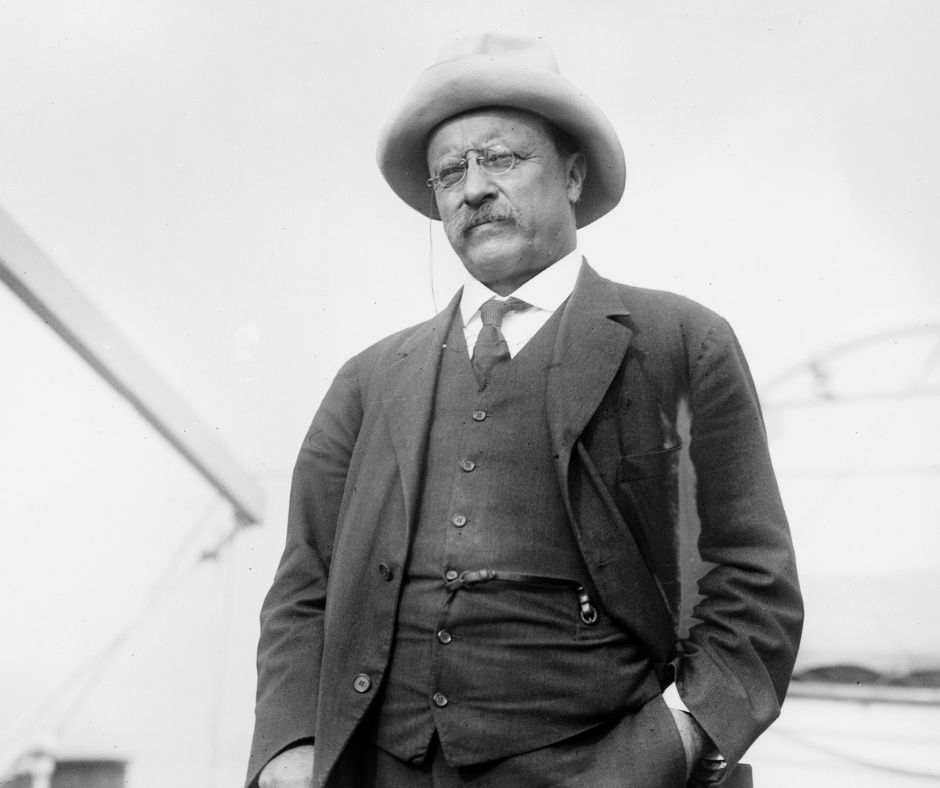
Theodore Roosevelt taken May 1914
Since the Reclamation Act of 1902, passed in the Theodore Roosevelt Administration, the federal government’s position has been at least ostensibly that it should recover some of the taxpayer funds that it had used to subsidize western water projects. Even the Reagan administration pursued cost-sharing reforms for federal water projects in the 1980s. But now Central Valley Project contractors south of the Delta seem to expect taxpayers to pick the whole check, and the new Congress is accommodating them.
WRDA 2024 is the gift that keeps on giving
The Water Resources Development Act (WRDA), a federal bill that is passed every two years, is becoming the vehicle for southern San Joaquin Valley water districts to tee up their dreams of reservoir expansions. It starts with getting the Army Corps – the owner and operator of many federal dams – to do the work for the districts, which is authorized by Congress in the WRDA’s.
Buchanan Dam boosters score big: Many of you will remember that the federal Water Resources Development Act of 2024 (WRDA), at the behest of the Kings River Conservation District, authorized the U.S. Army Corps of Engineers to study a 124,000-acre-foot expansion of the Corps’ 1,000,000-acre-foot Pine Flat Reservoir.
But another San Joaquin Valley water project study got authorized in this bill as well. At the behest of the Chowchilla Water District, the 2024 WRDA authorized a 50,000-acre-foot expansion study of the 150,000-acre-foot Eastman “Lake” to 200,000 acre-feet. Eastman “Lake” is formed by the Corps’ Buchanan Dam on the Chowchilla River. Estimated cost of the project, somewhere around a billion dollars. A study is not a project, but that’s still quite a Congressional lobbying success for the little irrigation district!
Since 2001, the Corps has expanded two of its southern San Joaquin Valley reservoirs (ones on the Kaweah and Tule Rivers), reconstructed another (Isabella Dam on the Kern), and now has study authorizations for two more(5). That only leaves one Corps San Joaquin Valley dam left: Hidden Dam forming Hensley “Lake” on the Fresno River. Of course, someday the Corps might pick off that river one more time as well. All these dams used principally for irrigation were mostly paid for with flood-control dollars — nowadays still offering a 65% federal taxpayer subsidy, although it used to be greater before President Ronald Reagan’s 1986 cost-sharing reforms.
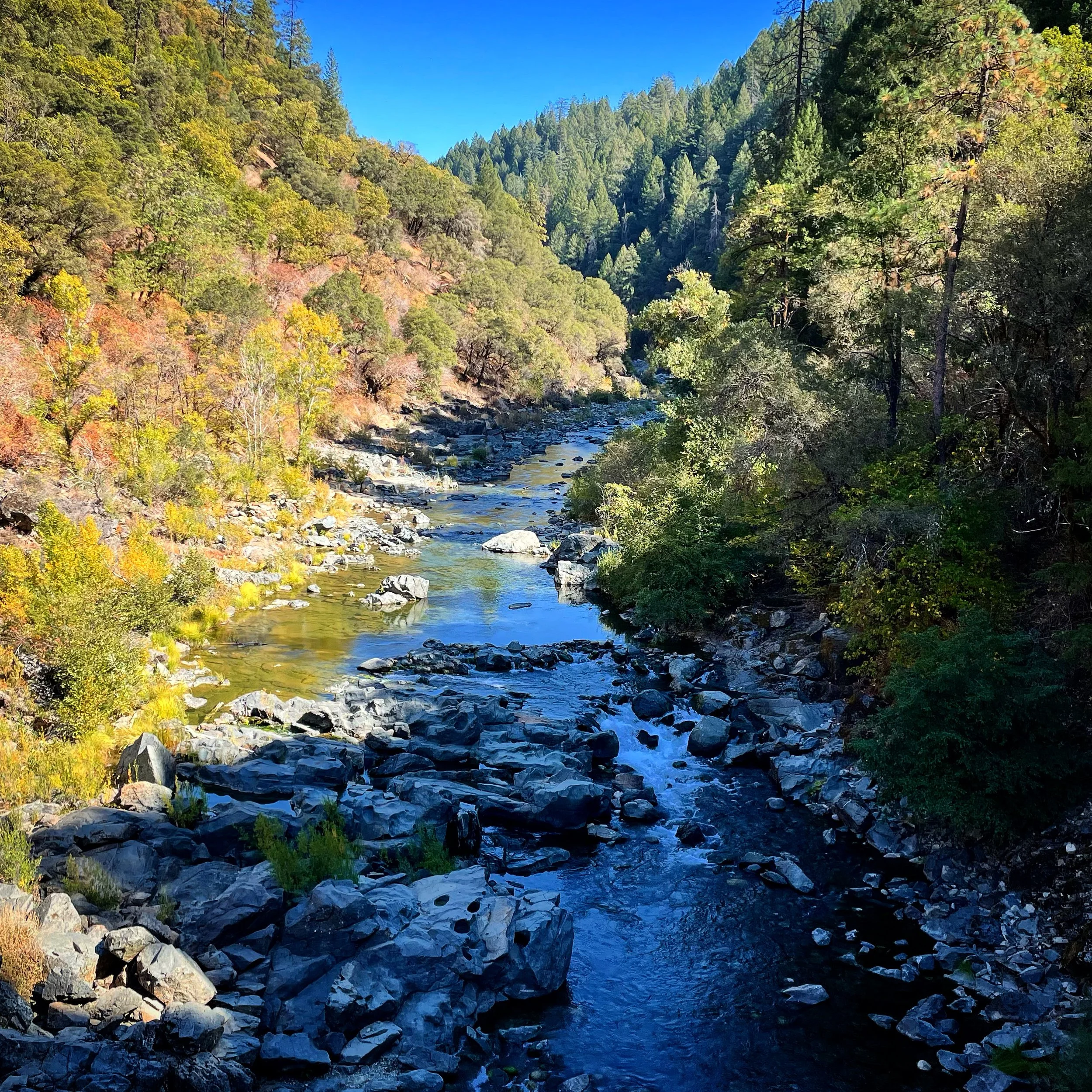
South Fork Yuba River, photo by Daniel Belshe
Priming the federal money pumps. Both these districts took advantage of Section 7001 of the Water Resources Reform and Development Act of 2014 (the WRRDA instead of the WRDA that year). That section requires that the Secretary of the Army submit an annual report to Congress that identifies potential future water resources development studies and projects. The report is eagerly used by the irrigation districts, their lobbyists, and the members of Congress who serve them to help line up Congressional authorizations for the districts’ favorite local federal water projects. It’s a sweet system if you like government handouts.
If these new studies result in on-the-ground reservoir expansions, it shows the political power of the water barons in the San Joaquin Valley.
Too bad the wild & scenic river potential river “farm team” doesn’t get the same kind of respect in our nation’s capital.
Little amenities too
The dramatic reductions in the federal work force range from the hugely consequential to some small but still tangible things. In California, these cuts are now directly affecting our rivers.
Back some four or five decades ago during Friends of the River’s Stanislaus River campaigns, the U.S. Army Corps of Engineers was looking around for ways to “mitigate” for the loss of the “Stan” – then the most heavily used whitewater river in the west coast. Perhaps the Mokelumne River could serve. But back then the East Bay Municipal Utility District (EBMUD) attempted to close its portion of the Mokelumne River with a “no trespassing” sign hung over the river just downstream of the Highway 49 river crossing (6).
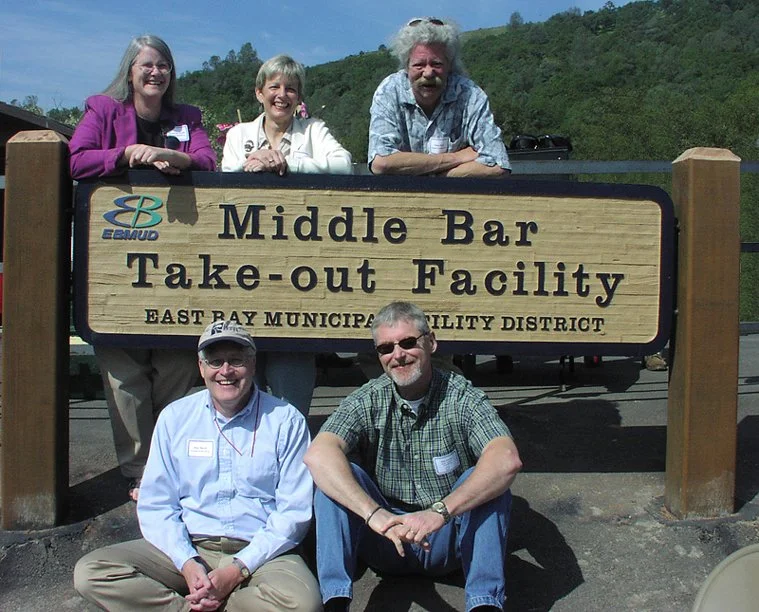
Featured here: Katherine Evatt (FC), Lisa Trankley (CA AG), Pete Bell (FC), Ron Stork (FOR), Rob Alcott (EBMUD) at the 2003 dedication of the EBMUD takeout
The Corps moved on from picking a fight with EBMUD, and after thirty more years of work, river activists finally freed the “Middle Bar” Mokelumne, memorialized by an EBMUD takeout in the upper end of Pardee Reservoir (7). The U.S. Bureau of Land Management (BLM) later followed with a pleasant parking lot put-in/takeout called Big Bar near the Highway 49 Bridge.
Alas, amidst the turmoil within the federal government, the BLM has closed its Big Bar parking lot. For now, it appears that citizens will have to cover the janitorial duties associated with toilets and trashcans to keep Big Bar open — traditional federal services now apparently considered to be “waste, fraud, and abuse” in the minds of some new leaders in our federal government(8).
Perhaps next our national parks?
Also read: Vandalizing the federal government by Ron Stork
Resources
(3) Proposed “Reconciliation” bill language
(4) Shasta Dam raise could move forward under Trump - CalMatters
(6) Mokelumne “No Tresspassing” sign, and resolution - SacBee
(7) Middle Bar Takeout Opens – Stockton Record