From Rapids to Resistance: Inside FOR’s 2025 Guide Activist Training
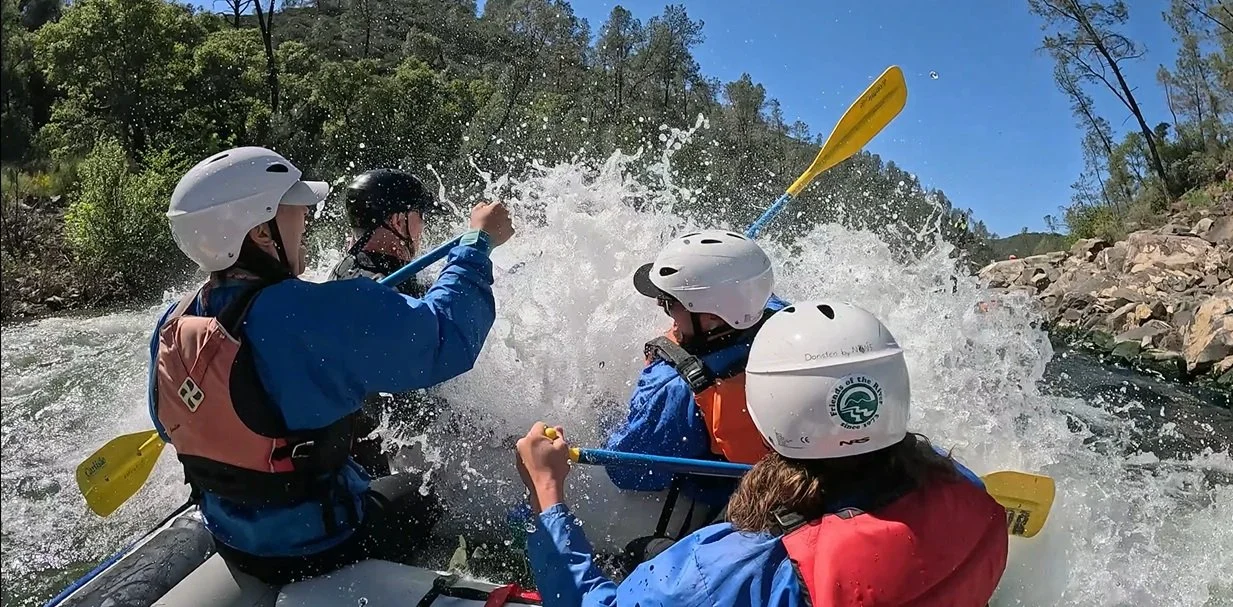
In April of this year, more than 30 people gathered for 9 days on the banks of the South Fork American River for FOR’s 2025 Guide Activist Training—a program designed not just to teach river skills, but to build a powerful, connected community of river advocates. The group was a mix of new and old faces: some were entirely new to FOR, others had been guiding and volunteering with us for decades.
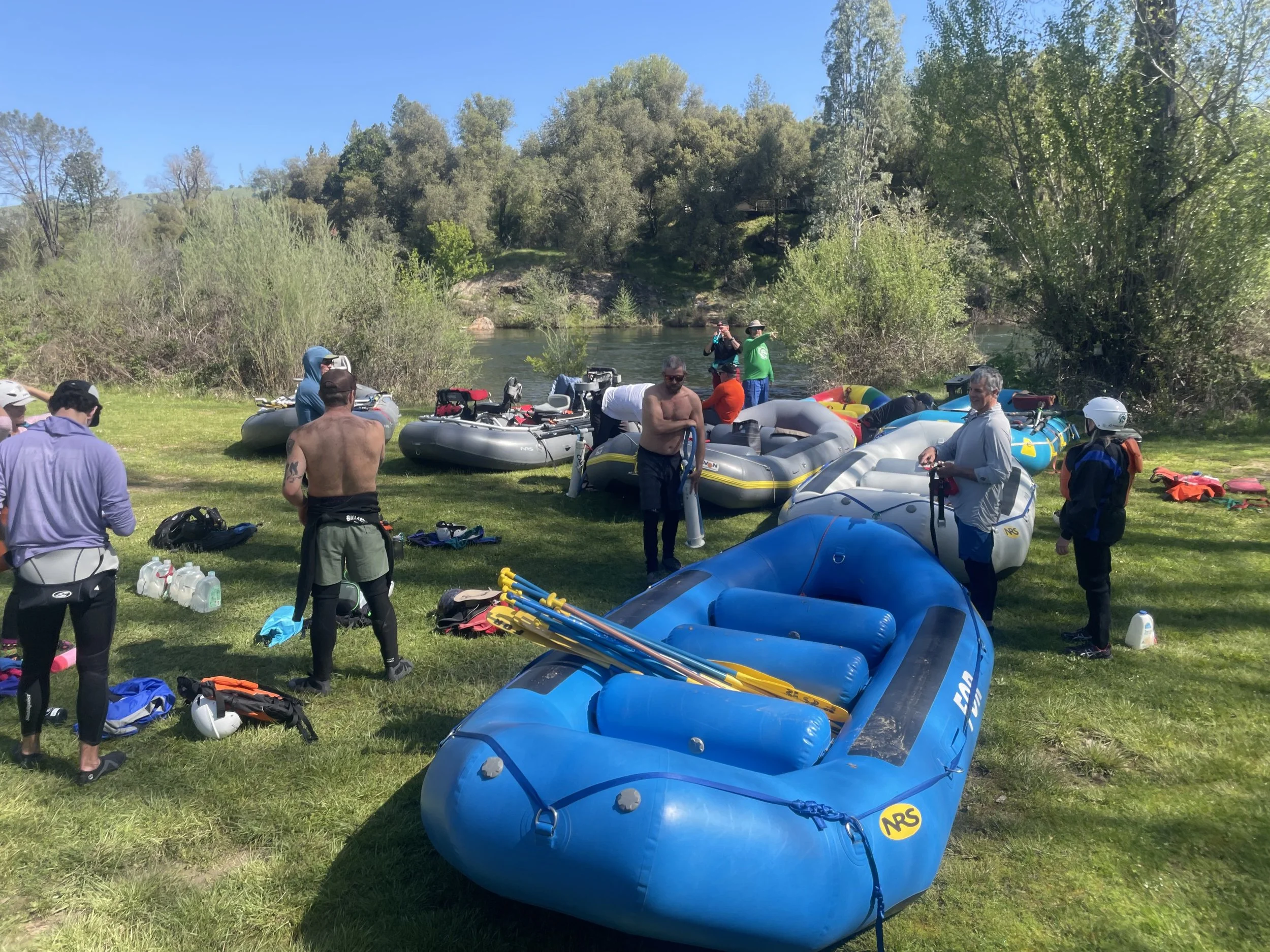
The trainee team prepping rafts each morning.
The 2025 class of trainees (12 total) travelled from across the state to learn whitewater guide skills, activist skills, and to build community. Some had never stepped foot in a raft, let alone into the guide seat.
They ranged in age from their early-twenties to late-fifties, and represented a wide variety of professional and personal backgrounds, including non-profit organizers, fish biologists, federal agency employees, hydrologists, attorneys, and more.
The cumulative knowledge of water and environmental issues was impressive. Even greater was the cumulative motivation to advocate on behalf of California’s rivers, and the drive to learn and cultivate effective tools for growing citizen action.
First Steps on the River
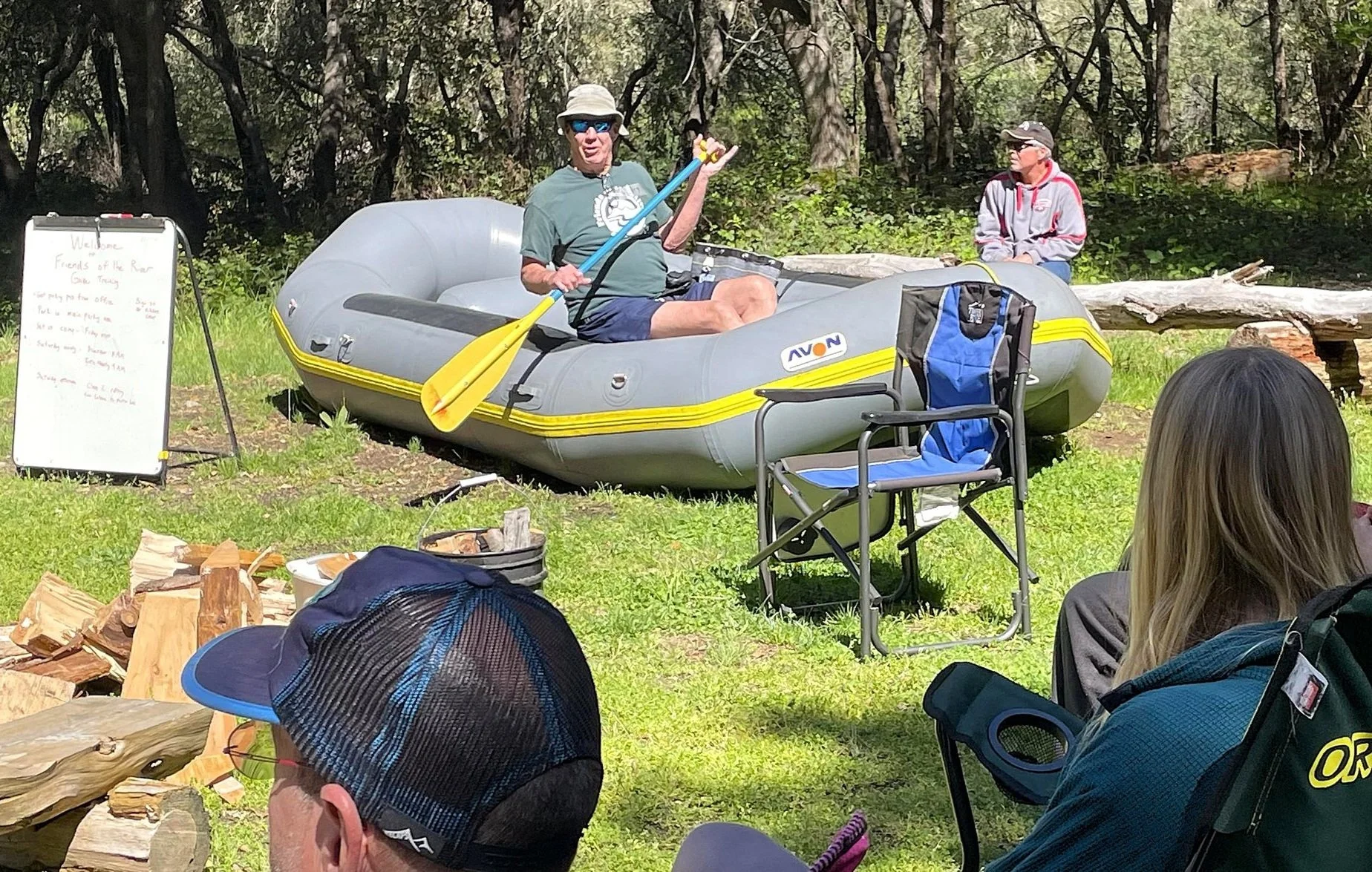
FOR’s guide school trainers conducted lessons on dry ground and on the water, teaching paddle strokes, crew commands, and talking their trainees through Class II rapids.
As the week got rolling, the trainees experienced a lot of firsts: their first time sitting in a raft, their first time falling out of a raft, and their first time flipping the aforementioned raft and sending their entire crew into the river.
The days were full. Trainees learned to be “river ready” soon after breakfast. They took turns puzzling over shuttle logistics and gear inventory. They asked each other for help, and called out for assistance carrying boats, counting PFDs, and assigning lead paddlers. Within 24 hours of arriving, they were already learning to rely on one another.
As training progressed, the class tackled bigger water and faster currents. Having just recently grown comfortable in the mellow, Class I and II water, the trainees were now thrown into navigating much larger rapids. “The Gorge Run” presented new challenges and new opportunities for the trainees to test their skills.
Learning the Ropes—And the Rapids
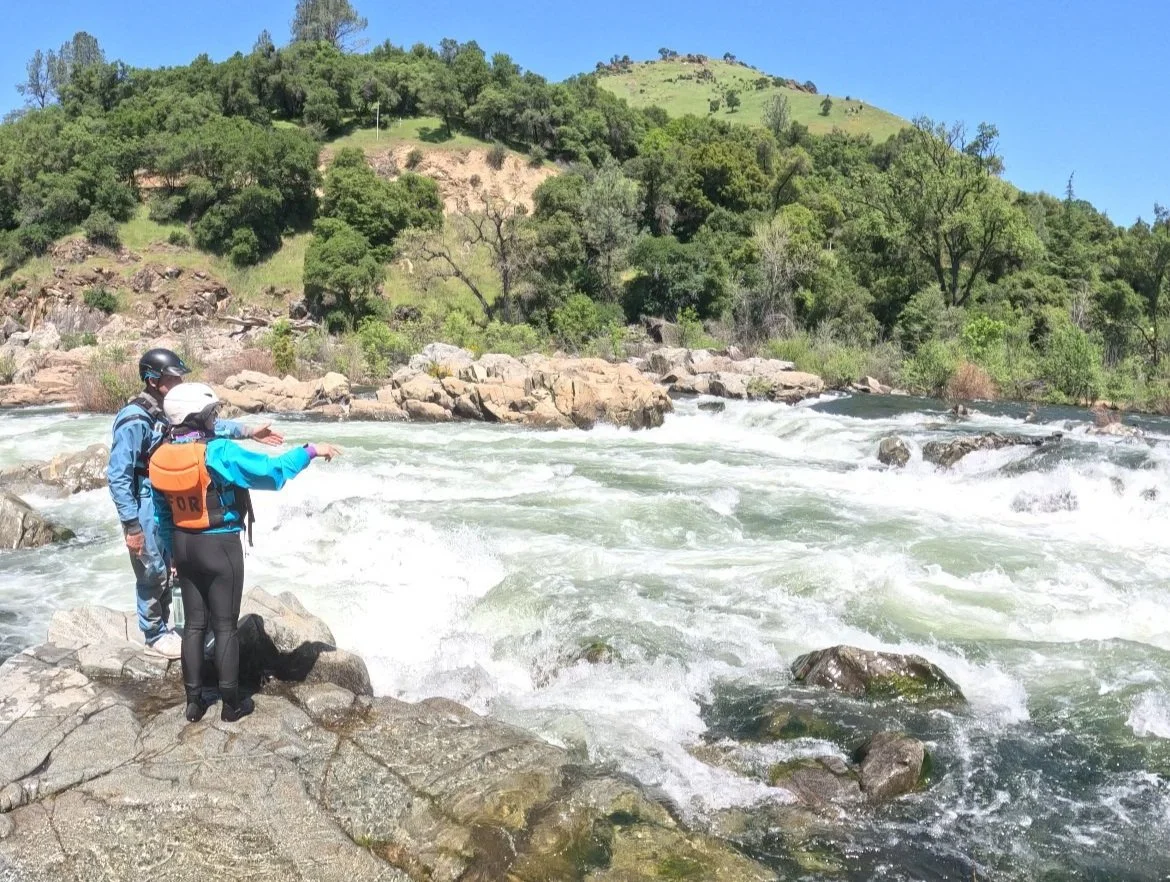
By mid-week the trainees – some with only four days of cumulative rafting experience – met their biggest challenge yet: the “Chili Bar” run. Named after the dam that controls the flows of the South Fork, Chili Bar is the uppermost run on the river, and the most challenging. With intimidating rapids like “Meat Grinder” and “Trouble Maker,” the day was welcomed with anticipation.
The evenings were dedicated to a different kind of learning. Trainees engaged in guided conversations on environmental and social movements, organizing theory, and the threats facing California rivers.
They heard from FOR’s policy staff and listened to stories about past river advocacy work. The diverse backgrounds of the group made for varied, dynamic conversations and the chatter often lingered long after the prompts were put away.
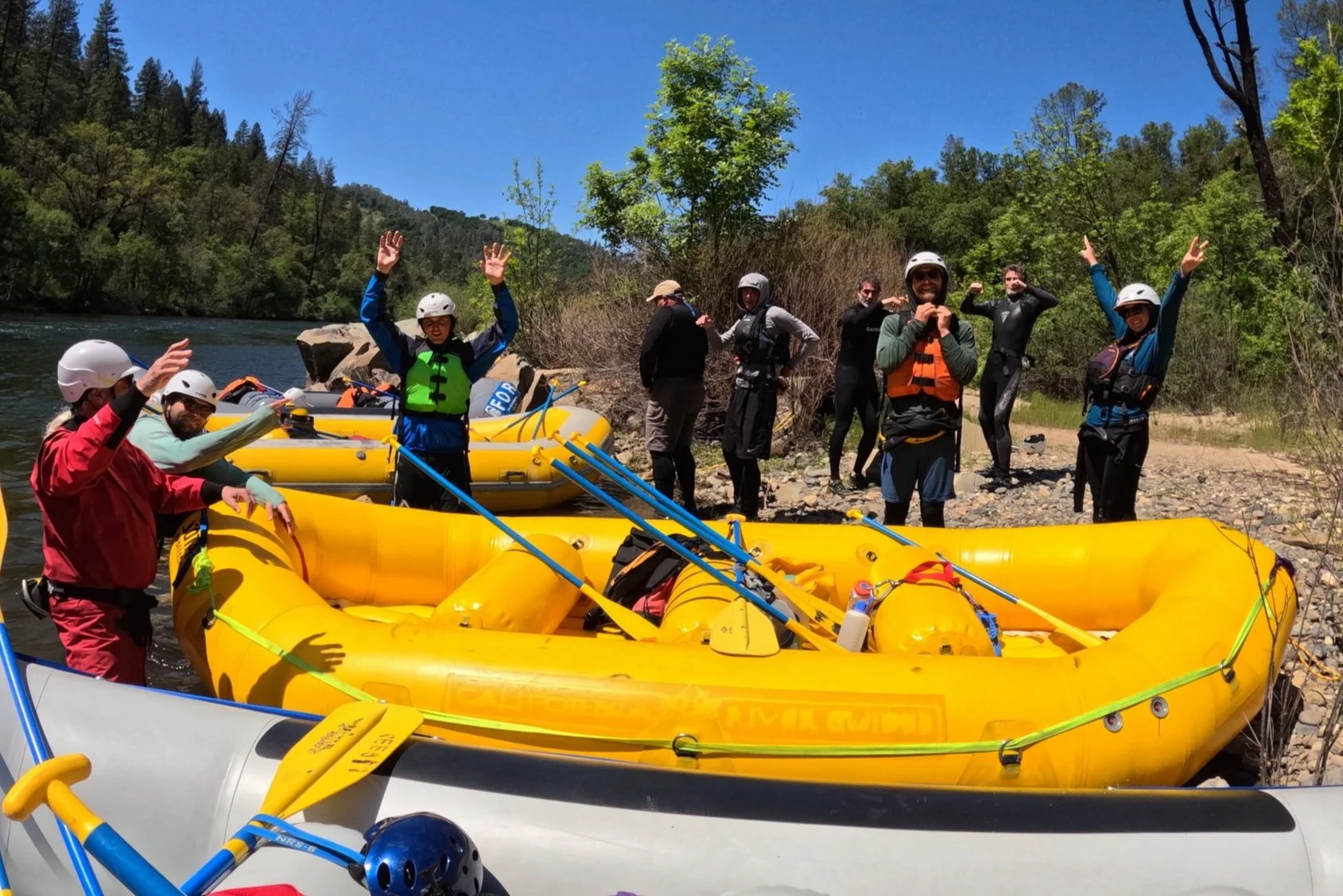
By the end of the week, the trainees had progressed as guides, as advocates, and as friends. The trainees were gaining confidence in the guide seat, and in working with their crew as a team. The final three days of training – all of them on the Chili Bar run – were raucous days filled with laughter and cheering as trainees confidently navigated the most difficult rapids on the South Fork.
All of this hard work culminated with a guest day, where trainees welcomed friends and family join them on the river, and had an opportunity to show off their new guide – and advocacy – skills.
More Than a Training: Building Power Through Community
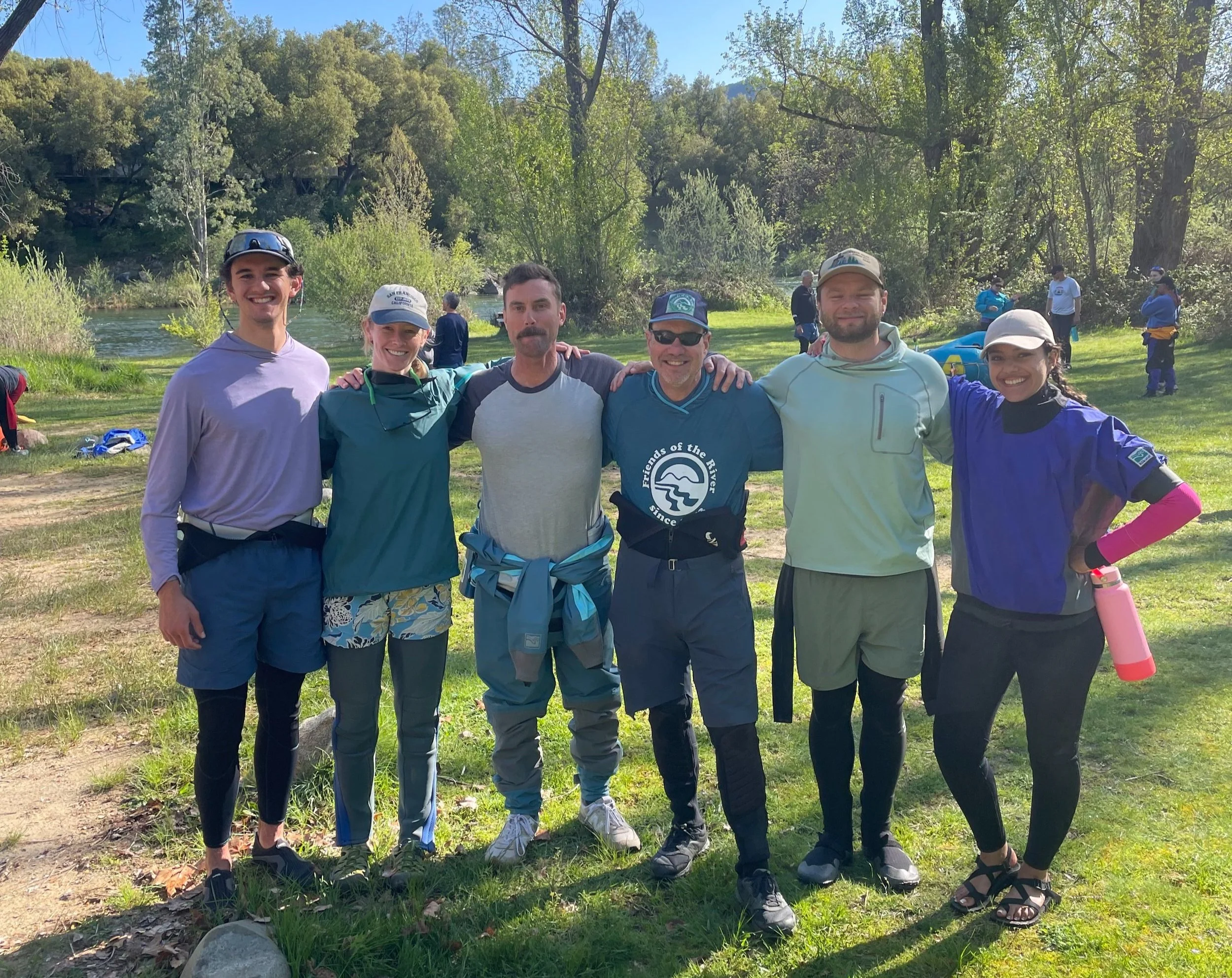
The 2025 Guide Activist Training graduates have now been welcomed into the FOR family, and they will play a critical role in supporting our River Program this season. But their impact goes beyond guiding rafts.
In today’s political climate—and as the impacts of climate change intensify—building community is essential. The threats facing our rivers demand not only technical expertise and strong advocacy, but also deep trust, connection, and collective purpose. That’s what the Guide Activist Training is all about.
Our River Program doesn’t just train whitewater guides; it builds a community of river defenders who are ready to take action, support one another, and grow the movement. In this moment, building community is building power.
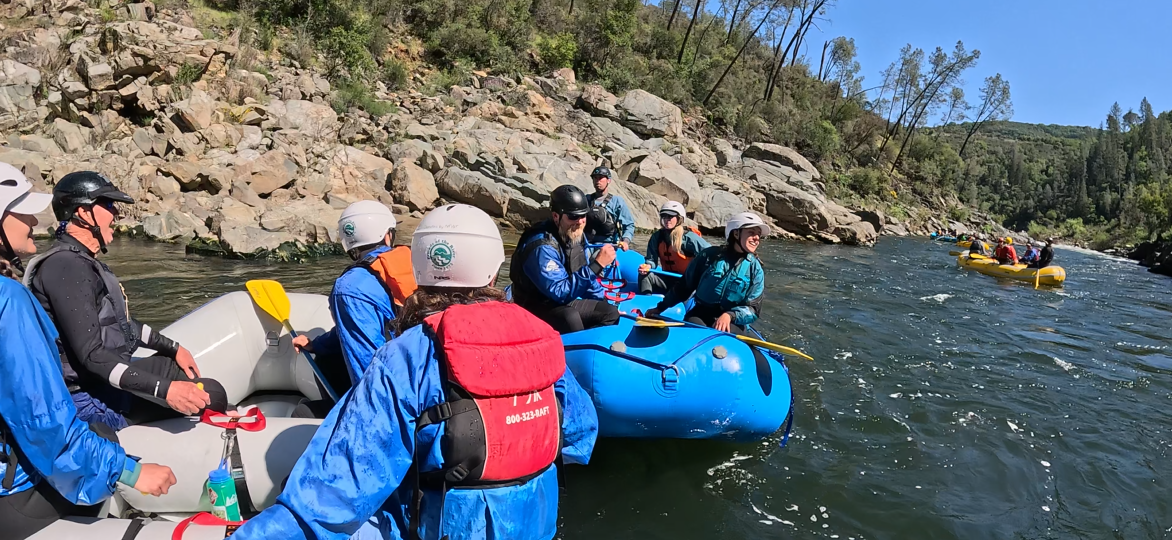
Follow FOR on social media and keep an eye out for upcoming RA articles for updates on what FOR has in store for this river season, and to see our 2025 GAT trainees in action.