ACTION ALERT: Speak Out for the Bay-Delta and Stop the Voluntary Agreements
Urge the State Water Board to Change Direction and Reject the Voluntary Agreements, and Take the Last Chance to Set Strong New Flow Standards for Rivers and the Bay-Delta
In October, the State of California is set to make a final decision on updating the water quality standards for the endangered San Francisco Bay-Delta estuary and the rivers that feed it. Instead of improving protections for species and habitats at high risk of extinction, the key regulator, the State Water Resources Control Board, is instead expected to approve the Voluntary Agreements, the Newsom Administration’s proposal to substitute money and habitat for new flow requirements. The Board will hear public comment on October 28 and 29, and make a decision by October 30.
What’s Being Proposed: The Bay-Delta Plan and Voluntary Agreements
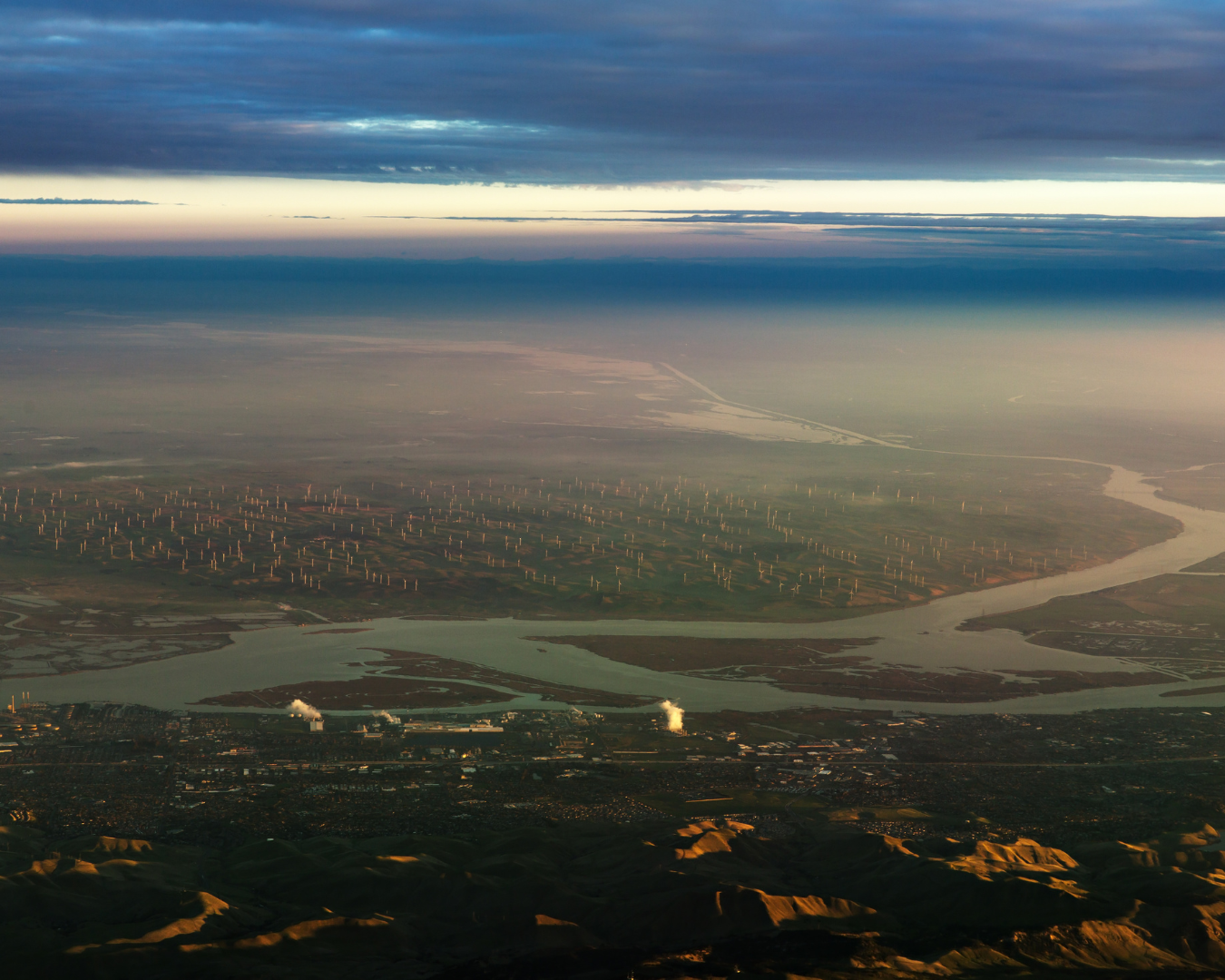
Sacramento River Delta
According to the final draft of the regulations (known as the Bay-Delta Plan), released in August, the State Water Board is proposing to adopt the so-called “Voluntary Agreements” (VAs). The Voluntary Agreements would give water agencies—some of the largest water users in the state—a pass from having to comply with pending new flow and water quality regulations that are needed to prevent the collapse of the Bay-Delta and Central Valley river ecosystems.
The current regulations, last updated in 1995, have failed to prevent:
the dramatic decline of numerous native fish and wildlife species that depend on adequate flows,
the increasing occurrence of toxic algae (which are a result of low flows),
the historic multi-year closure of the commercial salmon fishery, and
the loss of tribal and cultural uses that require healthy, flowing rivers.
Science Says: We Need Much Higher Flows
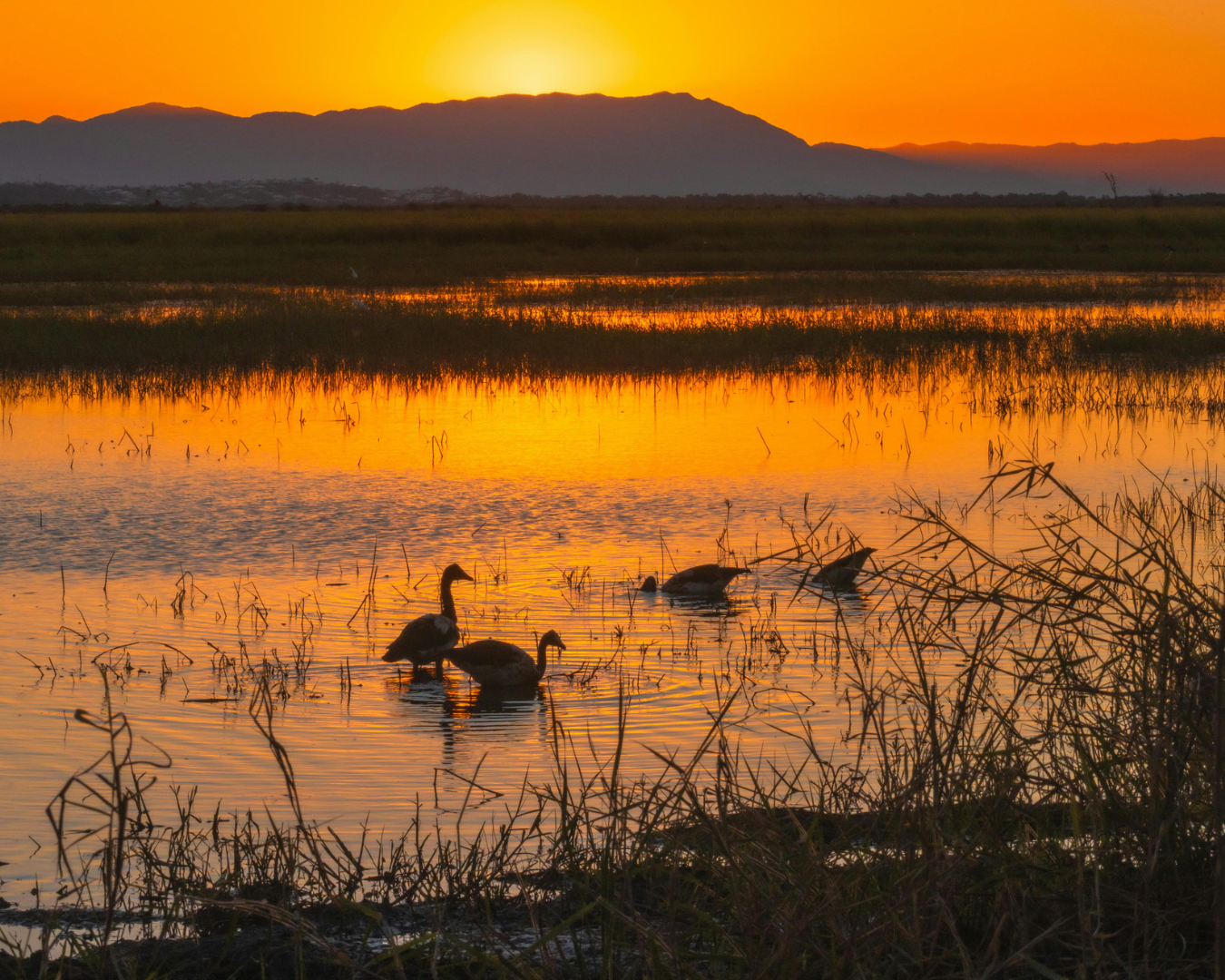
Sunset on the Bay-Delta Estuary
On average, only about half the runoff (water that flows/drains) in the Central Valley watershed reaches the Bay each year. Overwhelming scientific evidence confirms a strong relationship between flow and ecosystem health, and that evidence supports requiring up to 75% of runoff to make it all the way through the system.
But the update of the Bay-Delta Plan has been delayed for over a decade to accommodate Voluntary Agreement negotiations between state agencies and water users. (The Board adopted a 40% flow requirement for San Joaquin River Basin runoff to the Delta in 2018 but has not implemented it yet. The current draft update covers Sacramento River Basin flow into the Delta, and outflows to the Bay).
In previous drafts of the Bay-Delta Plan, the Board had proposed a 55% flow requirement (within an adaptive management range of 45-65%). The final draft undermines even the modest protections in previous drafts in two ways.
#1 Voluntary Agreements Would Gut Real Protections
First, the VAs would be the “preferred alternative” – that is, VA participants would not have to comply with new regulations for at least eight years but instead implement their own set of actions. (A regulatory backstop would apply to non-VA parties and if VA parties fail to implement actions – but see next section to how that backstop has been weakened). The VAs would provide little or no additional flows above the status quo; instead, they would pursue habitat and other “non-flow” projects that don’t address the root causes of the Bay-Delta crisis (plus, aquatic habitats need sufficient flow to be effective anyway) and the VAs would also rely on major taxpayer subsidies to help foot the bill.
Understandably, most water users are signing up for this giveaway—essentially, a pass to regulate themselves. Not coincidentally, the Newsom Administration and water users are also pushing the VAs because stronger regulations would make it much harder to justify construction and operation of new water mega-projects like the Delta Tunnel and Sites Reservoir that only make sense if water diversions are allowed to increase.
Ironically, some of the biggest VA parties – the US Bureau of Reclamation and its largest agricultural water contractor, Westlands – have said that they will withdraw from the VAs if the Board includes a regulatory backstop requirement. It’s clear that the Newsom Administration’s collaborative approach only works for water users if they get everything they want, and the state is prevented from enforcing protections for the environment and water quality.
#2 “Water Supply Adjustments” Would Undermine Flow Goals
Second, the State Water Board is proposing “water supply adjustments” to the 55% requirement, which would effectively gut it in most years. It would automatically cap flows at 55% in the wettest third of years, 45% in the middle third (when natural flows are most altered), and 35% in the driest third (when species and water quality are most at risk).
What Friends of the River Is Doing & How Your Voice Can Help
Friends of the River’s scientists and policy experts submitted extensive written comments on the final draft in September and will testify at the upcoming hearings. AND we also need your voice to:
Tell the State Water Board to
Adopt strong new science-based protections that require increased flows (no less than 55-65% of runoff) for Central Valley rivers and the Bay-Delta estuary in most years.
Reject the proposed Voluntary Agreements because they will maintain the unacceptable status quo — where massive diversions and exports are driving species to extinction, causing toxic pollution, destroying the fishing industry and impacting tribal and cultural uses of water.
Reject proposed “water supply adjustments” to the runoff standard that would prevent increased flows most of the time.
Take Action: Make Public Comment
Public comment is one of the most powerful ways to influence this decision. The State Water Board needs to hear directly from individual citizens like you.
How to participate:
Decide whether you will give public comment in writing, in-person or virtual
In-person or Virtual Comment:
Register to speak HERE by completing a speaker card no later than October 27th
Choose one day to comment: October 28 or 29
Speakers are limited to 3 minutes and may only speak on one day
The Clerk to the Board will email you participation details one day before your chosen hearing
REPLY to this email and let Friends of the River know you are registered
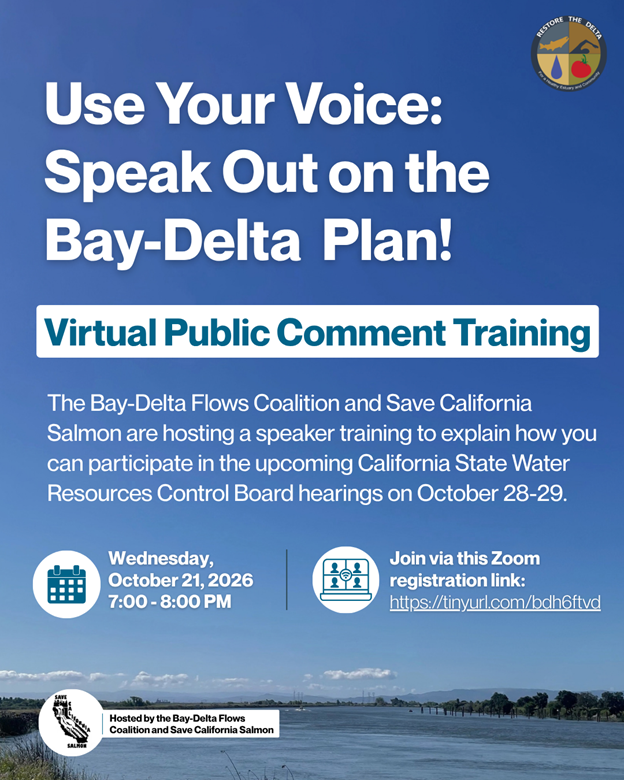
Learn more: Attend a Training
Want help crafting your comment or understanding the issues more deeply?
FOR is partnering with Restore the Delta, Save California Salmon, Yosemite Rivers Alliance and others.
REGISTER HERE for the October 21 on-line training session, where FOR’s experts and our partners will offer tips for how to make effective public comments and answer your questions.