Trouble in Hydroelectric Dam Paradise
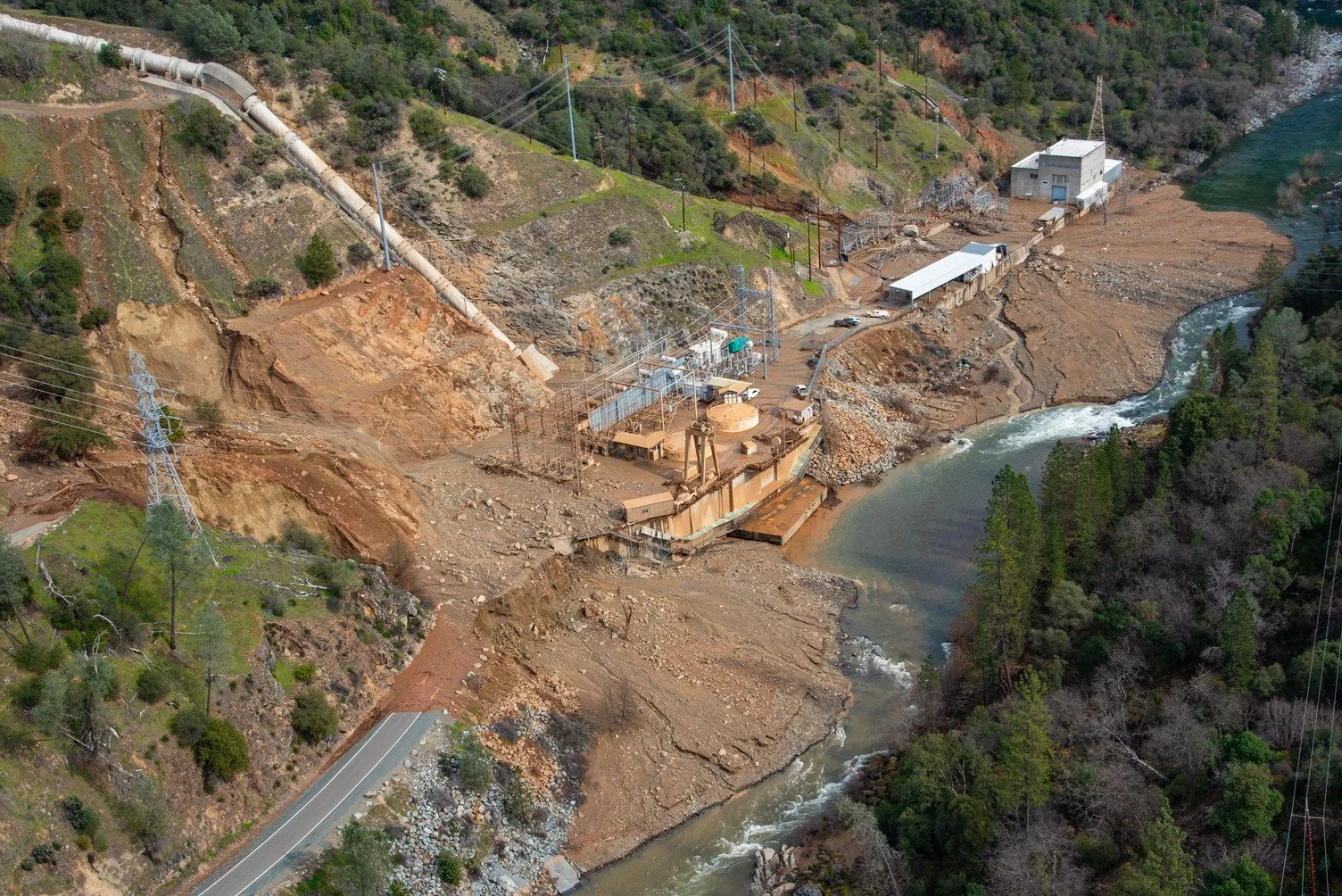
The Colgate Powerhouse penstock failure on the North Yuba River. Credit: YCWA
It started on a quiet February day. After taking their big powerhouse offline since last fall to replace an older section of their power penstock (a large pipe that moves water into a powerhouse), Yuba County Water Agency finally completed the replacement. The feed-in tunnel was filled with water, and the valve to the penstock was opened.
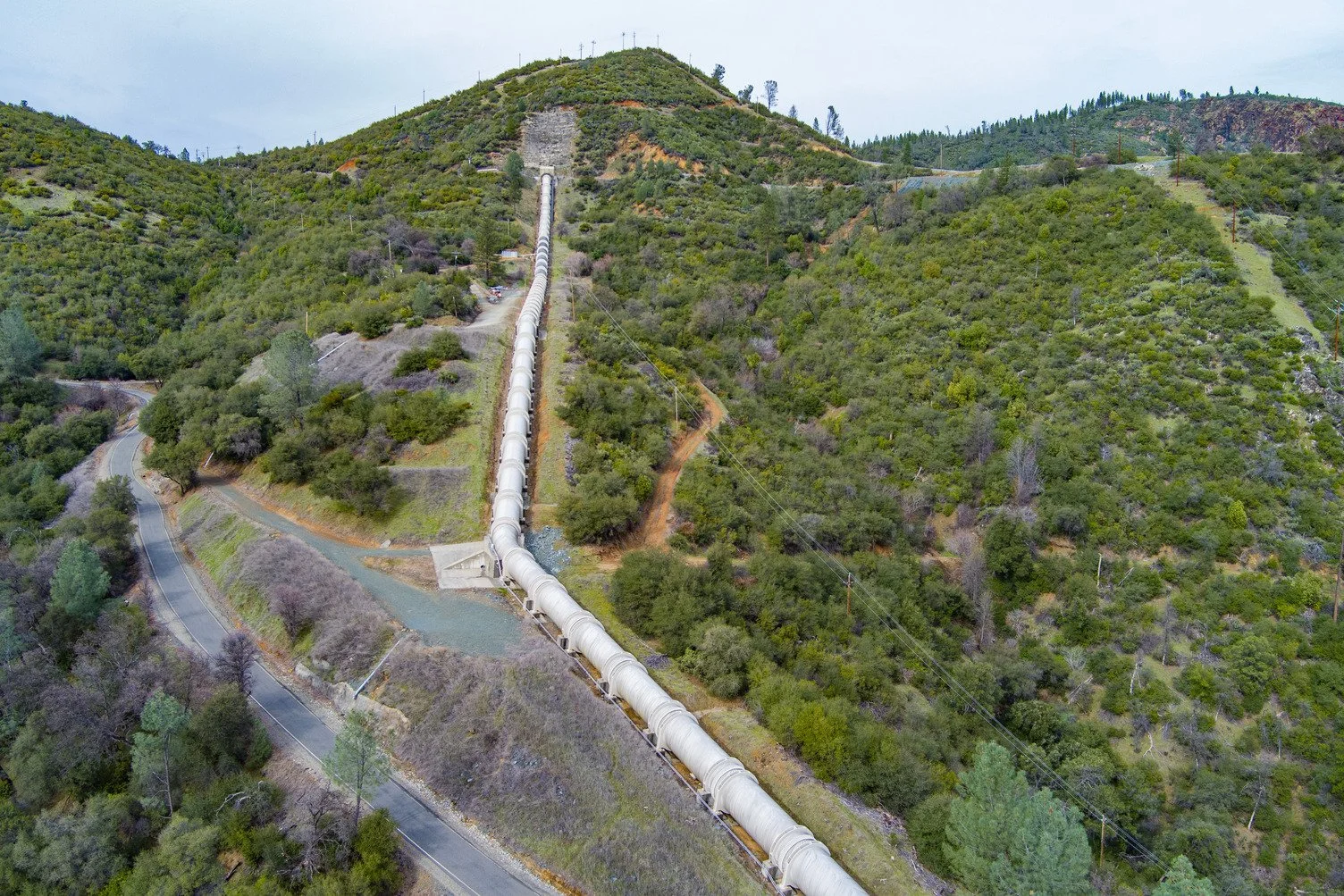
A quiet day on the hill. Credit: YCWA
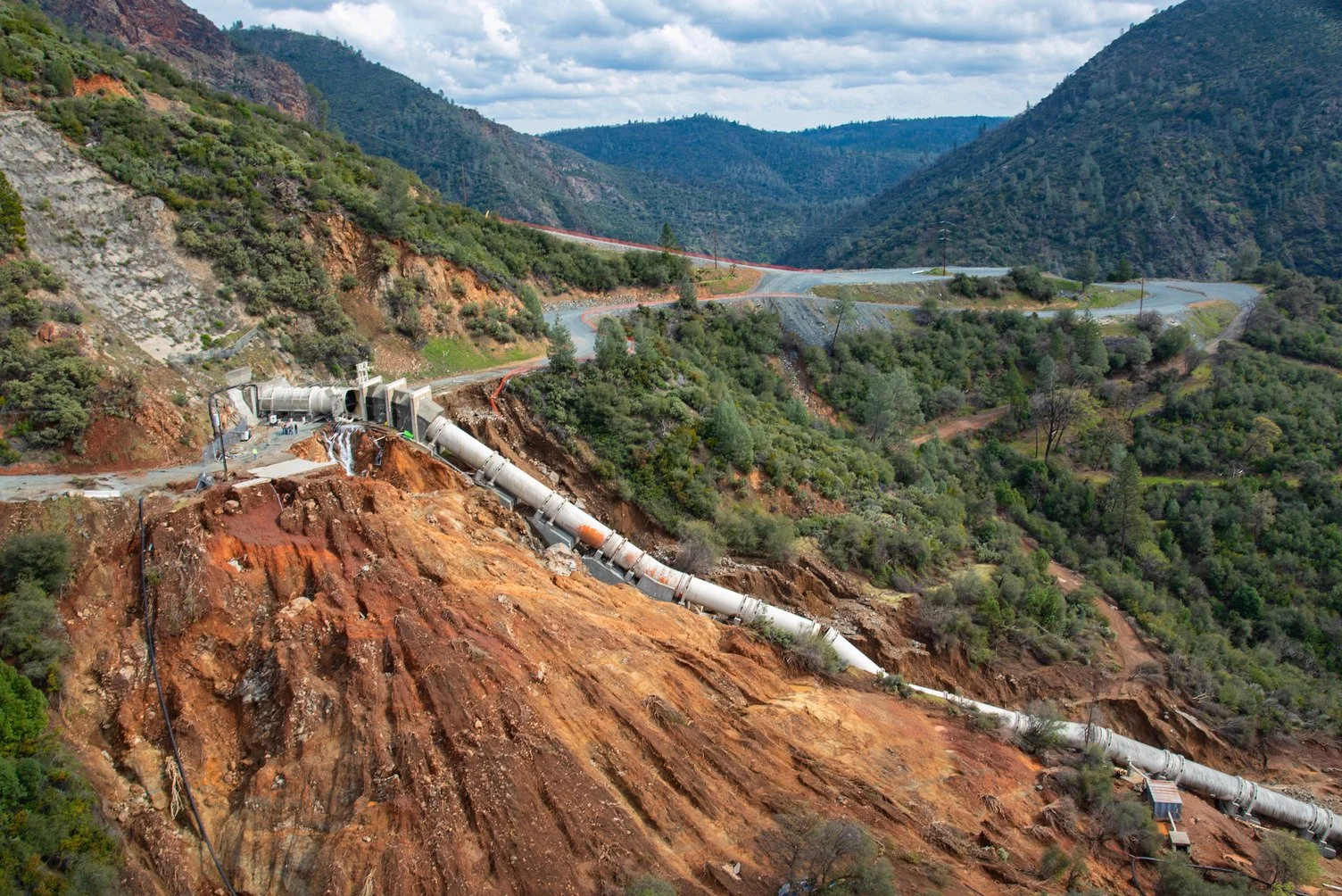
Penstock failure and erosion to hillside. Credit: YCW
Suddenly, the penstock failed catastrophically, and the 400-acre-feet of water in the tunnel violently disgorged down the steep slope. On the way, more of the penstock failed and penstock foundations uncovered and undermined.
Access roads were washed away. Down at the base of the canyon, a debris field washed through the switchyard and over the underground powerhouse and into the North Yuba River.
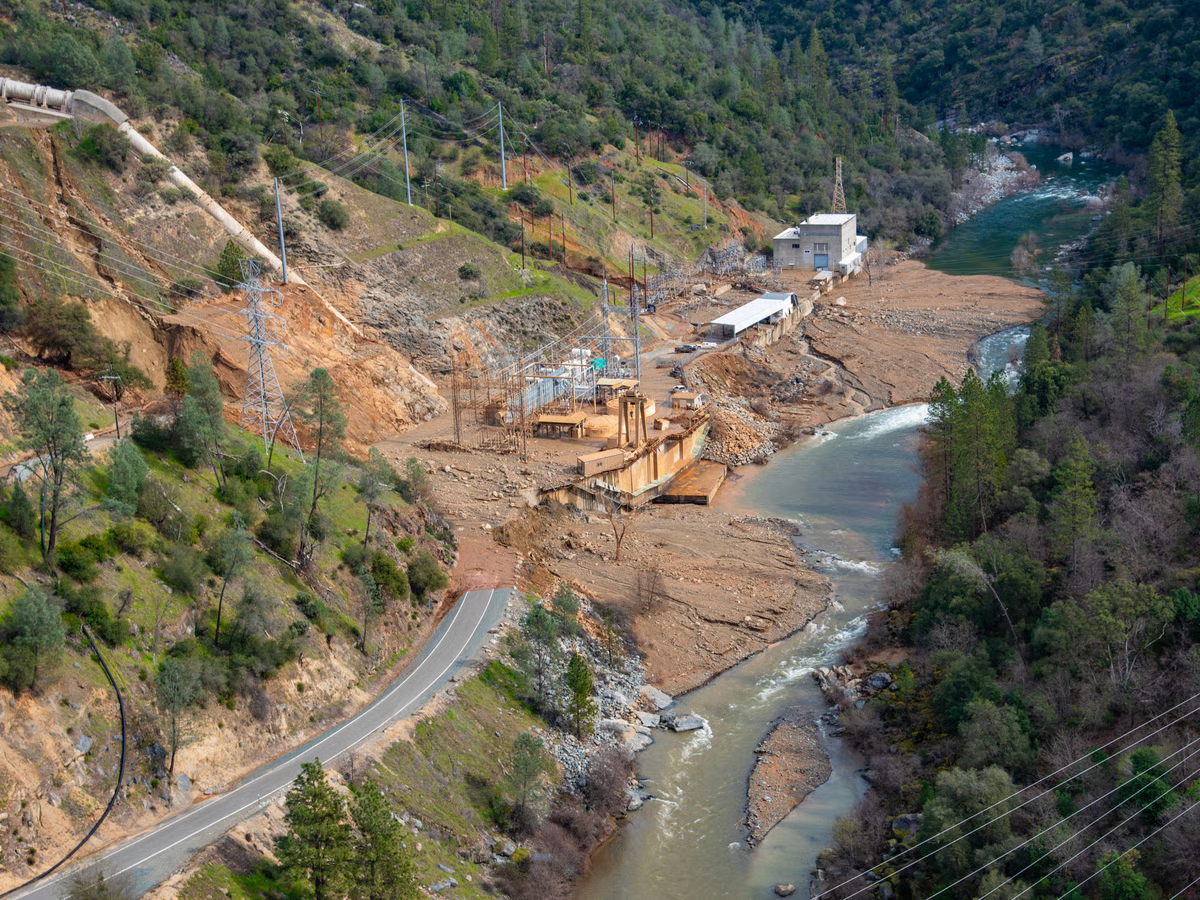
Access roads were washed away, debris pummeled the powerhouse, the river channel was altered. Credit: YCWA
Workers were stranded. Some were able to hike out, others took a helicopter ride. One was hospitalized, although he now is recovering at home.
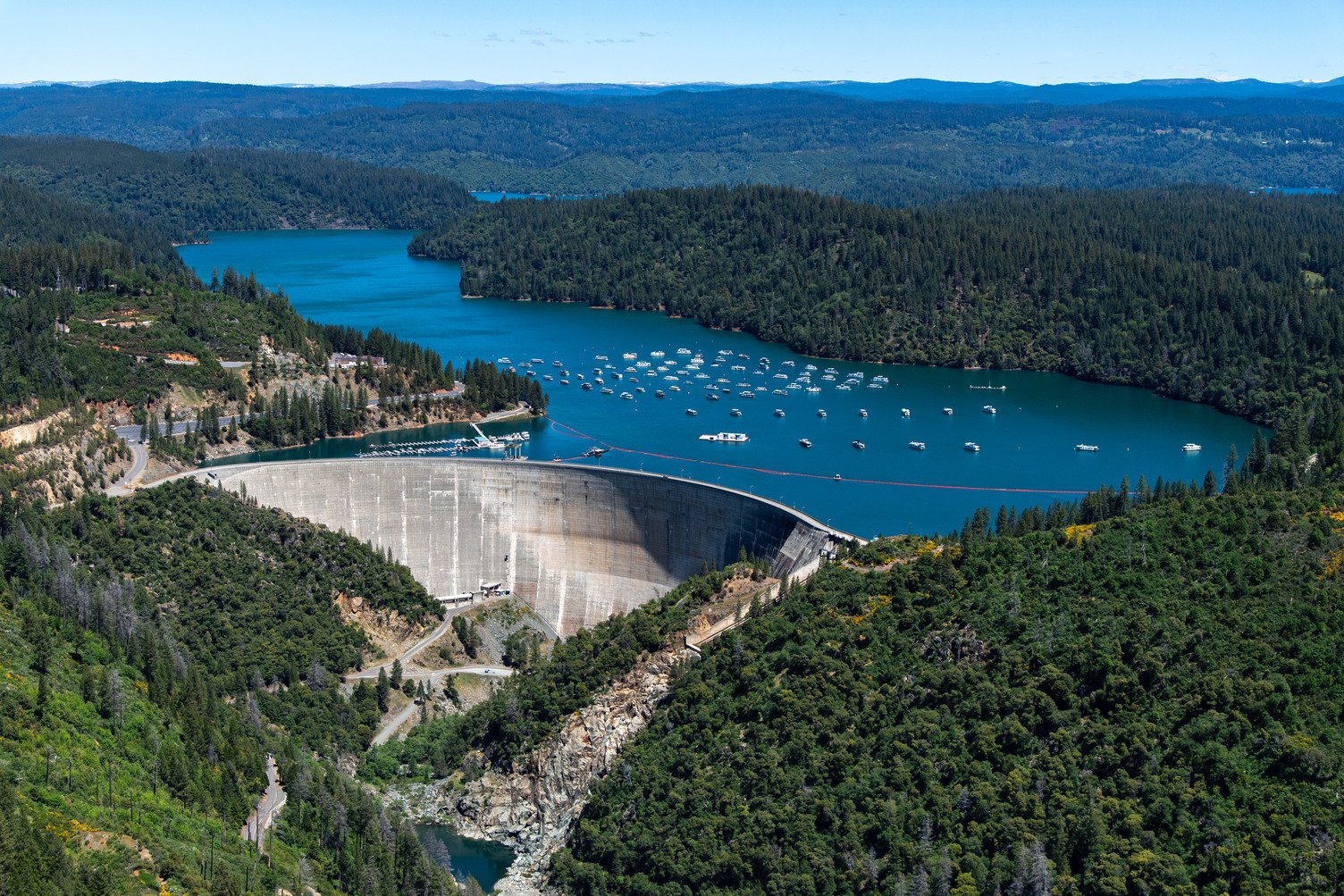
New Bullards Bar Dam. Credit: YCWA
The Colgate powerhouse is the Yuba County Water Agency’s (now operating as the Yuba Water Agency) big 3,500 cfs gun leading from its million acre-feet New Bullards Bar Dam on the North Yuba.
CFS means cubic feet per second, which is a measurement of how much and how fast water is flowing. To help you visualize, imagine 3,500 chickens passing you every second. That’s a lot of chickens.
Once the reservoir level drops as the California dry season begins, the Agency’s ability to access its reservoir will be limited to the 1,250 cfs it can release from its valve and power generation at the toe (base) of the dam.
That’s not a lot for this major California river. For the agency, dramatically reduced power and water sales will be in its future, as well as struggles to meet some minimum flow standards and irrigator demand downstream.
The Agency is speculating that reconstructing the project is going to take one or two years. Some industry insiders are talking about a bill of several hundred million dollars. All that is going to be rough for the Agency, its customers, and downstream fisheries, but unlike many older hydroelectric dams in the modern electricity market, this one is a money-maker. It’s going to be rebuilt. (Related: CapRadio article on longer term impacts)
The incident is just one more reminder of the forces that civil engineers harness behind dam and powerhouses — and just how suddenly they can go wrong, powerfully and dramatically wrong.
History is not bunk. The Progressive Era and New Deal (involving both President Roosevelts) helped to frame the U.S. response to our Robber Baron era of the latter part of the 1800s. Independent federal agencies staffed by expert professionals at least somewhat insulated from the sturm and drang of politicians were stood up and tasked with the regulatory responsibilities of the modernizing federal government. One such agency was the Federal Power Commission, subsequently renamed the Federal Energy Regulatory Commission (FERC).
Tucked away in quiet offices at FERC were the folks responsible for ensuring that the dams and powerhouses under FERC jurisdiction could be safely operated. And many at FERC have so far survived the chaos and purges of the first year of the current federal Administration.
Taking in some of the lessons of the even more harrowing 2017 Oroville Dam spillway incident, within four days of the Colgate penstock incident, FERC handed YCWA a six-page letter ordering YCWA to appoint an independent forensics team to investigate and report the causes of the incident and to appoint an independent board of consultants to oversee the design and reconstruction of the project.
We expect that the forensics report will be comprehensive and a dramatic read (albeit in engineer speak). And it probably won’t hurt to have some engineers looking over the shoulder of the Agency and contractors whose previous work met a near tragic fate. So, stay tuned.