In the small community of Coloma-Lotus, in the Sierra Nevada foothills east of Sacramento, Friends of the River is known first as a whitewater rafting group and second as a policy organization. For those of you in other parts of the state, this may come as a surprise. FOR is, after all, primarily a water policy organization. We work at the state and federal levels, advocating for sustainable and responsible water use and management, as well as working to protect rivers and watersheds from development and overuse.
So why does a policy organization – especially a small one that works across the state – also coordinate a whitewater rafting program?
1) Because Rafting is in our blood
For starters, rafting is an integral a part of FOR’s history. In the early 1970s, when the proposed New Melones Dam threatened to permanently flood the Stanislaus River – the most popular whitewater rafting reach in California – it was a group of river guides that founded Friends of the River. FOR became the leading voice in the fight to save the Stanislaus, and fight we did!
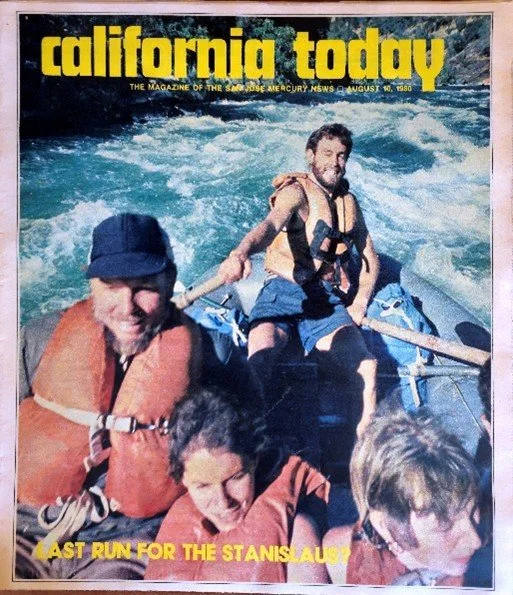
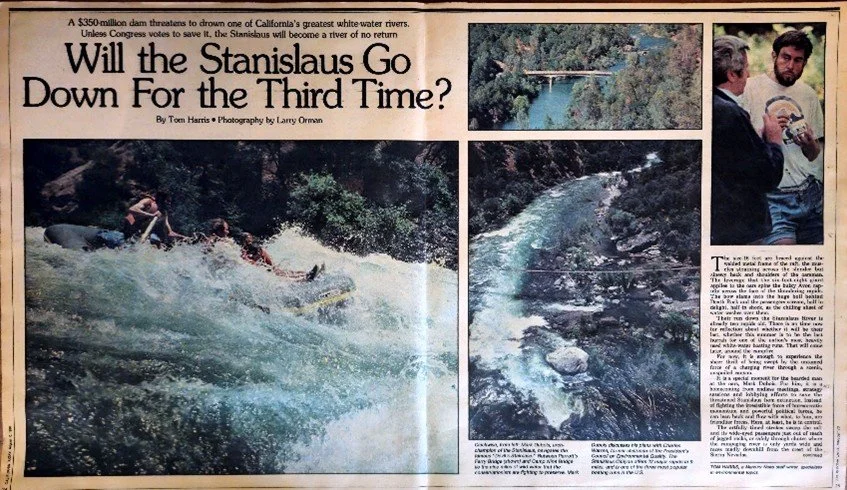
Mark Dubois, early and famous activist for FOR, featured in on the cover of California Today in August of 1980. The accompanying article covered the last efforts to save the Stanislaus from flooding. Credit: Stanislaus River Archive
FOR gained notoriety for the tireless work of its staff and volunteers to protect their river, as well as the creative and ingenious campaigns that garnered support across the state.
Unfortunately, FOR lost this first fight to save the Stanislaus. In 1983, the U.S. Bureau of Reclamation filled New Melones Reservoir, drowning the famous Camp 9 whitewater run. FOR, however, was far from done. In the years that followed, FOR grew into a statewide organization dedicated to protecting California’s rivers and watersheds.
2) Because we protect what we love (and love what we know!)
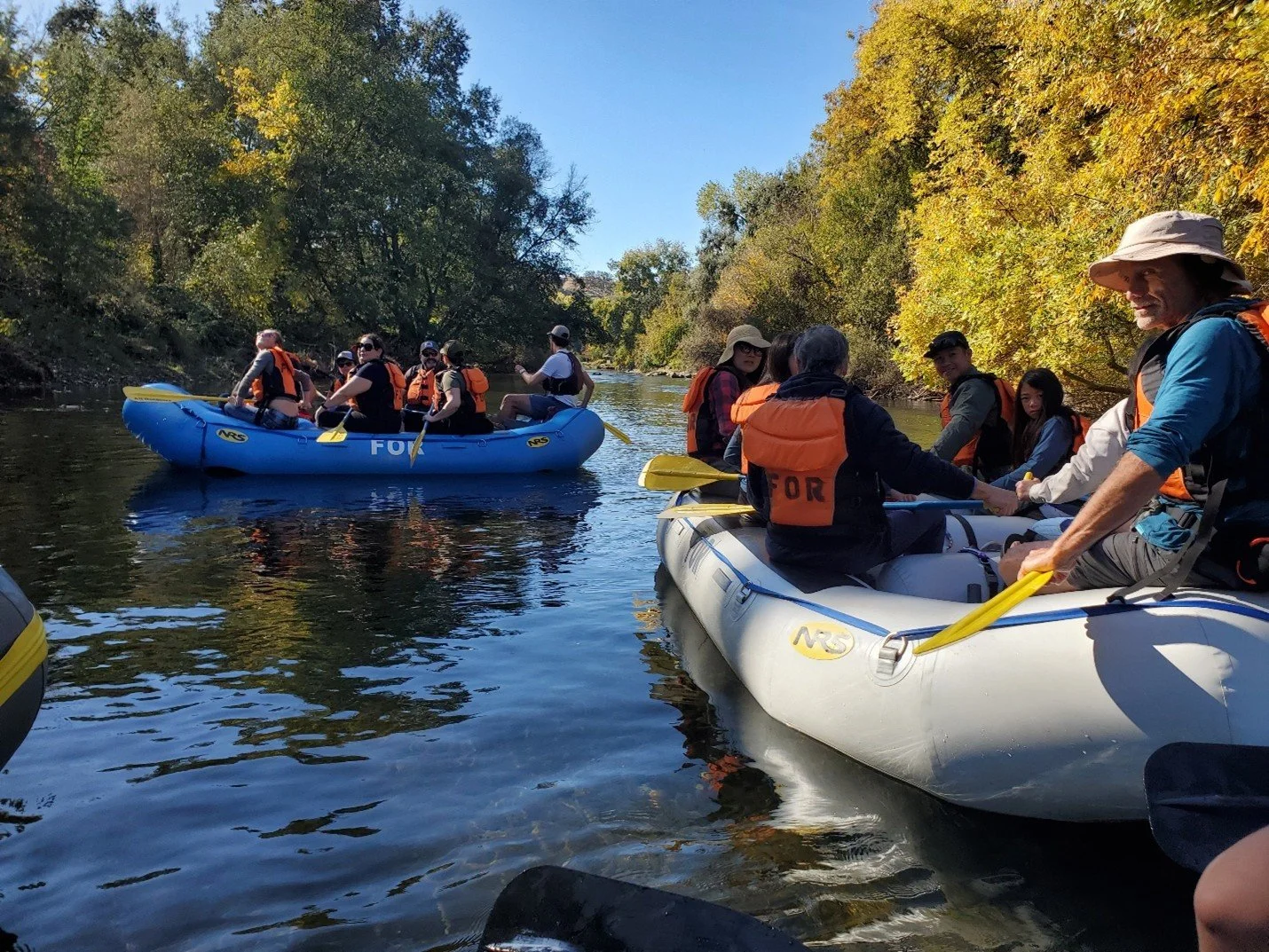
FOR guides taking guests down the Lower Stanislaus River as a part of the Stanislaus Salmon Festival near Oakdale in October of 2025. Photo Credit: FOR Archives
As FOR’s policy work grew to tackle new challenges, FOR did not forget its rafting roots. Throughout the decades that followed, FOR organized whitewater rafting trips in order to help the public experience the brilliance of California’s rivers, and to help those people understand what FOR was all about.
FOR led trips across the state – on the Kern, Tuolumne, Kings, Merced, and the three forks of the American River. FOR invited leaders of public agencies, elected officials, influential artists and musicians, and everyday citizens. At its peak FOR took thousands of people on rafting trips each year. Participants both experienced the joy of paddling, and FOR taught them about the threats to California’s rivers. At lunch, guests wrote letters to their elected officials advocating on behalf of free-flowing rivers, intact watersheds, and the importance of environmental flows.
3) Because the river is a classroom
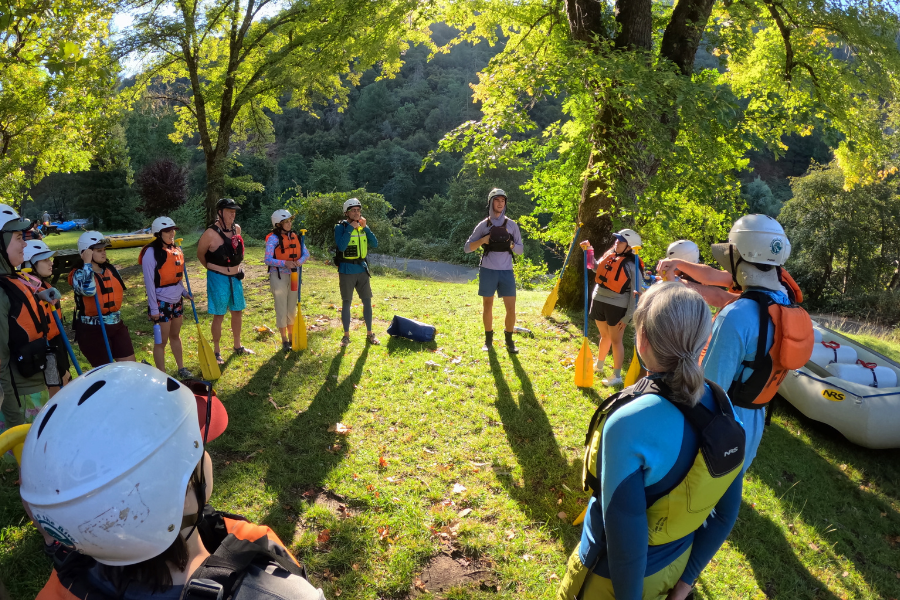
FOR guides giving a safety talk for a group of graduate students from UC Davis and UC Santa Cruz as part of FOR’s policy graduate student weekend on the South Fork American River. Photo Credit: FOR Archives
Today, FOR’s Rafting Program continues to be an integral part of our efforts to engage decisionmakers and the public. FOR’s volunteer guides and staff host whitewater trips for legislative staffers, agency staff, nonprofit partners, students, and community groups. Through these trips, the American River watershed becomes an outdoor classroom where guests can see firsthand examples of California’s water systems. And what a classroom it is! The American River is one of the most important watersheds in California, and it features all of the components of the California water system. From a large urban center in Sacramento, to a large reservoir (Folsom), to hydropower, upper watershed communities, and a hugely important recreational economy, the American River is a prime location to teach about the ways in which California’s rivers are used, managed, and enjoyed.
4) Because it builds community
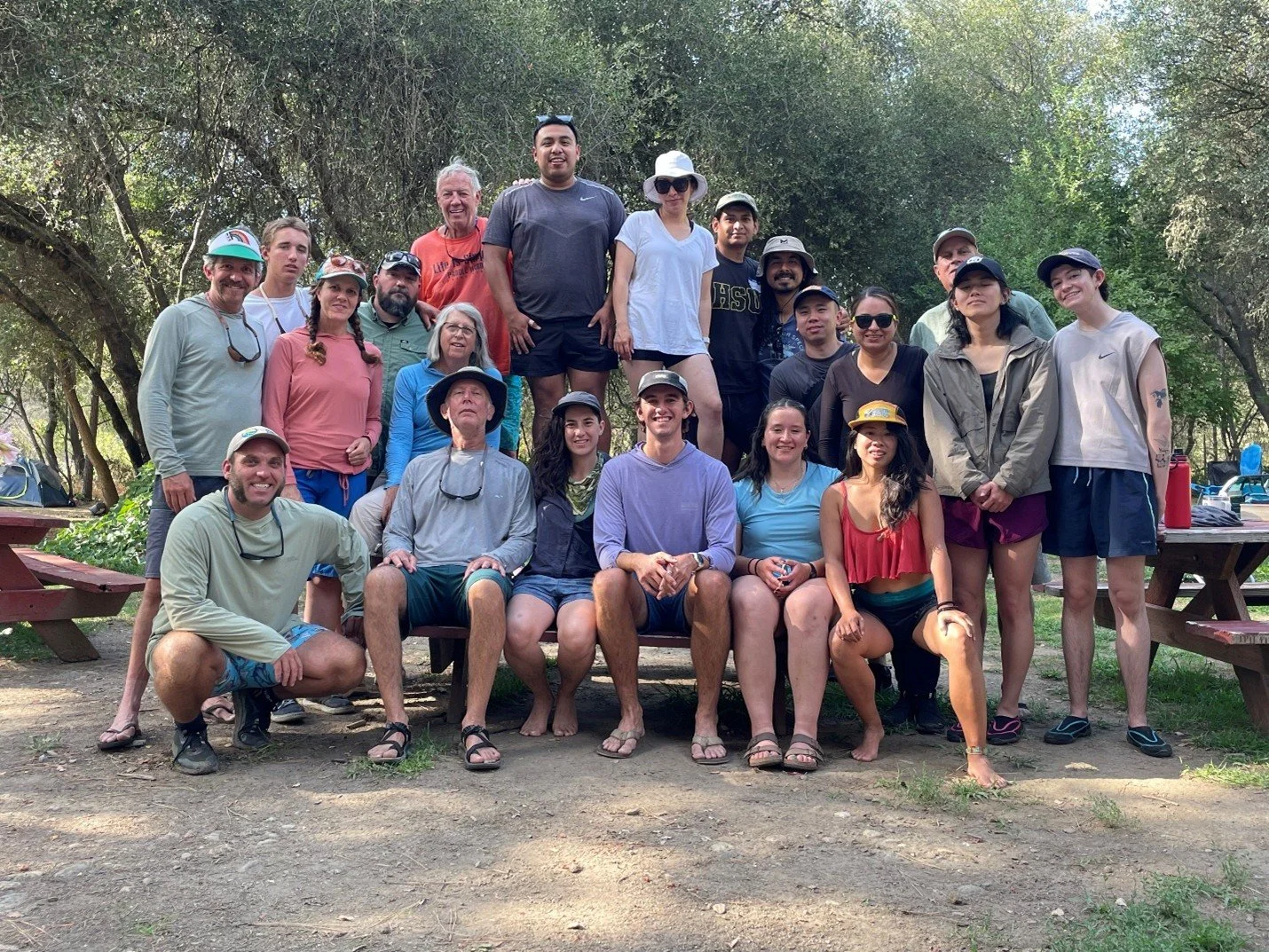
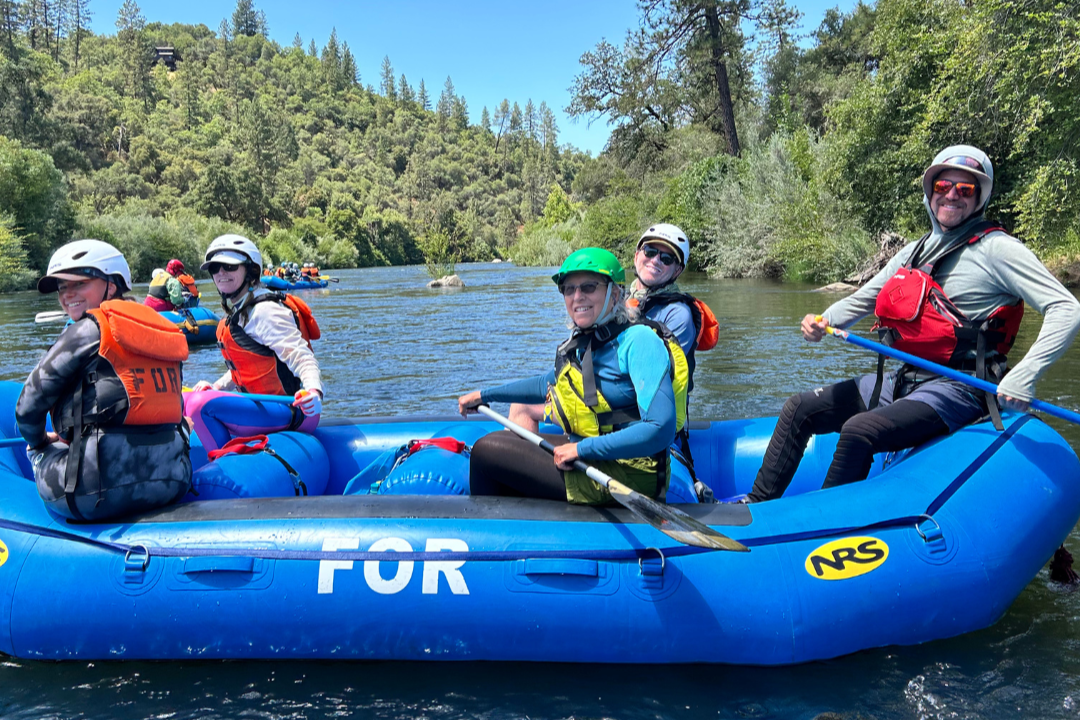
FOR Guides and staff from the Community Water Center on the South Fork American, Summer 2025. Photo Credit: FOR Archives
Friends of the River picks some big fights. We take on powerful interests in our work to protect California’s rivers. We too need to look to our communities, and our rivers, for the support and love that helps us keep up the good fight.
The community that surrounds FOR’s Rafting Program is far greater than just our staff! Our family of volunteers not only makes this program possible but is in many ways the backbone of FOR’s efforts to get people involved. Days spent on the South Fork American River, and evenings spent around the campfire with our community is the foundation that make this work possible.
Want to get involved with FOR’s Rafting Program? Click here to learn more about how you can join our volunteer family.