
State okays backroom deal instead of requiring improved river and estuary flows – and then approves Sites Reservoir, the biggest new water project in decades
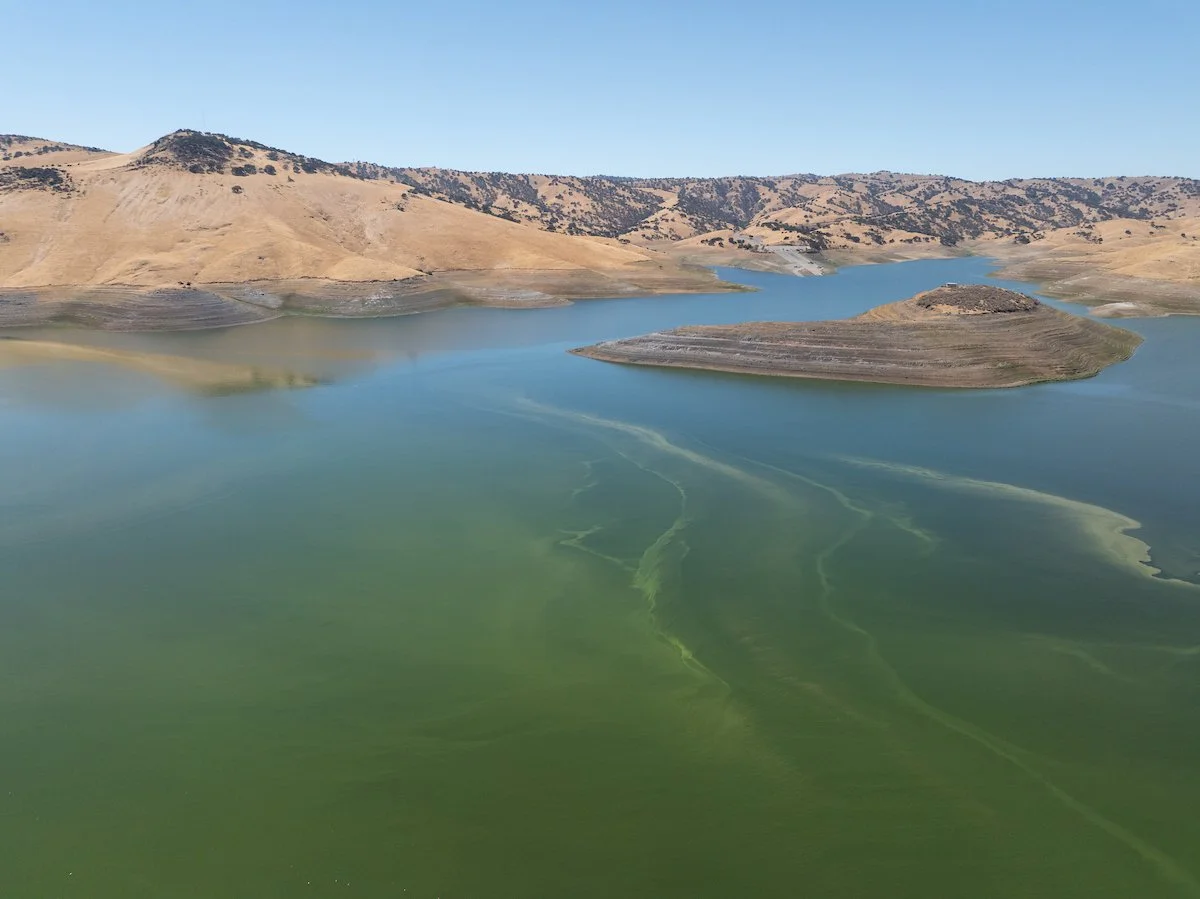
San Luis Reservoir with toxic algae overgrowth, similar outcomes expected for Sites Reservoir. Credit: CA DWR
Written by Gary Bobker and Keiko Mertz
In the span of just six days, the State Water Resources Control Board made two of the most consequential – and ill-judged – decisions in the history of California water. On October 29, in a 4-1 vote, the Board approved a major water regulation that lacked teeth, letting some of the State’s biggest water users off the hook, perpetuating the conditions that are worsening water quality and increasing the risk of extinction for endangered salmon, smelt, and other important native species. On November 4, in a unanimous vote, the Board granted a water right to the proposed Sites Reservoir, which will take water during critical times of year when salmon need it most.
Water Board Approves Weak Bay-Delta Plan
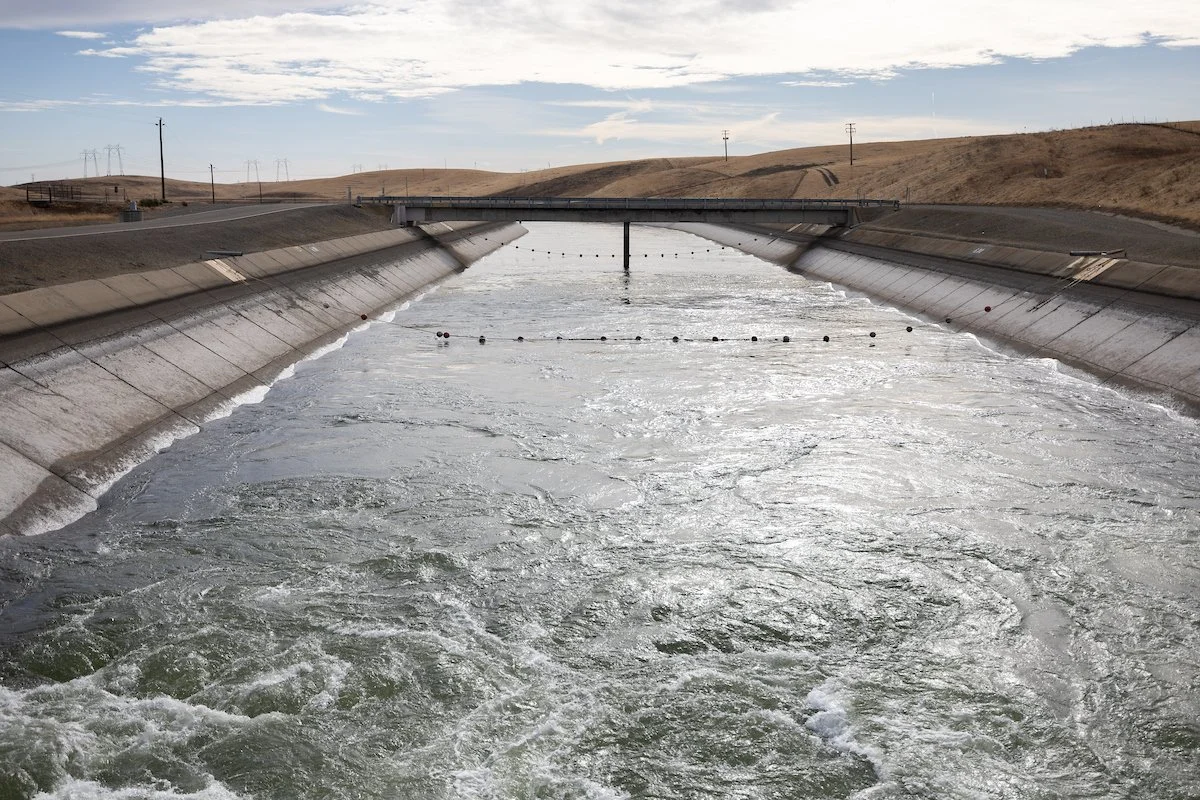
CA Aqueduct, which sends water to Southern California. The Water Board’s decision on the Bay-Delta Plan leaves the estuary starved of fresh water. Credit: CA DWR
On October 29, the Board approved the long-overdue but tragically flawed update of the water quality control plan for the San Francisco Bay-Delta estuary (last updated thirty-one years ago). The Plan, one of the most important and complex set of water regulations in the State, sets requirements for how much fresh water must flow from the many rivers in the vast Central Valley watershed to and through the Sacramento-San Joaquin Delta and out to San Francisco Bay. Overwhelming scientific evidence (relied upon by the Board in earlier, stronger drafts of the updated regulation) shows that increased fresh water flows are vital to support a healthy ecosystem; sustain commercial, recreational and subsistence fisheries; and maintain water quality for the environment and people. The scientific record also definitively shows that diverting half the annual average runoff has been devastating to water quality, fish, and wildlife. Fish populations have crashed to record low levels, the salmon fishery has been closed repeatedly, and toxic algal blooms have been proliferating.
The case for more freshwater flows – and against the weak proposal the Board was preparing to adopt – has been made numerous times by Friends of the River in written comments and oral testimony. For the adoption hearing, FOR’s program director Gary Bobker and lead scientist Devon Pearse summarized the case in a panel presentation(1) with other groups, and helped turn out over a hundred citizen activists to make public comments opposing adoption.
But instead of requiring more flow, the Board approved a dual pathway pushed by the Newsom Administration under which water users can implement “voluntary agreements” (VAs). VA participants get to take a loophole to provide little or no additional water but instead provide substitute non-flow actions like habitat projects – actions that will not reverse the estuary’s decline and that will be subsidized in part by taxpayers. The second pathway is a regulatory “backstop” requiring as little as a third of runoff in the drier years, which would be the alternative for users who either choose not to pursue VAs or who fail to meet their commitments under the VAs. Science shows that two thirds of runoff or more is needed to reverse the endangered species crisis in the Bay-Delta. In a recent twist, major VA participants, including the US Bureau of Reclamation, threatened to abandon their VA commitments if the Board included even the weak regulatory backstop in case of non-compliance or non-performance. Their position was that the Board should not even have oversight of the VAs. So far none have actually withdrawn. After all, there’s not much reason to give up such a sweetheart deal for water users when the likelihood that the Board will invoke the backstop lies many years in the future. Plus, it is unlikely to do so in any case – unless and until there is a truly independent Board that is willing to take seriously its responsibilities to protect the environment and water quality. (To her credit, Board member Nichole Morgan was the only member to oppose the flawed update, with the final vote 4-1 in favor).
‘Cultural Genocide’: Water Board Approves Largest New Water Right in Decades
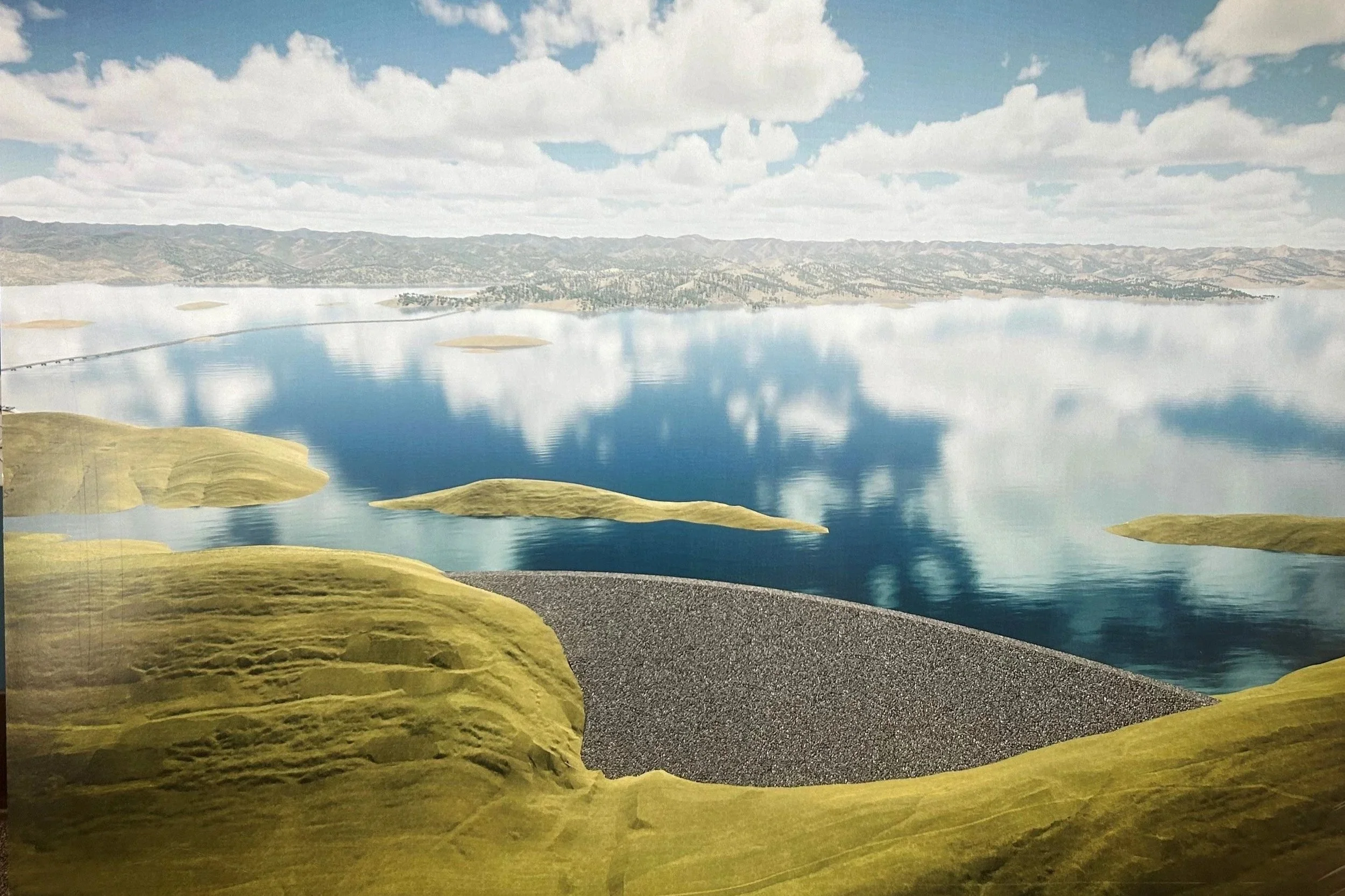
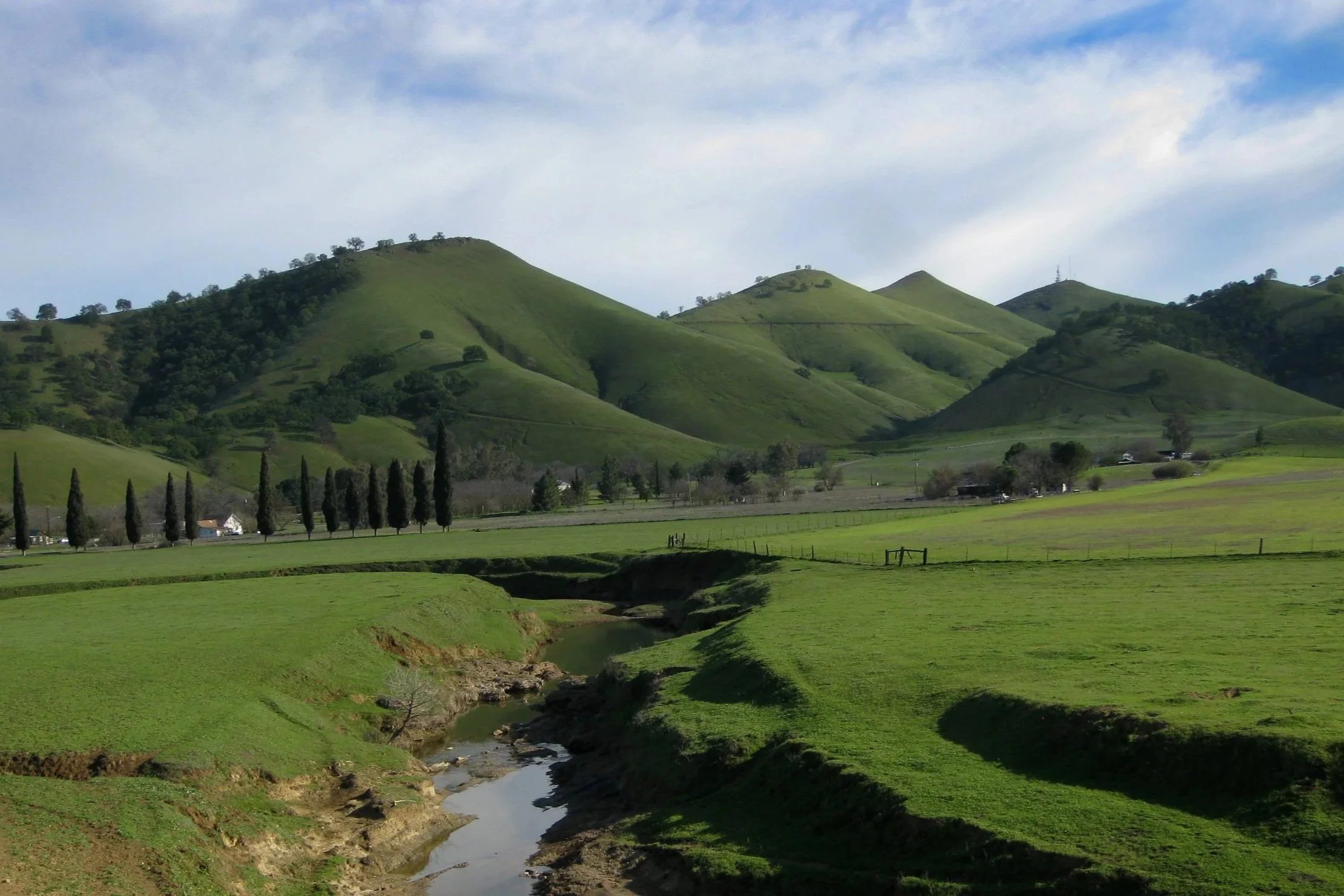
Sites Reservoir (rendering on left) will destroy Sites Valley (right). Credit: Sites Project Authority (left), Greg Kareofelas (right)
A week later, on November 4, the Board approved the water rights permit application for the proposed Sites Reservoir in the western Sacramento Valley, a $6 to 9 billion dollar boondoggle that would provide very little water in most years, dramatically increase greenhouse gas emissions and mercury pollution, and exacerbate the decline of Sacramento River salmon runs.
The Board’s Administrative Hearing Office, which ran the formal hearings to consider the Sites application, had issued a draft water rights permit in March that would have prohibited the project from diverting water when Sacramento River and Delta flows were below 55%, and contained other significant albeit imperfect environmental and water quality protections. But those elements were stripped from the revised order after an extraordinary reopening of the proceedings over the summer and high-level interventions from Governor Newsom and other officials at the behest of the Sites proponents.
Once again, FOR was at the forefront of the effort to oppose the permit, coordinating the efforts of groups formally protesting the application and providing numerous written and oral comments over the past three years. At the adoption hearing, FOR policy director Keiko Mertz kicked off a panel presentation(2) enumerating the project’s impacts on environment, water quality, fisheries, and cultural resources. FOR also reached out to inspire citizen activists to participate, with nearly 70 speakers opposing the project.
Tribal officials from numerous Tribes also spoke at the hearing, describing Sites Reservoir as the continuation of discrimination and erasure of indigenous peoples, and even calling it cultural genocide.
Nonetheless, the Board approved the Sites permit, with all 5 members voting in support. Given the Newsom Administration’s intense pressure to move the VAs and Sites forward (together with the Delta Tunnel, which will be up for approval next year), neither vote was surprising – only disappointing that Board members could so clearly overlook the scientific evidence and public sentiment in favor of an industry-designed smoke-and-mirrors show.
The action will now shift to two different courts – the legal system, where numerous challenges to both actions are expected (including from FOR) and the court of public opinion, where taxpayers and ratepayers weigh in on whether they’re prepared to underwrite an expensive and unnecessary new reservoir and a habitat program and other actions designed to allow water users to skip out on contributing their fair share of the water needed to protect rivers, the estuary, and water quality.
As Herman Melville wrote in the concluding words of his novel “The Confidence Man”: “Something further may follow of this masquerade.”
Resources:
(1) Slide Deck – NGO Panel Presentation on Bay-Delta Plan Deficiencies to Water Board (Oct 29, 2026)
(2) Slide Deck – NGO Panel Presentation on Sites Reservoir Water Right to Water Board (Nov 4, 2026)