Science in Action: FOR Connecting California’s Rivers, Salmon, and Water Policy
By Devon Pearse, FOR Lead Scientist
Every other year, California’s water science community gathers for the Bay-Delta Science Conference to connect and share their scientific stories in talks and poster sessions and discuss their latest research findings endlessly in the hallways, restaurants, and bars of Downtown Sacramento.
This year’s conference theme was ‘The Opportunity of Change’, highlighting the tremendous upheaval that the past year+ has brought for many scientists, particularly for those of us who were working in federal agencies prior to 2025. This year I had the privilege of representing Friends of the River. Leaving my research career at NOAA Fisheries and becoming Lead Scientist of Friends of the River expanded my connections to river and water science in California.
Rather than mostly focusing on talks related to genetics research, as I have in the past, this year I watched many talks on water quality and harmful algal blooms, the effects of flow and water exports on salmon and sturgeon migration, water temperature management, and groundwater dependent ecosystems, to name just a few. I also had fantastic discussions with scientists working in state and federal agencies, universities, NGOs, and water policy groups, all working collaboratively in different ways to support scientific knowledge and better understand the problems the Bay-Delta faces.
It was refreshing and inspiring to experience this collective scientific effort!
Friends of the River supports strong, science-based management of California’s rivers and water
My own talk reflected both ‘The Opportunity of Change’ theme and Friends of the River’s advocacy for science in water policy. It was titled ‘Going with the Flow—salmonid life-history variation and water management in the California Central Valley’. In it, I described recent research my colleagues and I did on genetic diversity in fish populations and connected it to the impacts of dams and other water infrastructure.
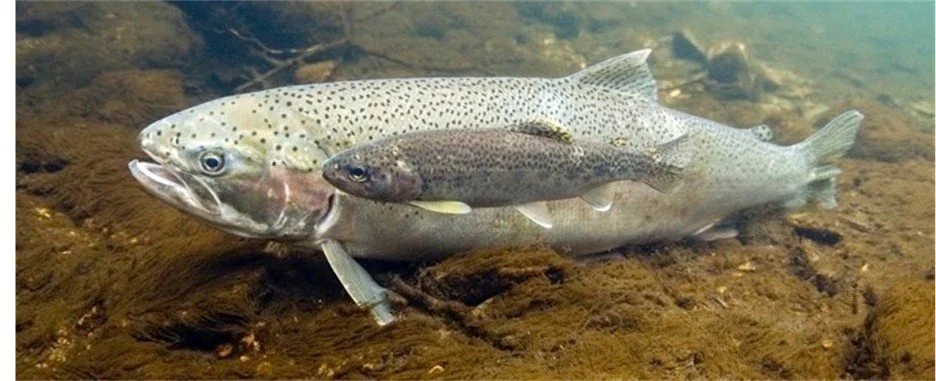
Oncorhynchus mykiss, known as rainbow trout when they live in freshwater and as steelhead when they migrate to the ocean before returning to the river to spawn. Photo: by Morgan Bond (NMFS/UCSC) in Scott Creek, CA
Collectively these data provide a baseline of how one species—steelhead/rainbow trout, Oncorhynchus mykiss—is impacted by dams and other water infrastructure, including on the Klamath River, where dam removals have recently restored migratory connectivity (O’Malley et al. 2026), on Putah Creek, where coastal and Central Valley steelhead are separated by Lake Berryessa and Monticello Dam (Goetz et al. 2026), and around the San Francisco Bay area (Leitwein et al. 2017).
This work shows how evolution interacts with changes to the riverscape, and will inform future efforts to restore and reconnect populations. Genetic studies in the Eel River (Kannry et a. 2020), will similarly provide a baseline for future studies of restored migratory connectivity after the removal of Scott and Van Arsdale dams—which FOR and others are working hard to ensure happens soon!
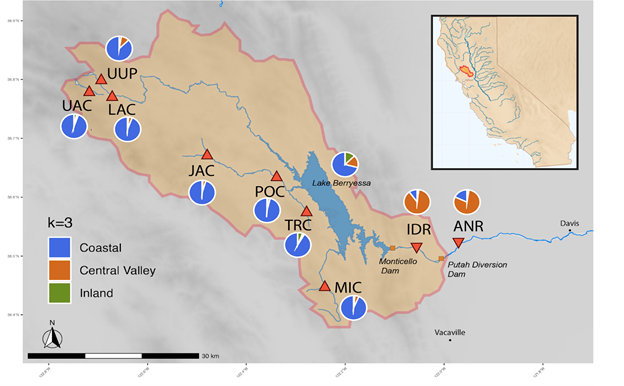
Rainbow trout populations above Monticello Dam on Putah Creek are part of the coastal steelhead genetic lineage, while those sampled below the dam are part of the Central Valley genetic lineage. There is also some genetic ancestry from inland lineage hatchery strains (Goetz et al. 2026).
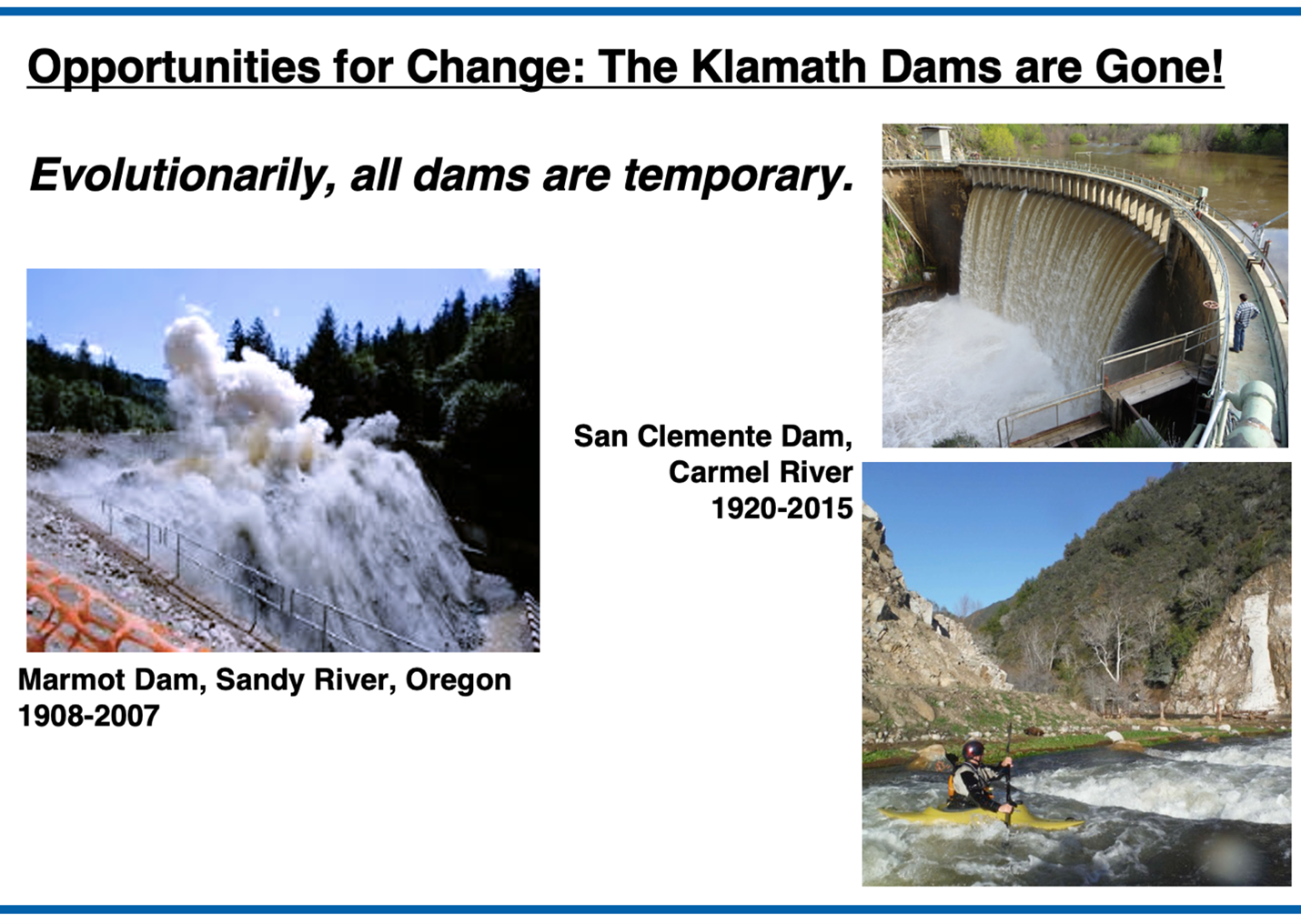
In evolutionary time, all dams are temporary. Those built in a past era are becoming obsolete, but the demand for water is ongoing. What will rivers and water infrastructure look like over the next 100 years? 500 years? Future Us will thank us for making good choices now.
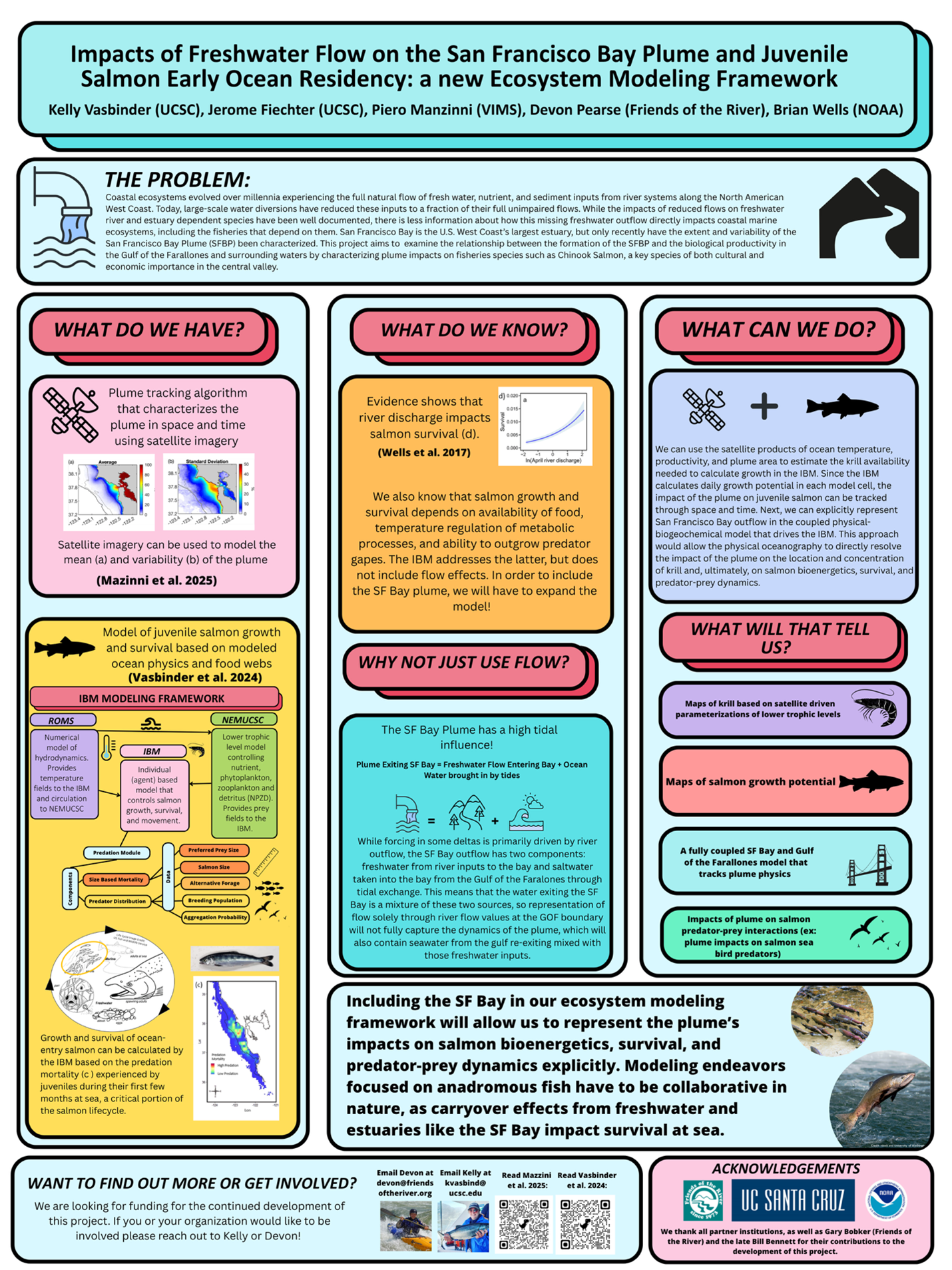
We also presented a research poster on ‘Impacts of Freshwater Flow on the San Francisco Bay Plume and Juvenile Salmon Early Ocean Residency: A new Ecosystem Modeling Framework’. This work is being led by Dr. Kelly Vasbinder, and Friends of the River is an active partner in developing this collaboration and working to fund the project. Stay tuned for more on this exciting research soon!