Del Puerto Dam Proposals Draw Comments
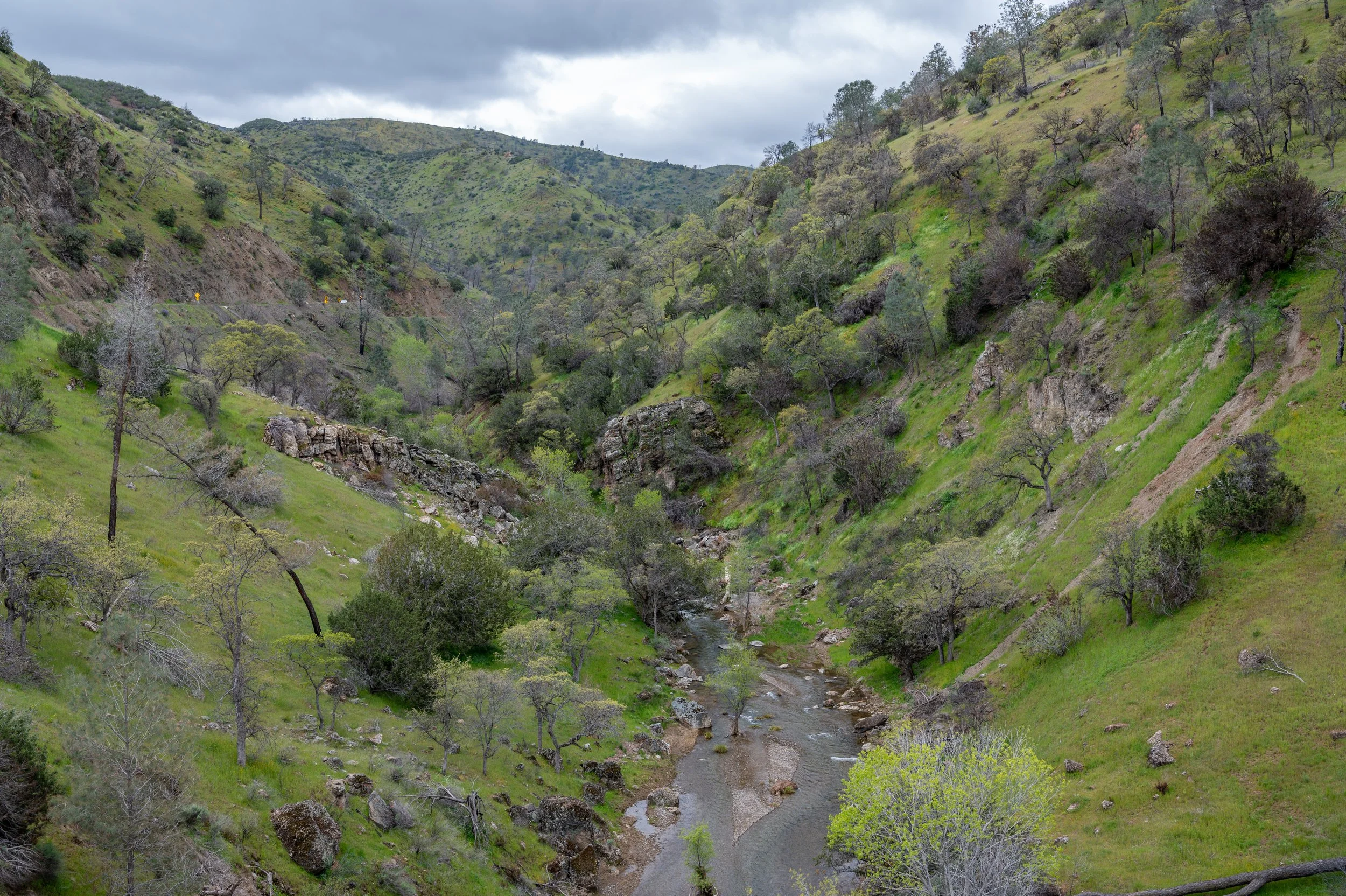
Del Puerto creek flows through the Diablo Range. Credit: Scott Hein.
It was a beautiful Spring day when I first drove up that road at least four decades ago. As I recall, it was with a small group from the California Native Plant Society. And yes, there were flowers. On that pleasant day, I had no idea that decades later a billion-dollar-plus dam proposal to block and bury that notch would be hatched by the local water district, the ironically named Del Puerto Water District.
This month Friends of the River, along with other environmental groups, took the opportunity to offer comments on the project, the proposed Del Puerto Canyon dam.
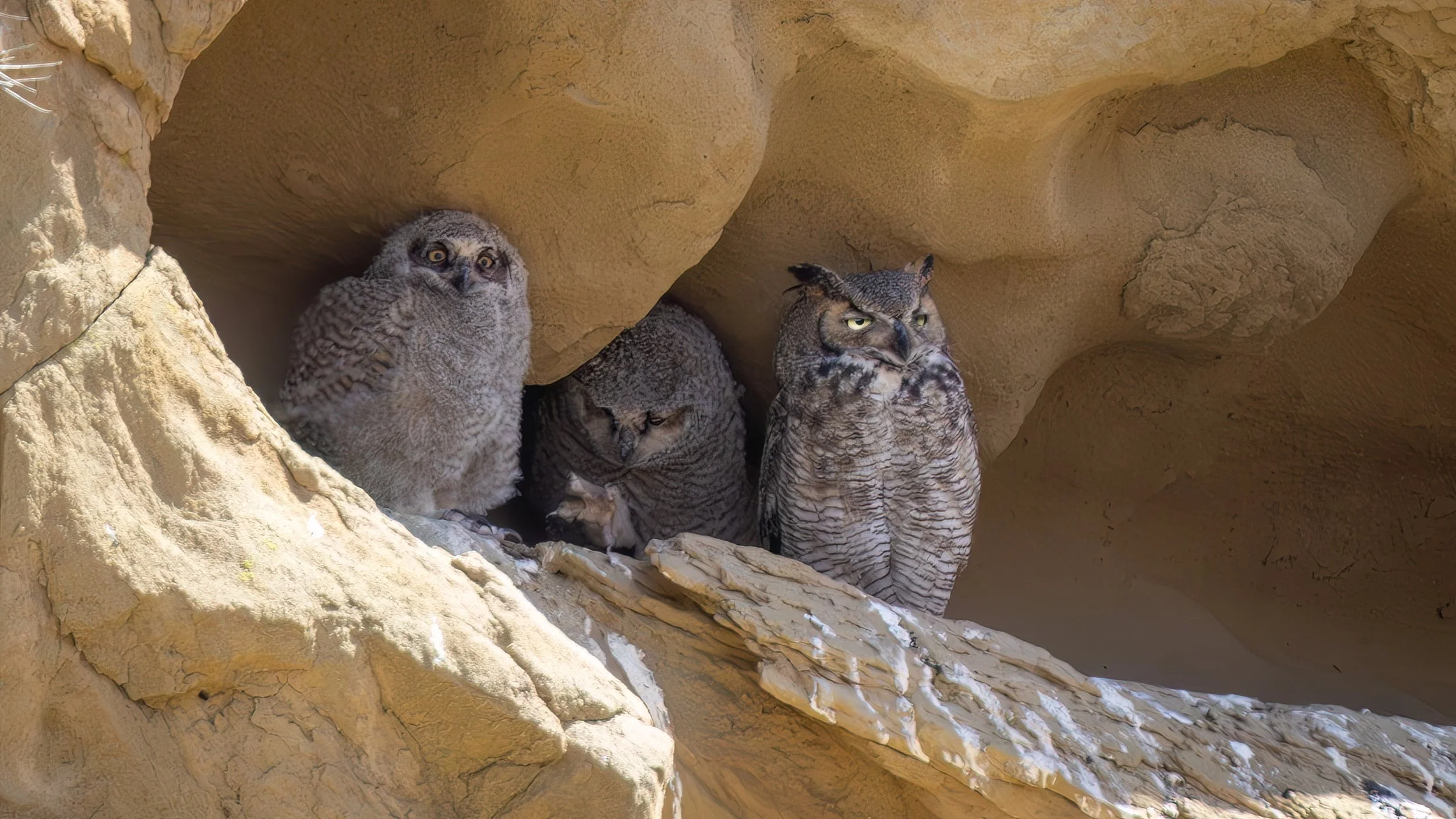
Del Puerto Canyon is home to a variety of wildlife, including this Great Horned Owl family. Credit: Jim Gain, May 7, 2025.
The U.S. Bureau of Reclamation had been working on their draft environmental impact statement (DEIS) for many years and had decided to give us the DEIS as a Christmas present. The EIS would support various federal actions, including showering the project with hundreds of millions of dollars of WIIN funding, approving the interconnections between the project and the federal San Luis Canal, and supporting Reclamation’s request for a change to their water rights to store federal water pumped up into the new reservoir.
Our comments were due in 30 days. It took a couple of us to write them. One took on the lawyerly task of taking Reclamation to task for falling short of their National Environmental Policy Act responsibilities (while Reclamation still has them). I approached the matter as if I was also commenting on a draft feasibility report. I had to establish some context for the proposal’s limited value and the significant challenges that lay ahead (at least I hoped they would be significant). (Read our comments on the federal EIS here).
But we’d had another Christmas present. Shortly after comments on the DEIS were filed, comments on the District’s Partially Recirculated Draft Environmental Impact Report (PRDEIR) were due. The PRDEIR was prepared because of some litigation on the original EIR from Friends of the River and other environmental groups, and thus the issues covered in it were narrow. Prepared by three of us this time, I’d like to think that our comments offered some helpful suggestions on how to meet their legal requirements.
My job wasn’t that. Rather, it was to again offer some helpful warnings that additional significant environmental review on the already stale EIR would be necessary — and that the project still faces feasibility challenges, both financial and procedural. Read our comments on the state PREIR here).
All those tasks done, it’s helpful to reflect. Politicians extol the virtues of this project. Bean counters in the back rooms, less so. Users of the canyon, even less. Who will win has yet to be decided.
But why do we get involved? Life takes its twists and turns. Democracy happens (or is supposed to), and even little pieces of our California green and golden earth can be defended side by side by older folks with experience and remembered moments from their earlier years, and younger people with even fresher memories and fierce competence.