Tuolumne Habitat for Flow Scam Gets Bad Reviews
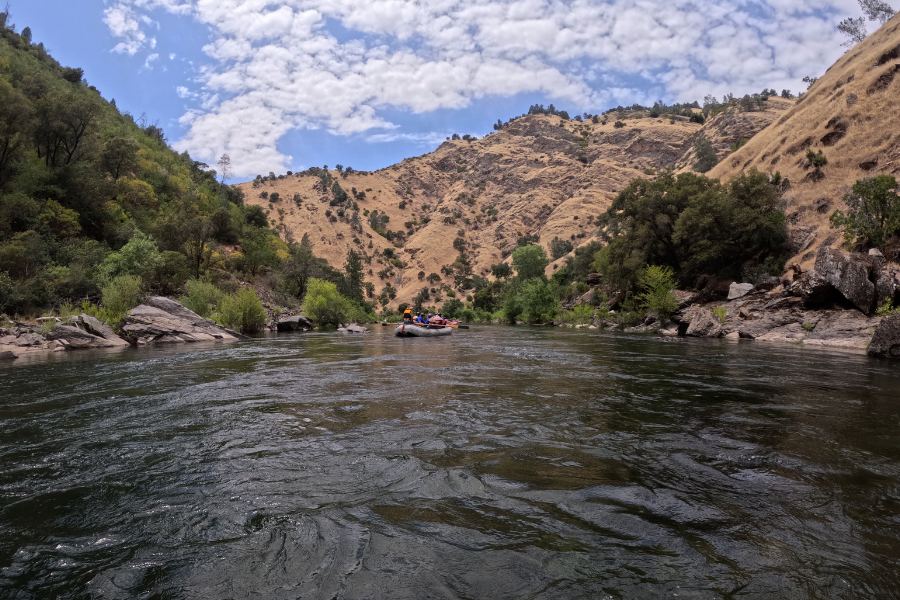
Tuolumne River. Photo Credit Friends of the River
In 2018 the State Water Resources Control Board adopted new water quality standards to significantly increase the amount of water that flows into the Delta from three San Joaquin Valley rivers—the Merced, Stanislaus and Tuolumne. The Water Board’s decision was in response to the ecosystem crisis, including the collapse of salmon fisheries and decline in white sturgeon, caused by the dramatic reduction in freshwater flows in Central Valley rivers and out through the Bay-Delta Estuary. Although the 2018 terms were not as strong as Friends of the River might have liked, the decision was a historic milestone because, for the first time, it set requirements affecting senior water rights holders upstream of the Delta. It also set requirements for the state and federal water projects that export water out of the Delta. Good news for the Tuolumne and the Delta, right?
If only. At the time, the Water Board rejected a plea by state officials to delay the decision and give time for efforts by agencies and water districts to complete a Tuolumne River “voluntary agreement,” or VA, which would substitute ineffective physical habitat actions for real flow improvements – despite the scientific evidence to the contrary. Shortly thereafter, Governor Newsom got rid of Water Board chair Felicia Marcus, and under new leadership the next step—actually implementing the new requirements through a water rights decision—was put on hiatus.
Now, seven years later, the new requirements have still not been implemented. In fact, the Board may consider weakening their 2018 decision to allow for adoption of the new proposed Tuolumne VA, which is being pushed by the Newsom Administration. (Ironically, one of the VA proponents’ arguments was that finalizing and implementing the VA would be so much faster than adopting new standards and implementing a water rights decision. Given the dozen years or so that have gone by so far, they were a little off on that one, it seems…)
But a new analysis by the Board itself shows that the Tuolumne VA would not be effective. In testimony before the Board on November 5, FOR Lead Scientist Devon Pearse and San Francisco Baykeeper Science Director Jon Rosenfield explained what the new report got right about the VA – and how it even underestimated the problems with the VA. You can watch their presentation here.
The Tuolumne VA’s primary claim is that it will expand the acreage of salmon spawning grounds, replenish spawning gravel, and control predators to substitute for any substantial increase in river flows. But as the report shows, there’s one little problem with this claim—the overwhelming scientific evidence showing that none of these are the limiting factor for salmon population size. Instead, it’s river flows, which in turn control temperatures (the lower Tuolumne is lethally hot for salmon much of the time), activate floodplains (expanding the acreage of these, without sufficient water to inundate it, does little good), reduce the impact of predation, and support young salmon on their journey to the sea. In many years under the Tuolumne VA, flows would be almost as bad as existing conditions (as low as 15% of runoff, not much better than the 10% we can experience now, and only half of the minimum flows set by the new regulations, that is, the bottom of the 30 to 50% range).
It could get even worse. Proposed water projects being promoted by the VA parties and others could add up to 1.185- million acre-feet of water storage capacity and 2.7 million acre-feet of additional water rights on the Tuolumne River. This could harm legally-protected Wild and Scenic stretches of the river, and capture the wet year high flows that represent the only remaining near-natural flow conditions and provide water to feed the freshwater-starved Bay-Delta estuary.
As demonstrated by the many private citizens who took time out of their own lives to speak out passionately at the November 5 workshop, there are too many of us who love the Tuolumne and want to return it to a healthy river to allow the TVA to move forward or permit the construction of more harmful dams and reservoirs.