
Raising some Tuolumne River dams and other Tuolumne River mischief
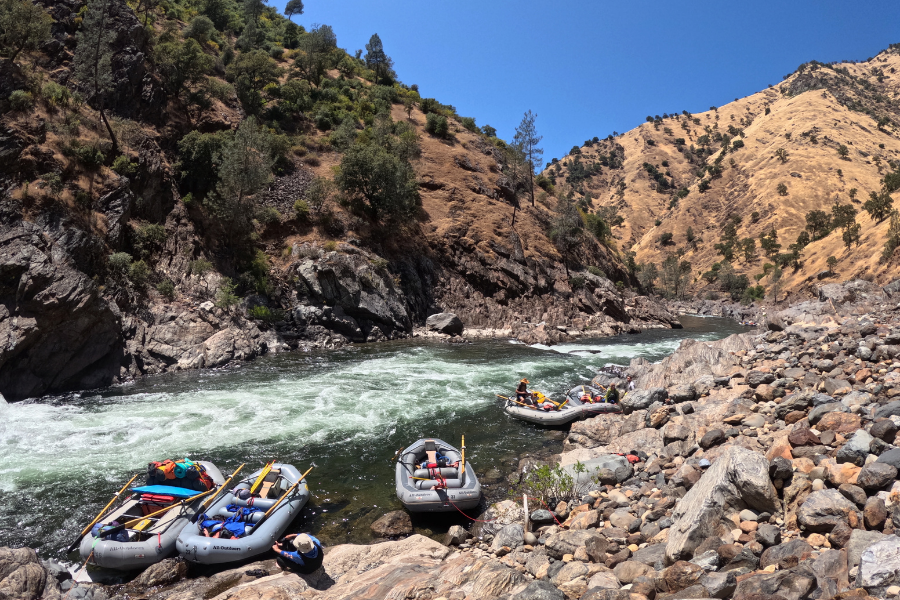
Tuolumne River - Photo by FOR
At a glance: The Turlock and Modesto Irrigation Districts are advancing a bold plan on the Tuolumne River to raise dams, build new reservoirs, and acquire the water rights to divert nearly every drop of “unclaimed” water— actions that could have profound consequences for the river and those who depend on it.
The Tuolumne River is the largest tributary of the San Joaquin River Basin and has been extensively developed as a water supply for the Turlock and Modesto Irrigation Districts (TID & MID, or “Districts”) and the City of San Francisco and much of the SF Bay Peninsula. The Tuolumne and Merced Rivers also provide limited support for the San Joaquin River and its water users (these rivers are essentially the San Joaquin River’s present-day headwaters) and, of course, export customers served by the Central Valley Project (CVP) and State Water Project (SWP) pumps. The Tuolumne River also supports regional groundwater as it sinks into the ground dewatered by modern pumping.
The big historic battles over the Tuolumne River include John Muir’s failed attempt to safeguard Hetch-Hetchy Valley in Yosemite National Park and the scattered objections to the 1921 Don Pedro and 1966 (New) Don Pedro Dams. The Districts and San Francisco’s attempt to license the Clavey-Wards Ferry hydro and water storage project upstream of Don Pedro Reservoir led to the creation of the Tuolumne River national wild and scenic river from the headwaters to the Don Pedro Reservoir gross pool (or near gross pool) in 1984.
Ever plucky, further expansion of extractions from the Tuolumne have surfaced in recent years. (1) Modesto and Turlock have kindly agreed to sell their treated wastewater (otherwise destined for the San Joaquin River) to the Del Puerto Water District and the U.S. Bureau of Reclamation via the San Luis and Delta-Mendota Canal. (2) The Stanislaus Regional Water Authority was able to “grandfather” their “Regional Surface Water Supply Project,” a proposed or perhaps under-construction diversion of Tuolumne River flows to the Authority’s water treatment plant serving the cities of Turlock and Ceres, as a CA Water Bond of 2014 Water Supply Investment Program (WSIP) “screening project.” Along with the proposed Del Puerto Dam, these two “screening” projects are “WSIP projects in waiting” that could receive funding allocations if other WSIP projects like the proposed Sites and Pacheco dams fail to consume all the available bond funds.
But the Turlock and Modesto Irrigation Districts are proposing much, much more.
In 2022, they applied for a water right for 2.7 million acre-feet of additional Tuolumne River — in their minds, all of the unappropriated water flowing through the Tuolumne River Basin.
What’s more, the Districts are lining up the projects to use that applied-for right — expanding Turlock Lake and Don Pedro Reservoirs, building two large offstream reservoirs (Cardoza and Montgomery), and constructing a tunnel to and from the Tuolumne River to Reclamation’s “underutilized” but giant New Melones Reservoir. In June of this year, TID staff briefed their board of directors on the results of their phase 1 surface water supply evaluations (the groundwater recharge evaluations will follow). The proposed dam raises would add 185,000 acre-feet of new storage for the Districts. The new combined reservoirs would add 1,020,000 acre-feet. Available space for borrowing in Reclamation’s 2,400,000-acre-foot New Melones Reservoir was not revealed, but presumably would be a lot. More info here.
The consequences could mean less flows into the Tuolumne River and more flows into the Districts’ extensive canal network.
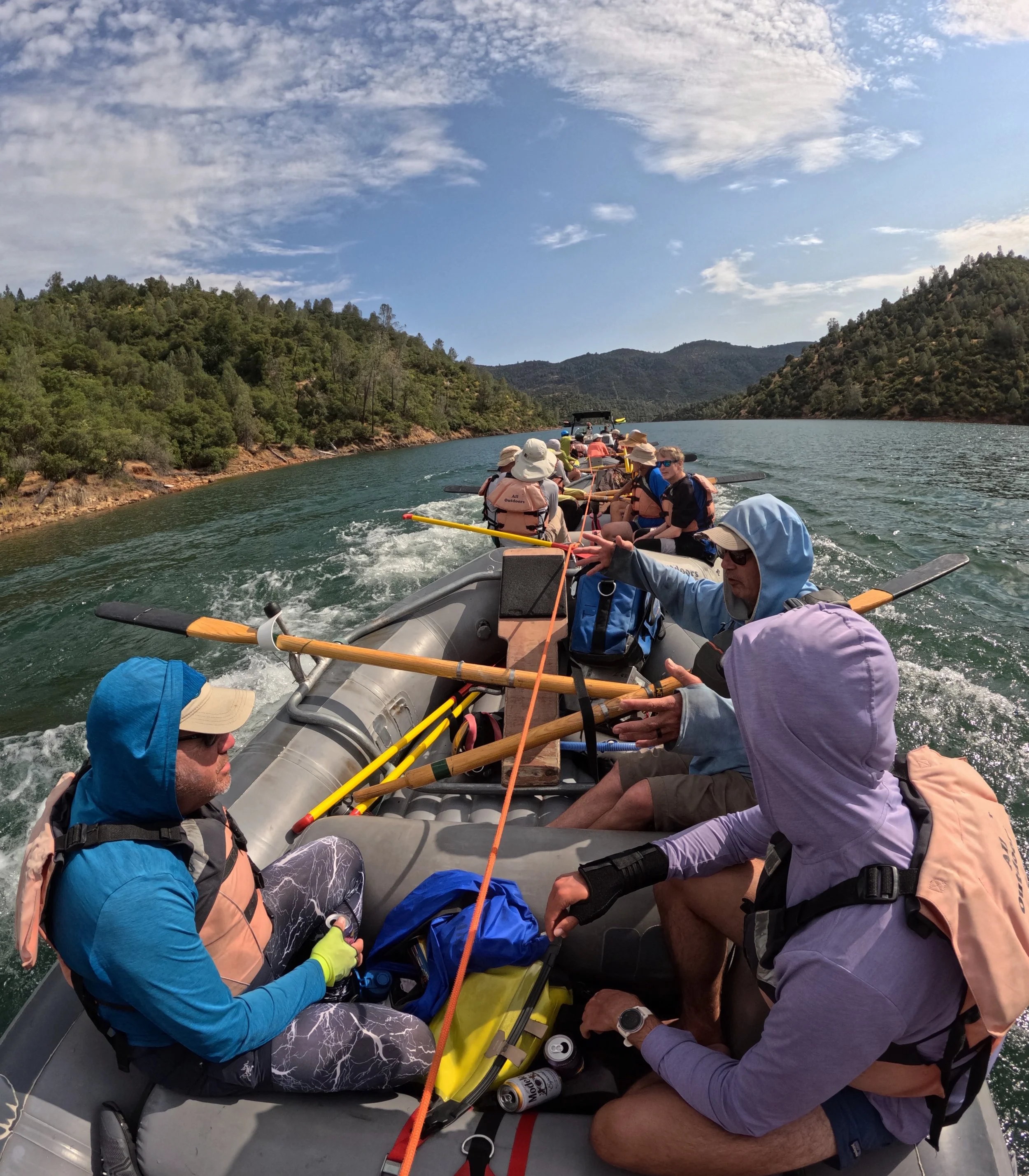
Boaters being towed across Don Pedro Reservoir by a motor boat - Photo by FOR
Also, the Don Pedro Dam raise (the Districts’ “low-hanging fruit”) could send the Meral’s Pool-to-Wards Ferry Tuolumne River takeout farther upstream than it is today. This premier run has always had a difficult takeout. When the reservoir is high, many boaters have resorted to motorboat tows, sometimes through logjams, to takeout. (See an American Whitewater update to describe the current takeout access travails there.)
Of course the Districts’ full plans include putting Tuolumne River behind the giant New Melones Dam, which could also result in reduced value of the remnant Stanislaus River “Camp Nine” run, which can be completely or partially inundated by the dam.
Boaters will also need to be watchful of the U.S. Army Corps of Engineer’s Pine Flat Dam raise study on the Kings River. The study was authorized by the Congress in 2024 and presumably is underway. Fresno Bee Article.